
Danielle LaPorte happiness vs joy: This exploration delves into the subtle yet significant distinctions between these two deeply personal emotions. We’ll dissect LaPorte’s perspectives on cultivating happiness and joy, exploring the pathways to each and highlighting their unique characteristics. Are they interwoven or separate threads in the tapestry of a fulfilling life? This journey promises to uncover the key differences and illuminate how these emotions can enhance our daily experiences.
LaPorte’s philosophy emphasizes the interplay between internal states and external factors in achieving both happiness and joy. We’ll examine specific examples and actionable steps to understand how her teachings can translate into practical applications for personal growth.
Defining Happiness and Joy
Danielle LaPorte, a renowned author and life coach, often explores the nuances of human emotions, particularly the subtle distinctions between happiness and joy. Her work emphasizes that these feelings, while interconnected, have unique characteristics and serve different purposes in our lives. Understanding these differences can lead to a deeper appreciation for the emotional landscape and a more fulfilling existence.LaPorte’s exploration of happiness and joy goes beyond simple definitions.
She delves into the underlying motivations and actions associated with each emotion, highlighting how they impact our well-being and personal growth. This nuanced approach allows readers to gain a clearer understanding of how to cultivate both emotions effectively in their daily lives.
Defining Happiness in LaPorte’s Work, Danielle laporte happiness vs joy
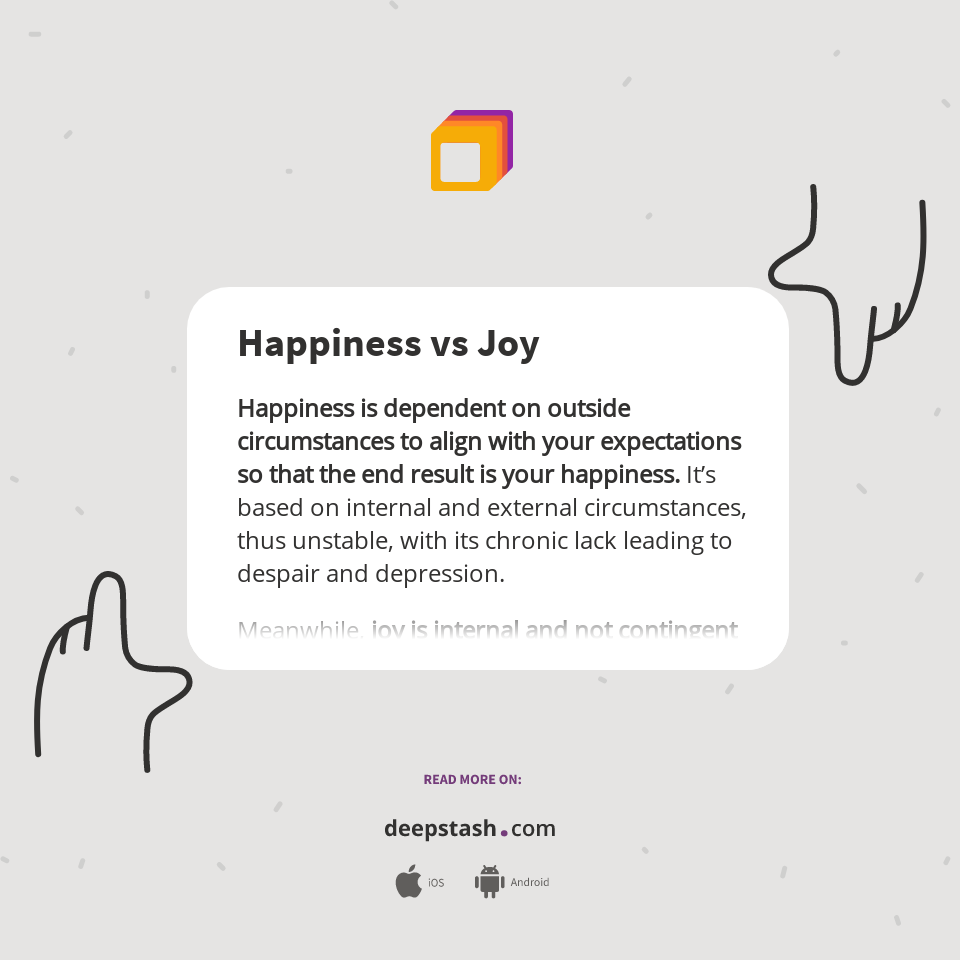
Happiness, in LaPorte’s perspective, is often associated with external circumstances and a sense of contentment. It’s a feeling of pleasantness and satisfaction derived from achieving goals, experiencing positive events, or maintaining a comfortable state of being. This can be a temporary state, linked to specific situations or achievements. LaPorte likely emphasizes the importance of self-awareness and aligning one’s actions with their values to cultivate consistent happiness.
Defining Joy in LaPorte’s Work
Joy, on the other hand, is a deeper, more profound emotion. LaPorte likely positions it as a feeling of profound fulfillment and connection, often arising from a sense of purpose or meaningful engagement with the world. It’s not necessarily tied to external validation but rather to an inner sense of well-being and alignment with one’s true self. This emotion often signifies a more enduring and pervasive sense of happiness, rooted in a connection to something larger than oneself.
Overlaps and Differences between Happiness and Joy
Happiness and joy are not mutually exclusive; they can coexist and even influence each other. A fulfilling achievement can bring both happiness and joy. However, the key difference, as LaPorte likely argues, lies in their source and duration. Happiness can be fleeting, tied to external factors, while joy is more intrinsic and lasting, stemming from a deeper connection to one’s values and purpose.
LaPorte might contrast these by emphasizing that happiness is a reaction to circumstances, whereas joy is a response to a sense of alignment and contribution.
Nuances in LaPorte’s Philosophy
LaPorte likely explores the potential pitfalls of relying solely on external sources for happiness. She might highlight the importance of cultivating an internal sense of joy, which is less dependent on external validation. This understanding allows individuals to navigate life’s inevitable ups and downs with a greater sense of resilience and fulfillment. Furthermore, she likely emphasizes that happiness is not inherently bad; it’s a valuable emotion.
However, focusing solely on happiness can lead to a shallow and ultimately unsatisfying existence. Joy, on the other hand, is the cornerstone of a truly meaningful and fulfilling life.
Key Characteristics of Happiness and Joy
| Happiness | Joy |
|---|---|
| Often linked to external circumstances and achievements. | Rooted in a deeper sense of purpose and connection. |
| Can be a temporary state, fluctuating with external factors. | Generally a more enduring and pervasive emotion. |
| Derived from satisfaction with goals and positive events. | Stems from a sense of alignment with one’s values and purpose. |
| Can be cultivated through self-care and positive experiences. | Often fostered through meaningful contributions and engagement. |
| May be dependent on external validation and feedback. | Less reliant on external validation and feedback. |
LaPorte’s Perspective on Happiness
Danielle LaPorte’s exploration of happiness delves beyond the superficial, challenging conventional notions of achieving a state of perpetual bliss. She emphasizes that true happiness is not a destination but a continuous journey of self-discovery and alignment with one’s values. This journey involves understanding the interplay between internal states and external factors, recognizing that neither is inherently superior.LaPorte argues that happiness is not a static emotion but a dynamic process of embracing life’s ups and downs.
It requires cultivating a mindset that acknowledges both joy and discomfort as integral parts of the human experience. This perspective shifts the focus from a pursuit of constant happiness to a conscious acceptance of the full spectrum of emotions.
Danielle LaPorte’s insights on happiness versus joy are fascinating, but sometimes managing a chronic condition like diabetes can make those distinctions feel less clear. Learning about practical strategies for diabetes management, like those in Brendan McEachern’s “bolus blues diabetes book” bolus blues diabetes book brendan mceachern , can actually contribute to a deeper understanding of well-being. Ultimately, finding joy amidst the challenges of diabetes, as LaPorte might suggest, is key to maintaining a fulfilling life.
LaPorte’s View on Cultivating Happiness
LaPorte’s philosophy centers on the idea that cultivating happiness is a proactive process, not a passive one. It’s about understanding and nurturing your internal landscape while thoughtfully engaging with the external world. She encourages individuals to recognize and address their personal values and beliefs as the foundation for a fulfilling life. This alignment empowers individuals to make choices that resonate with their authentic selves.
Connecting Happiness with External and Internal Factors
LaPorte highlights the interconnectedness of internal states and external factors in the pursuit of happiness. She emphasizes that happiness is not solely dependent on external circumstances but also on the internal choices and perceptions we hold. This means that even amidst challenging external situations, an individual can cultivate internal happiness through mindful awareness and intentional action.
| External Factors | Internal States | LaPorte’s Suggestions |
|---|---|---|
| Relationships: Strong connections with loved ones | Gratitude: Appreciating the positive aspects of relationships | Prioritize meaningful interactions. Cultivate empathy and understanding in relationships. Practice active listening and open communication. |
| Financial security: Having enough resources for basic needs | Contentment: Accepting what you have rather than striving for more. | Mindful spending: Evaluate needs versus wants. Focus on experiences over material possessions. Practice gratitude for what you already have. |
| Health and wellness: Maintaining physical and mental well-being | Self-compassion: Treating yourself with kindness and understanding. | Prioritize self-care. Engage in activities that promote relaxation and well-being. Acknowledge and accept your emotions, without judgment. |
| Career fulfillment: Finding purpose and satisfaction in work | Resilience: Maintaining optimism and hope in the face of challenges. | Identify your values and how they align with your career. Seek opportunities for personal growth and learning. Practice mindfulness during challenging work situations. |
LaPorte’s Perspective on Joy
Danielle LaPorte’s exploration of happiness and joy delves into the nuances of these emotional states, highlighting the distinct paths to each. While happiness often focuses on external achievements and contentment, joy, according to LaPorte, stems from a deeper connection with one’s inner self and a profound sense of purpose. Her perspective offers a framework for understanding joy not as a fleeting emotion, but as a sustained state of being.LaPorte’s approach to understanding joy emphasizes the importance of aligning one’s actions with one’s values and passions.
This alignment, she suggests, is crucial for cultivating a sense of fulfillment and joy, moving beyond the superficial pursuit of happiness. She suggests that joy is not about constantly chasing external validation, but rather about embracing inner peace and finding meaning in daily activities.
LaPorte’s Approach to Cultivating Joy
LaPorte emphasizes that cultivating joy involves a conscious shift in perspective. It’s not about waiting for perfect circumstances but actively engaging in practices that nurture a joyful inner state. This proactive approach distinguishes joy from the more passive pursuit of happiness. She suggests that joy is cultivated through self-awareness, mindfulness, and a deep understanding of one’s personal values.
Specific Actions for Experiencing Joy
LaPorte likely advocates for a range of practices to cultivate joy. These might include:
- Mindful living: Paying attention to the present moment, appreciating small joys, and practicing gratitude can foster a sense of contentment and joy. This might involve taking a few moments each day to reflect on positive experiences, both large and small.
- Connecting with values: Actively engaging in activities aligned with one’s core values can lead to a deep sense of purpose and joy. For instance, if someone values creativity, engaging in artistic pursuits or creative problem-solving could bring a profound sense of joy.
- Embracing imperfections: Recognizing and accepting imperfections, both within oneself and in the world, can foster a sense of peace and joy. This doesn’t mean ignoring challenges, but rather understanding them as part of the human experience.
Differences Between Paths to Happiness and Joy
LaPorte likely distinguishes between happiness and joy by emphasizing that happiness often relies on external validation and achievements. Joy, in contrast, is rooted in internal alignment and a deep connection with one’s values. Happiness might be a response to external circumstances, whereas joy is a choice and a way of being.
Connecting Joy with External Factors and Internal States
LaPorte likely connects joy to external factors and internal states by recognizing the interplay between the two. External factors, such as positive relationships or fulfilling work, can contribute to joy, but the experience of joy is ultimately shaped by one’s internal response and interpretation of these factors.
Danielle LaPorte’s exploration of happiness versus joy is fascinating, but it’s also important to remember that external factors can deeply influence our emotional state. Navigating the complexities of different developmental challenges, like those faced by individuals with Fetal Alcohol Spectrum Disorders (FASD), can profoundly affect a person’s journey towards happiness and joy. For valuable insights into resources and support for FASD, check out some of the best fetal alcohol spectrum disorders blogs, like best fetal alcohol spectrum disorders blogs.
Ultimately, understanding the multifaceted nature of happiness and joy, even within the context of these challenges, is key to fostering a deeper personal understanding.
| External Factors | Internal States | LaPorte’s Suggestions |
|---|---|---|
| Meaningful relationships | Feeling connected, supported, and loved | Cultivate genuine connections, prioritize quality time, practice empathy, and forgiveness |
| Purposeful work | Feeling fulfilled and motivated | Align work with personal values, embrace challenges as opportunities for growth, seek out mentors and support networks |
| Acts of kindness | Feeling compassion and generosity | Practice acts of kindness towards oneself and others, recognize the interconnectedness of humanity, volunteer |
Comparing and Contrasting Happiness and Joy
Danielle LaPorte’s exploration of happiness and joy delves into the nuances of these often-confused emotions. She doesn’t simply equate them; instead, she highlights their distinct qualities and potential interplay. This exploration reveals a deeper understanding of how these emotions can shape our lives and well-being.LaPorte’s analysis goes beyond a surface-level comparison. She investigates the underlying motivations and experiences that contribute to each emotion.
This nuanced perspective allows for a more comprehensive understanding of how these emotional states impact our overall sense of fulfillment and contentment.
Distinguishing Characteristics
LaPorte distinguishes happiness from joy by emphasizing their different origins and durations. Happiness, she argues, often stems from external circumstances, achievements, or the satisfaction of needs. Joy, on the other hand, arises from a deeper connection to something greater than oneself, often experienced in moments of profound connection or spiritual awakening.
Comparing Happiness and Joy
This table summarizes the key differences and similarities between happiness and joy, as portrayed by LaPorte.
Danielle LaPorte’s insights on happiness versus joy are fascinating, but sometimes practical application is key. Finding the right balance in my own life often involves mindful choices, like focusing on healthy eating. For example, delicious low-carb dinners for type 1 diabetes made easy can be a game-changer when managing blood sugar levels, helping you feel more in control and potentially boosting your overall sense of well-being.
This is a big factor when considering the nuance of happiness versus joy in daily life. Ultimately, Danielle’s work highlights the importance of understanding these emotions for a more fulfilling existence. low carb dinners for type 1 diabetes made easy
| Happiness | Joy | Similarities | Differences |
|---|---|---|---|
| Often tied to external factors like achievements, circumstances, and fulfilling needs. | Rooted in internal connection, profound experiences, and a sense of transcendence. | Both contribute to a positive emotional state and well-being. Both are desirable emotional states. | Happiness is often more transactional, while joy is more experiential. Happiness can be fleeting, whereas joy often lasts longer, leaving a lasting impact. |
| Can be a reaction to something external. | Is often a response to something internal, spiritual, or profound. | Both can lead to feelings of contentment and fulfillment. | Happiness is more focused on the self, while joy is more focused on a connection beyond the self. |
| Example: Feeling happy after completing a challenging project. | Example: Feeling joy in moments of profound connection with nature. |
Interplay of Happiness and Joy
LaPorte likely views happiness and joy as interconnected but not interchangeable. She might suggest that joy is a deeper, more profound state that can emerge from a consistent experience of happiness. It’s not simply about experiencing a series of happy moments; it’s about cultivating a sense of connection that transcends external circumstances.
Balancing Happiness and Joy
LaPorte’s perspective might encourage a focus on cultivating both happiness and joy, recognizing their unique roles in a fulfilling life. She would likely advocate for practices that foster gratitude for the present moment (contributing to happiness), while also encouraging activities that promote deeper connection and meaning (leading to joy). This balance might involve a conscious effort to find gratitude in everyday life, while also seeking experiences that connect us to something larger than ourselves.
This balanced approach could contribute to a more holistic sense of well-being.
Practical Applications
Danielle LaPorte’s exploration of happiness and joy provides a valuable framework for understanding and cultivating these vital emotions. Moving beyond mere definitions, her insights offer actionable strategies for weaving joy and happiness into the fabric of daily life. By understanding the nuances between these two experiences, we can consciously choose to cultivate more fulfilling and meaningful experiences.Applying LaPorte’s perspectives allows us to reframe our approach to well-being.
It’s not about chasing a fleeting feeling, but rather building a foundation of contentment and appreciation within ourselves and our surroundings. This shift in perspective empowers us to make choices that resonate with our deepest values and desires, leading to a more authentic and joyful existence.
Cultivating Happiness
Understanding happiness, according to LaPorte, involves recognizing its connection to self-acceptance and aligning actions with one’s values. This involves more than just external achievements; it’s about recognizing and embracing our inherent worth. Cultivating happiness requires conscious effort and consistent practice.
- Mindful Self-Reflection: Regularly reflecting on your values and aligning your actions with them helps cultivate a sense of purpose and fulfillment. This involves understanding what truly matters to you and making choices that reflect those values.
- Gratitude Practices: Focusing on gratitude, whether through journaling, expressing appreciation to others, or simply noticing positive aspects of your day, can shift your perspective and increase happiness levels. This reinforces a positive mindset.
- Acceptance of Imperfection: Accepting imperfections in yourself and others is crucial. This fosters a more compassionate and understanding approach to life’s inevitable challenges and setbacks.
Cultivating Joy
Joy, according to LaPorte, is a more spontaneous and often unpredictable emotion, rooted in connection and engagement with life’s experiences. It’s not about chasing happiness but about fully engaging with the present moment.
- Embracing Vulnerability: Vulnerability allows for deeper connections with others and a richer understanding of your emotions. Sharing your thoughts and feelings can lead to genuine moments of joy and connection.
- Engaging in Playful Activities: Incorporating playful activities into your daily routine can foster a sense of joy and lightness. This could include anything from spending time in nature to pursuing a creative hobby.
- Openness to New Experiences: Stepping outside your comfort zone and embracing new experiences, whether it’s trying a new cuisine or visiting a new place, can spark joy and expand your perspective.
Impact of Choices
LaPorte’s framework emphasizes that our choices directly influence our experiences of happiness and joy. By aligning our actions with our values and engaging fully in life’s experiences, we can cultivate a more fulfilling and joyful existence.
| Specific Action | Impact on Happiness | Impact on Joy |
|---|---|---|
| Prioritizing activities aligned with personal values | Increased sense of purpose and fulfillment | Enhanced engagement and connection |
| Practicing gratitude | Shift in perspective towards positivity | Appreciation for present moments |
| Embracing new experiences | Broadened perspective and growth | Spontaneous moments of delight and wonder |
| Cultivating meaningful connections | Enhanced sense of belonging | Shared experiences and genuine connection |
Illustrative Examples: Danielle Laporte Happiness Vs Joy
Unpacking the nuances between happiness and joy, as defined by Danielle LaPorte, requires a deeper look at how these emotions manifest in everyday life. While happiness often stems from external circumstances and positive experiences, joy, according to LaPorte, is a deeper, more intrinsic feeling connected to a sense of purpose and alignment with one’s values. These examples highlight the subtle but significant differences in their expression.Understanding these distinctions allows us to recognize and cultivate both emotions in different areas of our lives.
This section provides vivid scenarios to illustrate the varied ways happiness and joy can be experienced, considering the individual’s background and the context of the situation.
Personal Relationships
Personal relationships offer fertile ground for observing the interplay between happiness and joy. Happiness might be triggered by a pleasant interaction, a shared laugh, or receiving a thoughtful gift. Joy, however, might emerge from a deep connection, a sense of belonging, or witnessing another’s growth and fulfillment.
“Happiness in relationships is often fleeting, dependent on external factors. Joy, on the other hand, is rooted in the enduring bond and shared values.”
Danielle LaPorte
- Scenario 1: A couple enjoys a weekend getaway. The couple feels happy because of the scenic beauty and the fun activities they partake in. However, their joy deepens from the genuine connection and understanding they rediscover during their time together, leading to a renewed sense of purpose in their relationship.
- Scenario 2: A friend receives a promotion at work. They feel happy about the increased salary and recognition. However, the joy comes from recognizing their friend’s hard work and dedication over the years, which inspires them to pursue their own aspirations.
Work
Work environments can be a source of both happiness and joy. Happiness might arise from a successful project, a positive team dynamic, or a well-deserved raise. Joy, however, often originates from a sense of purpose in one’s work, feeling valued for their contributions, and the fulfillment of making a meaningful impact.
- Scenario 1: A software engineer completes a challenging project on time. They feel happy about the accomplishment and the recognition they receive. Their joy stems from seeing the project improve user experience and solve a real-world problem.
- Scenario 2: A teacher feels happy about a student’s positive feedback. However, their joy is derived from witnessing the student’s growth and their own impact on the student’s life.
Leisure
Leisure activities can be a powerful avenue for experiencing both happiness and joy. Happiness might be found in the simple pleasures of a relaxing day, a favorite hobby, or a fun social gathering. Joy, however, is connected to the deeper satisfaction of engaging in activities that align with one’s values and passions.
- Scenario 1: A person spends a day hiking in a beautiful natural landscape. They feel happy about the scenic views and the physical activity. Their joy arises from the connection with nature and the appreciation for the natural world.
- Scenario 2: A musician performs at a local venue. They feel happy about the positive feedback from the audience. However, their joy comes from the deep satisfaction of expressing their creativity and sharing their passion with others.
Varying Backgrounds
The experience of happiness and joy can vary significantly based on individual backgrounds, cultural contexts, and personal values. Someone raised in a collectivist culture might find joy in community service, while someone raised in an individualistic culture might derive joy from personal achievement.
- Scenario 1: An immigrant working hard to build a new life in a foreign country might feel happiness from the progress they make. However, their joy could stem from contributing to the community, learning a new language, and connecting with people who share similar experiences.
- Scenario 2: An artist raised in a family of scientists might find happiness in creating beautiful works of art. However, their joy may arise from the deep connection with their creativity, the pursuit of self-expression, and the freedom of artistic exploration.
Visual Representations
Exploring the nuanced difference between happiness and joy, as Danielle LaPorte articulates, requires a visual representation that transcends simple labels. These emotions, though often intertwined, possess distinct qualities that can be visualized through metaphors and symbolic illustrations. Visualizing these concepts allows us to grasp their subtleties and appreciate the unique experience each brings.
A Ripple Effect
Happiness, in LaPorte’s framework, often resembles a gentle ripple spreading outward. Imagine a still pond. A single pebble dropped into its surface creates a series of concentric circles, each one diminishing in intensity as it moves further from the point of impact. This visual represents the feeling of happiness, spreading outwards from a source of contentment, like a personal achievement or a moment of connection, and diminishing in intensity as it touches other aspects of life.
This gradual expansion mirrors how happiness can permeate different areas of our lives, but its impact might not always be felt equally strongly everywhere.
A Burst of Fireworks
Joy, on the other hand, is more akin to a burst of fireworks. A single spark ignites a dazzling display of light and color, an explosion of energy and exhilaration. This visual metaphor captures the sudden, intense, and vibrant nature of joy. Unlike happiness, which is more of a sustained feeling, joy is characterized by its explosive and overwhelming quality, a moment of pure delight.
This burst of energy can be triggered by a variety of experiences, like a spontaneous act of kindness, a shared laugh, or a deep sense of wonder.
Happiness as a Garden
Happiness, according to LaPorte’s perspective, can be viewed as a garden. It requires consistent nurturing, tending to the plants, removing weeds, and providing water and sunlight. The garden represents the ongoing effort and attention needed to cultivate happiness in one’s life. A well-maintained garden produces beautiful flowers and lush foliage, a visual representation of the rewards of consistent effort and attention to personal well-being.
This is a sustained and gradual growth, reflecting the nature of happiness as a state of being.
Joy as a Mountain Peak
Joy, in contrast, is like a challenging mountain peak. The ascent might be strenuous, requiring effort and determination, but the breathtaking view from the summit represents the immense reward of overcoming obstacles and reaching a high point. The peak itself is a singular moment of intense feeling, a summit experience that is fleeting yet unforgettable. This visual reflects how joy, while exhilarating, can be a transient experience, yet its impact remains profound.
Interplay: Overlapping Circles
To illustrate the interplay between happiness and joy, envision two overlapping circles. The inner circle represents happiness, the sustained feeling of contentment and well-being. The outer circle symbolizes joy, the fleeting but powerful moments of exhilaration and delight. The overlapping area signifies the moments where happiness and joy converge, where moments of intense joy deepen and enrich the underlying feeling of happiness.
This visual representation underscores how joy can enhance and elevate happiness, but happiness provides the foundation for joy to flourish.
Closure

In conclusion, Danielle LaPorte’s insights on happiness and joy offer a framework for understanding the nuanced differences between these emotions. This exploration has shown that while happiness is often tied to external achievements and circumstances, joy stems from a deeper, more internal connection to ourselves and the world around us. Ultimately, LaPorte’s approach suggests that a balanced understanding and cultivation of both happiness and joy can lead to a more fulfilling and meaningful life.
