Are there different types of clinical trials? Absolutely! This exploration delves into the fascinating world of clinical research, revealing the diverse approaches used to test new treatments and interventions. From understanding the basic phases of trials to examining the various categories, we’ll uncover the intricacies behind this vital process. We’ll also examine the ethical and regulatory frameworks that underpin these studies.
Clinical trials are crucial for advancing medical knowledge and improving patient outcomes. They test new medications, devices, and procedures to determine their safety and effectiveness. This comprehensive guide provides an overview of the various types of trials, highlighting the key differences between them, and explaining the methodologies behind their design and execution. We’ll also examine the ethical considerations and regulatory aspects of conducting these vital experiments.
Introduction to Clinical Trials
Clinical trials are systematic investigations designed to evaluate the safety and efficacy of medical interventions, including new drugs, treatments, or procedures. These studies play a critical role in advancing medical knowledge and improving patient care. They are meticulously planned and executed, following strict ethical guidelines to ensure the safety and well-being of participants.The overarching purpose of clinical trials is to gather robust scientific evidence to determine if a particular intervention is effective, safe, and beneficial for patients.
This process involves carefully comparing the intervention to a control group or a standard treatment. This rigorous approach allows researchers to draw meaningful conclusions about the intervention’s impact and make informed decisions about its potential use in clinical practice.
Clinical Trial Phases
Understanding the different phases of clinical trials is crucial to comprehending their progression and purpose. Each phase focuses on a specific aspect of the intervention, from initial safety testing to large-scale effectiveness evaluations.
- Phase 1 Trials are typically small-scale studies involving a small number of healthy volunteers or patients with the condition being studied. The primary objective of Phase 1 trials is to assess the safety of the intervention, identify potential side effects, and determine the appropriate dosage. These trials aim to establish the maximum tolerated dose, the highest dose that can be administered without causing significant harm.
This information is essential for designing subsequent trials.
- Phase 2 Trials expand upon the findings of Phase 1 trials. They involve a larger number of participants with the target condition, and the primary goal is to evaluate the intervention’s effectiveness and further refine the dosage regimen. Researchers are looking for signs that the intervention might be beneficial, and to further assess its safety profile in a wider population.
This phase often involves refining the study design based on preliminary data from Phase 1.
- Phase 3 Trials are large-scale studies involving hundreds or thousands of participants. The primary objective is to confirm the effectiveness and safety of the intervention in a diverse population. These trials compare the intervention to existing standard treatments or placebos. The data gathered in these trials is crucial for regulatory approval and determining the intervention’s clinical utility.
- Phase 4 Trials are post-market surveillance studies conducted after the intervention has been approved and is available to the public. These studies gather real-world data on the intervention’s long-term effects, efficacy in various patient populations, and potential adverse effects that might not have been fully revealed in earlier phases. These trials often provide valuable insights into the intervention’s use in real-world clinical settings.
Comparison of Clinical Trial Phases
This table summarizes the key characteristics of each clinical trial phase.
| Phase | Number of Participants | Trial Duration | Primary Goals |
|---|---|---|---|
| Phase 1 | 20-100 | Few months to a year | Safety, dosage range, and side effects |
| Phase 2 | 100-300 | Several months to 2 years | Effectiveness, optimal dosage, and safety in patients |
| Phase 3 | Hundreds to thousands | 1-4 years | Effectiveness, safety, and comparison to standard treatments |
| Phase 4 | Thousands | Years | Long-term safety and effectiveness in various populations |
Types of Clinical Trials
Clinical trials are meticulously designed experiments to evaluate new medical treatments, diagnostic tools, and preventative strategies. Understanding the different types of clinical trials is crucial for comprehending the scientific process behind advancements in healthcare. This exploration delves into the major categories of clinical trials, their unique characteristics, and their applications.
Major Categories of Clinical Trials
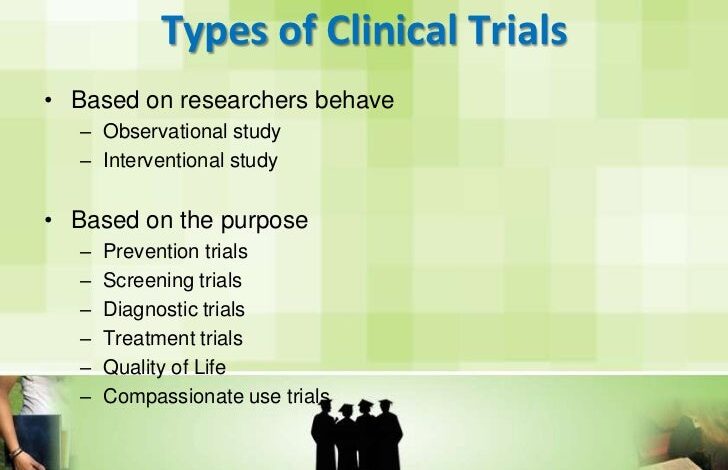
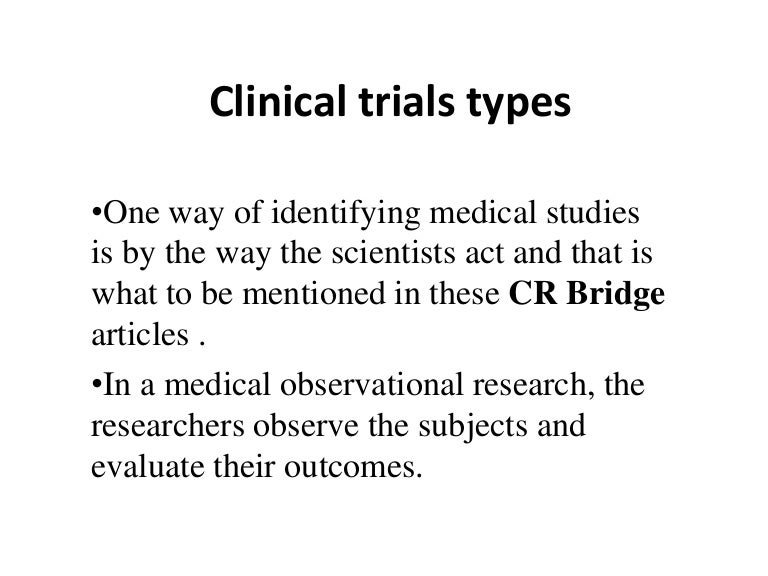
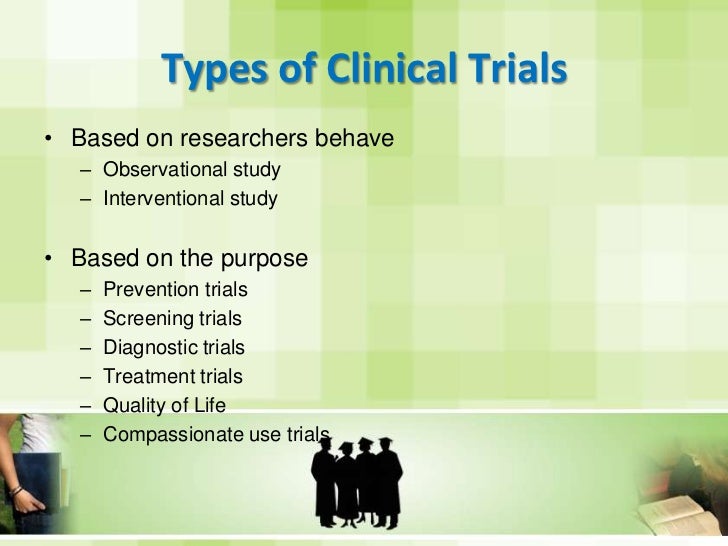
Clinical trials are broadly categorized based on their primary objective. These categories encompass interventional trials, where researchers actively manipulate variables, and observational trials, where researchers passively observe and analyze existing data. Understanding these distinctions is essential for evaluating the validity and reliability of trial results.
Interventional Trials
Interventional trials involve manipulating one or more variables to observe their effects on a specific outcome. These trials are frequently used to evaluate the efficacy of new treatments or therapies. A defining characteristic of these trials is the active intervention by the researchers. The subjects are often assigned to different groups, either receiving a new treatment or a standard treatment, to assess the treatment’s effectiveness.
Observational Trials, Are there different types of clinical trials
Observational trials, conversely, do not involve direct manipulation of variables. Instead, researchers passively observe and analyze existing data or characteristics of subjects. These trials are particularly useful in exploring associations between risk factors and diseases or in evaluating the natural progression of a condition. A key advantage of observational trials is their ability to study large populations over extended periods.
Examples include cohort studies and case-control studies.
So, are there different types of clinical trials? Absolutely! They range from testing new drugs to exploring lifestyle interventions. Thinking about fitness apps, some apps like the crossfit top iphone android apps might incorporate elements that could eventually become the subject of a clinical trial, exploring the effects of CrossFit training on specific health metrics. Ultimately, the different types of trials all aim to improve human health in various ways.
Randomized Controlled Trials (RCTs) vs. Other Trial Designs
Randomized controlled trials (RCTs) are a specific type of interventional trial where participants are randomly assigned to different treatment groups. This randomization helps minimize bias and ensures a more accurate assessment of treatment effectiveness. Other trial designs, such as quasi-experimental or observational trials, may not utilize randomization. The choice of design depends on the specific research question and the resources available.
RCTs are considered the gold standard in clinical trials for their ability to establish causality.
Examples of Different Types of Trials
- Phase 1 Trials: These trials evaluate the safety and dosage of a new treatment in a small group of healthy volunteers. The primary objective is to identify potential side effects and determine a safe dosage range for future trials.
- Phase 2 Trials: These trials evaluate the effectiveness and safety of a new treatment in a larger group of patients with the condition of interest. The focus is on preliminary evidence of efficacy and further refining the dosage.
- Phase 3 Trials: These trials compare the new treatment to a standard treatment or placebo in a large group of patients. They are crucial for confirming the effectiveness and safety of the treatment in a broader patient population.
- Phase 4 Trials: These trials monitor the long-term safety and effectiveness of a treatment after it has been approved for general use. This helps identify any rare side effects or unexpected interactions.
- Prevention Trials: These trials evaluate strategies to prevent diseases or conditions. They may involve testing vaccines, lifestyle interventions, or other preventive measures.
- Treatment Trials: These trials evaluate new treatments for existing conditions. These trials often compare new treatments to standard treatments or placebos.
- Diagnostic Trials: These trials evaluate new diagnostic tests or tools to identify diseases or conditions. They may involve comparing new diagnostic methods to existing methods.
- Comparative Effectiveness Trials: These trials compare different treatments or approaches to determine which is most effective for specific patient populations or conditions.
Summary Table of Clinical Trial Types
| Trial Type | Purpose | Characteristics | Examples |
|---|---|---|---|
| Phase 1 | Safety and dosage | Small, healthy volunteers | Testing a new drug |
| Phase 2 | Effectiveness and safety | Larger patient group | Testing drug dosage and efficacy |
| Phase 3 | Comparison to standard treatment | Large patient group, randomized | Comparing a new drug to existing therapy |
| Phase 4 | Long-term safety and effectiveness | Post-approval monitoring | Monitoring side effects after FDA approval |
| Prevention | Prevent disease | Evaluate preventive measures | Vaccine trials |
| Treatment | Evaluate new treatments | Compare new treatments to standard care | New cancer therapies |
| Diagnostic | Evaluate new diagnostic tools | Compare new tests to existing methods | New imaging techniques |
| Comparative Effectiveness | Compare treatment approaches | Assess effectiveness across different populations | Different surgical approaches |
Design and Methodology
Clinical trial design is a critical component of ensuring reliable and valid results. A well-designed trial minimizes bias, maximizes the chances of detecting a true effect, and ultimately contributes to evidence-based medical advancements. This section delves into the essential steps, crucial elements, and potential pitfalls of clinical trial design.The careful planning and execution of a clinical trial are paramount to its success.
It’s not just about administering treatments; it’s about meticulously controlling variables, measuring outcomes accurately, and ensuring the integrity of the entire process.
Essential Steps in Clinical Trial Design
Careful planning and execution are vital for a successful clinical trial. This involves several key steps, ensuring the trial addresses the research question effectively and minimizes biases. The steps include defining the research question, identifying the study population, developing the protocol, outlining data collection methods, and determining appropriate statistical analysis.
- Defining the Research Question: The initial step involves clearly articulating the specific research question the trial aims to answer. This should be focused, measurable, and directly related to the potential treatment or intervention being studied.
- Identifying the Study Population: A well-defined target population is crucial for accurate representation and generalization of findings. This step involves specifying the characteristics of the individuals who will participate in the trial, such as age, gender, disease stage, and other relevant factors.
- Developing the Protocol: The protocol serves as a detailed blueprint for the trial, outlining the procedures, timelines, data collection methods, and safety measures. This document ensures consistency and reproducibility throughout the study.
- Outlining Data Collection Methods: The data collection methods must be clearly described, including how data will be collected, stored, and analyzed. This ensures the accuracy and reliability of the collected information.
- Determining Appropriate Statistical Analysis: The chosen statistical methods must be appropriate for the type of data collected and the research question being addressed. This ensures valid conclusions can be drawn from the trial’s results.
Randomization and Blinding
Randomization and blinding are essential techniques used in clinical trials to reduce bias and ensure the integrity of the results.
- Randomization: Randomly assigning participants to different treatment groups (e.g., treatment group and control group) helps to minimize the influence of confounding factors. This prevents selection bias and ensures that the groups are comparable at the start of the trial. An example would be randomly assigning patients to receive a new drug or a placebo.
- Blinding: Blinding, also known as masking, is a technique where either the participants, the researchers, or both are unaware of the treatment assignment. This prevents bias from influencing the results. For instance, if researchers know which participants are receiving the new drug, their interactions with those participants might inadvertently influence the outcome. Single-blind trials involve masking participants, double-blind trials mask both participants and researchers.
Control Groups
Control groups are essential components of clinical trials, providing a baseline against which the effects of the treatment can be compared.
- Importance of Control Groups: Control groups help researchers to determine whether the observed changes in the treatment group are truly due to the treatment itself or to other factors. For example, a control group receiving a placebo allows researchers to compare the treatment’s effects with the natural course of the disease or the effects of a standard treatment.
Step-by-Step Guide for Designing a Simple Clinical Trial
A simplified approach to designing a clinical trial includes these steps:
- Formulate a specific research question.
- Identify a suitable sample size for your research.
- Determine appropriate randomization methods to avoid bias.
- Select a control group (placebo or existing standard treatment).
- Establish clear outcome measures.
- Implement blinding where applicable.
- Develop a data collection plan.
- Artikel the statistical analysis methods.
- Ensure ethical considerations are addressed.
Outcome Measures
Appropriate outcome measures are critical to accurately assess the effects of a treatment or intervention.
- Selection of Outcome Measures: Outcome measures should be carefully chosen to align with the research question and be measurable, relevant, and reliable. For example, if studying a new drug for hypertension, blood pressure measurements would be an appropriate outcome measure.
Types of Bias
Bias can significantly impact the results of a clinical trial.
| Type of Bias | Description |
|---|---|
| Selection Bias | Systematic differences between groups in the characteristics of the participants. |
| Information Bias | Systematic differences in how information is collected from different groups. |
| Performance Bias | Differences in how participants are treated in different groups. |
| Detection Bias | Differences in how outcomes are assessed in different groups. |
Ethical Considerations
Clinical trials, while crucial for advancing medical knowledge and improving patient care, must adhere to rigorous ethical principles. These principles ensure the safety and well-being of participants throughout the entire trial process. Ethical oversight is paramount to maintain public trust and ensure that research is conducted responsibly.Ethical considerations are interwoven throughout every stage of a clinical trial, from initial design to data analysis and dissemination.
Clinical trials come in various forms, each designed to answer specific questions. For example, a fascinating area of research explores whether combining multiple blood pressure medications is more effective than using a single drug. This question is directly addressed in an interesting article on whether are 3 blood pressure drugs better than 1 , and ultimately, the answer depends on individual patient needs and the specific trial design.
Understanding these different types of trials is key to evaluating the validity of their results.
Careful attention to these considerations is vital to ensure that participants are treated with respect, dignity, and concern.
Ethical Principles Guiding Clinical Trials
Ethical principles, such as beneficence, non-maleficence, respect for persons, and justice, underpin all clinical trials. Beneficence requires that the trial must maximize potential benefits while minimizing potential harms. Non-maleficence dictates that the trial should not cause harm. Respect for persons demands that participants be treated as autonomous agents capable of making informed decisions about their participation. Justice ensures equitable selection of participants and distribution of the benefits and burdens of the trial.
Informed Consent and Patient Rights in Clinical Trials
Informed consent is a cornerstone of ethical clinical trials. Participants must fully understand the nature of the trial, its potential risks and benefits, and their rights as participants. This includes comprehension of the study procedures, potential side effects, and the option to withdraw at any time. Detailed and easily understood information should be provided, ensuring the participant’s ability to make a truly informed choice.
Furthermore, patients have the right to privacy and confidentiality of their data, as well as the right to be free from coercion or undue influence.
Role of Institutional Review Boards (IRBs) in Clinical Trials
Institutional Review Boards (IRBs) play a critical role in ensuring ethical conduct in clinical trials. IRBs are independent bodies composed of diverse members, including scientists, ethicists, and community representatives. Their primary responsibility is to review and approve (or disapprove) proposed clinical trials to guarantee they meet ethical standards. IRBs assess the potential risks and benefits to participants, the adequacy of informed consent procedures, and the overall scientific validity of the research.
Procedures for Obtaining Ethical Approval for Clinical Trials
Obtaining ethical approval for a clinical trial involves a meticulous process. Researchers must submit a detailed protocol outlining the study design, participant selection criteria, procedures, and data analysis plans. The IRB reviews this protocol, often requesting revisions to ensure ethical compliance. Once the IRB approves the protocol, the trial can proceed, but ongoing monitoring and reporting to the IRB are crucial.
Key Ethical Principles in Different Stages of a Clinical Trial
| Stage of Clinical Trial | Key Ethical Principles |
|---|---|
| Pre-Trial | Ensuring equitable participant selection, informed consent, minimizing potential risks, and adherence to scientific validity. |
| Recruitment | Honest and transparent communication about the trial, ensuring participants’ autonomy and free consent. |
| Trial Conduct | Monitoring participant safety, ensuring ongoing informed consent, respecting patient privacy and confidentiality, and maintaining adherence to the trial protocol. |
| Data Analysis and Reporting | Maintaining confidentiality of participant data, objective analysis of results, and transparent dissemination of findings. |
Common Ethical Dilemmas in Clinical Trials and Their Solutions
Clinical trials often face ethical dilemmas, such as balancing the potential benefits of a new treatment with the risks to participants or maintaining confidentiality while complying with legal requirements.
- Confidentiality of Patient Data: Protecting patient data is crucial. Data should be anonymized whenever possible, and access to identifiable information restricted to authorized personnel. Strong encryption and secure storage protocols are essential.
- Balancing Risks and Benefits: When developing new treatments, a careful assessment of potential risks and benefits is necessary. The benefits should significantly outweigh the risks, and the trial design should minimize harm to participants.
- Unequal Access to Treatments: In some cases, clinical trials may raise ethical concerns regarding unequal access to treatments for different groups. Fair distribution of the treatment and its potential benefits should be carefully considered and monitored.
Data Collection and Analysis
Clinical trials hinge on meticulous data collection and rigorous analysis to ensure accurate results and reliable conclusions. This crucial stage involves careful planning, standardized procedures, and a commitment to data integrity. The quality of the data collected directly impacts the validity and reliability of the trial’s findings.
So, are there different types of clinical trials? Absolutely! They vary widely in their design and purpose, from evaluating new drugs to exploring ways to improve existing treatments. Interestingly, this relates to the recent trend of many job applicants and employees failing drug tests, perhaps highlighting the importance of rigorous testing and the need for a deeper understanding of substance use.
This further emphasizes the diverse approaches to research, whether in the medical field or in the context of employment screening, as outlined in more detail in this article: many job applicants employees failing drug tests. Ultimately, different clinical trials provide crucial insights into various health concerns.
Methods for Collecting Data
Data collection in clinical trials employs various methods tailored to the specific trial design and the type of data being gathered. These methods include patient questionnaires, physical examinations, laboratory tests, and imaging studies. Standardization is paramount to ensure consistency and comparability across different participants and trial sites. Clear protocols are established to guide data collection, minimizing errors and maximizing the reliability of the results.
Procedures for Analyzing Data
Data analysis in clinical trials involves several crucial steps. First, data are checked for completeness and accuracy. Inconsistencies or missing data are identified and addressed. Then, the data are cleaned and prepared for statistical analysis. This often involves transforming data into suitable formats for statistical tests.
Descriptive statistics are calculated to summarize the key characteristics of the data. This allows for an initial understanding of the patterns and trends within the dataset. Inferential statistics are then applied to draw conclusions about the study population.
Use of Statistical Methods
Statistical methods are essential tools in clinical trials. They allow researchers to determine if observed differences between groups are likely due to chance or to the intervention being studied. Statistical significance tests, such as t-tests, chi-square tests, and analysis of variance (ANOVA), are commonly used to assess the relationship between variables. These tests evaluate the probability of obtaining the observed results if there were no true effect of the intervention.
Different Statistical Tests in Clinical Trial Analysis
| Test | Purpose | When to Use |
|---|---|---|
| t-test | Compares the means of two groups. | Comparing the effect of a treatment on a continuous outcome variable between two groups. |
| Chi-square test | Analyzes the association between categorical variables. | Assessing the relationship between treatment assignment and a categorical outcome (e.g., disease remission/no remission). |
| ANOVA | Compares the means of three or more groups. | Evaluating the effectiveness of different treatment options on a continuous outcome variable. |
| Regression analysis | Examines the relationship between a dependent variable and one or more independent variables. | Investigating the influence of various factors on an outcome. |
Interpreting Results from Clinical Trials
Interpretation of clinical trial results necessitates a careful evaluation of the statistical findings in the context of the study’s design, the characteristics of the participants, and the potential limitations of the trial. Results are not simply reported as statistically significant or not significant. The magnitude of the effect observed, the confidence intervals, and the clinical relevance of the findings should be considered.
The results are presented in a way that is transparent and easily understandable for both researchers and the public. For example, if a new drug reduces blood pressure by 5 mmHg, and the confidence interval is 2-8 mmHg, the interpretation might emphasize that the reduction is likely substantial but with some uncertainty about the precise effect size.
Importance of Data Integrity and Accuracy
Data integrity and accuracy are paramount in clinical trials. Any deviation from the established protocols can compromise the validity of the results. Data should be collected consistently, accurately recorded, and stored securely. Procedures to ensure data quality, such as data validation checks and audits, are implemented throughout the trial. This rigorous approach safeguards the integrity of the research and ensures the reliability of the conclusions drawn from the trial.
Maintaining accurate records helps avoid errors and maintain the trust in the trial’s outcomes.
Regulatory Aspects: Are There Different Types Of Clinical Trials
Clinical trials are crucial for advancing medical knowledge and treatments, but they must adhere to stringent regulations to ensure patient safety and ethical conduct. These regulations are overseen by various governmental bodies and international organizations, designed to maintain high standards throughout the entire trial process. Understanding these regulatory aspects is essential for researchers and sponsors to navigate the complex landscape of clinical research.The regulatory landscape for clinical trials is multifaceted, encompassing the approval process, reporting requirements, and ongoing oversight.
Different countries have their own specific guidelines, reflecting national priorities and legal frameworks. This necessitates a thorough understanding of the regulations governing clinical trials in each specific geographic location where research is planned to be conducted.
Role of Regulatory Bodies
Regulatory bodies play a critical role in safeguarding public health by ensuring clinical trials are conducted ethically and effectively. These bodies oversee the entire trial process, from initial design and protocol review to monitoring data collection and disseminating results. Their involvement is paramount to maintain quality control and protect the rights and safety of participants. For example, the FDA in the US and the EMA in Europe are key regulatory authorities.
Regulatory Requirements in Different Countries
Clinical trial regulations vary significantly across countries. These differences stem from diverse legal frameworks, cultural contexts, and historical developments. The specific requirements often include the type of review required, the necessary paperwork, and the need for ethical approval from local review boards. Understanding these nuanced requirements is vital for successful trial execution.
- The United States (US) Food and Drug Administration (FDA) mandates stringent requirements for clinical trials, emphasizing safety and efficacy. These include detailed documentation, pre-approval procedures, and continuous monitoring.
- The European Medicines Agency (EMA) regulates clinical trials within the European Union (EU). Their process often involves collaborative efforts between national authorities, with specific considerations for patient privacy and data security.
- Other countries, like Japan and China, also have their own distinct regulatory frameworks, taking into account their unique medical needs and priorities. These frameworks often mirror the global standard but include specific national requirements.
Process of Obtaining Regulatory Approvals
Obtaining regulatory approvals for clinical trials is a multi-step process, involving several key stakeholders and procedures. The process often includes submitting detailed trial protocols, obtaining ethical review board approvals, and demonstrating adherence to safety guidelines. This often involves rigorous documentation and detailed analysis.
- Protocol Development and Submission: Researchers meticulously design and document the clinical trial protocol, including the study’s objectives, methodology, and anticipated outcomes. This detailed plan is then submitted to the relevant regulatory authorities for review.
- Ethical Review Board (IRB) Approval: The trial protocol must be reviewed and approved by an independent ethical review board, ensuring the study aligns with ethical principles and safeguards patient rights.
- Regulatory Agency Review and Approval: The regulatory agency, such as the FDA or EMA, carefully examines the trial protocol to assess its scientific validity, methodology, and adherence to regulations. The agency may request further clarifications or revisions before granting approval.
- Trial Initiation: Once all approvals are secured, the clinical trial can commence. This stage often involves careful adherence to the protocol and continuous monitoring of patient safety.
Requirements for Reporting Clinical Trial Results
Reporting clinical trial results is a critical component of the process, ensuring transparency and facilitating the dissemination of knowledge. Results must be documented accurately and submitted to the relevant regulatory authorities. This process often includes a detailed analysis of the findings and potential implications. The findings are crucial for the future of medicine.
- Accuracy and Transparency: Trial results must be presented with complete accuracy and transparency, ensuring a comprehensive overview of the trial’s findings, including both positive and negative outcomes.
- Timely Reporting: Regulatory authorities often have specific timelines for reporting trial results, which must be adhered to strictly.
- Data Integrity: Maintaining data integrity is paramount in reporting clinical trial results, ensuring the data is accurate, reliable, and verifiable.
Flowchart: Obtaining Regulatory Approvals
(A visual flowchart depicting the steps from protocol development to trial initiation, including regulatory agency review and IRB approval, would be highly beneficial here, but cannot be created in text format.)
Comparison of Regulatory Guidelines
(A table comparing regulatory guidelines across different countries, including the US, EU, and others, highlighting key differences in requirements, timelines, and procedures, would be beneficial here, but cannot be created in text format.)
Wrap-Up
In conclusion, the answer to the question “are there different types of clinical trials” is a resounding yes. We’ve explored the spectrum of trial designs, from the initial phases of testing to long-term observational studies. Understanding these variations is crucial for appreciating the complexity and rigor of medical research. From the ethical considerations to the regulatory framework, each element plays a vital role in ensuring the safety and efficacy of new treatments and interventions.
Ultimately, these trials represent a critical pathway towards advancements in healthcare.