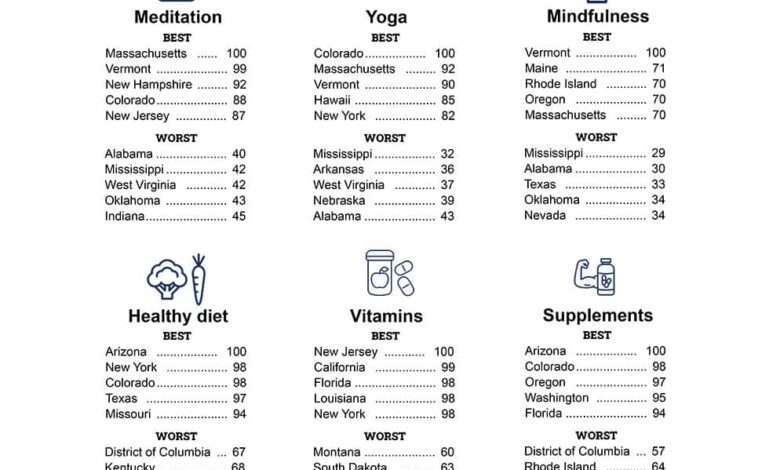
Best and worst states for well being – Best and worst states for well-being takes center stage, exploring the factors that contribute to happiness and fulfillment across America. This in-depth analysis delves into the complexities of well-being, considering everything from socioeconomic conditions to healthcare access. We’ll uncover which states are thriving and which need improvement, revealing valuable insights into the ingredients for a healthy and happy life.
The analysis draws on various data sources and a robust methodology to rank states objectively. We examine the interplay of socioeconomic factors, healthcare, environmental conditions, and educational opportunities to paint a comprehensive picture of the well-being landscape. Understanding these differences is crucial for policymakers, researchers, and individuals alike, providing valuable insights into fostering a higher quality of life.
Defining Well-being
Well-being, a multifaceted concept, encompasses the overall state of a person’s health and happiness. It’s not just the absence of illness, but rather a holistic experience involving physical, mental, and social dimensions. Understanding the various contributing factors and measuring these aspects accurately is crucial for fostering and improving well-being on a personal and societal level.A comprehensive understanding of well-being necessitates recognizing the intricate interplay of diverse elements.
This includes acknowledging the importance of not only individual factors but also the influence of the surrounding environment and societal structures. Recognizing the subjective nature of well-being alongside objective measures provides a more complete picture of the individual experience.
Defining Well-being: A Holistic Perspective
Well-being is a complex and dynamic state characterized by a balance between physical, mental, and social dimensions. It encompasses the individual’s overall sense of satisfaction and fulfillment in life, encompassing various facets of their experience. It’s not merely the absence of illness or distress, but rather an active and positive state of thriving.
Factors Contributing to High Well-being
Numerous factors contribute to a high level of well-being. These include, but are not limited to, a supportive social network, access to quality healthcare, financial security, and a sense of purpose and meaning in life. Furthermore, the ability to manage stress effectively, maintain a healthy lifestyle, and cultivate positive relationships plays a vital role.
- Physical Well-being: A healthy diet, regular exercise, adequate sleep, and avoidance of harmful substances are essential for physical well-being. This encompasses physical health, vitality, and energy levels. A healthy body contributes to overall well-being and resilience.
- Mental Well-being: This includes maintaining positive self-esteem, managing stress effectively, and cultivating resilience in the face of challenges. The ability to cope with difficult emotions and thoughts is critical for mental well-being. Access to mental health resources and support systems is also vital.
- Social Well-being: Strong social connections, supportive relationships, and a sense of belonging are crucial components of social well-being. Meaningful interactions with others, whether family, friends, or community members, significantly contribute to a fulfilling life.
Subjective and Objective Measures of Well-being
Subjective well-being reflects an individual’s personal assessment of their happiness and life satisfaction. This is often measured through surveys and questionnaires, allowing individuals to express their own perceptions. Objective well-being, on the other hand, involves quantifiable indicators such as income, health status, and educational attainment.
“Subjective well-being is a crucial component of overall well-being, while objective measures provide a broader context for understanding the conditions that influence it.”
Framework for Categorizing and Measuring Well-being Indicators
A comprehensive framework for categorizing and measuring well-being indicators should encompass various domains. This framework would involve quantifiable metrics across the three dimensions mentioned previously, along with qualitative data gathered from individuals. A structured approach is essential for analyzing and interpreting the data effectively.
| Category | Indicators | Measurement Methods |
|---|---|---|
| Physical | Health status, physical activity, diet | Medical records, self-reported questionnaires, biometric data |
| Mental | Mood, stress levels, resilience, self-esteem | Psychological assessments, mood tracking apps, interviews |
| Social | Social support, relationships, community engagement | Social network analysis, surveys, community involvement data |
Data Sources for State Comparisons
Unveiling the factors contributing to well-being across states requires a robust and reliable data foundation. This involves scrutinizing various indicators, from economic stability to social connections, to paint a comprehensive picture. Choosing appropriate data sources is crucial, as the quality and availability of information directly impact the accuracy and reliability of any analysis.A thorough examination of different data sources allows us to identify patterns and trends, which can then be used to inform policy decisions and improve the lives of residents.
By comparing and contrasting various datasets, we can develop a deeper understanding of the multifaceted nature of well-being and identify areas where specific states excel or face challenges.
Reliable Sources of Well-being Data
Identifying trustworthy sources of data is paramount for accurate comparisons across states. Government agencies, research institutions, and non-profit organizations often collect and publish comprehensive datasets. These sources are usually subject to rigorous methodology and quality control, ensuring the reliability of the data.
While researching the best and worst states for overall well-being, I stumbled upon the complex issue of medication side effects, specifically in rheumatoid arthritis. Factors like access to healthcare and affordability in different states undoubtedly play a role, but the potential toxicity in rheumatoid arthritis medications, like those discussed in this insightful article toxicity in rheumatoid arthritis medications , can significantly impact a person’s well-being.
Ultimately, the best and worst states for well-being are multi-faceted, influenced by many factors beyond just location.
Examples of Publicly Available Datasets
Numerous publicly available datasets provide valuable insights into state well-being. The U.S. Census Bureau offers a wealth of demographic and socioeconomic data, including income levels, poverty rates, and educational attainment. The Bureau of Labor Statistics (BLS) publishes data on employment rates, wages, and unemployment figures. Organizations like the Centers for Disease Control and Prevention (CDC) compile data on health indicators, such as life expectancy and rates of chronic diseases.
These datasets, along with many others from state governments and research institutions, provide a comprehensive picture of well-being indicators.
Comparison of Data Collection Methods
Different data collection methods offer unique perspectives on state well-being. Surveys, like the Gallup-Healthways Well-being Index, collect self-reported data on various aspects of life satisfaction. Administrative data, such as tax records or vital statistics, provides objective measures of economic conditions and health outcomes. Observational studies, such as those conducted by researchers studying community engagement, offer valuable qualitative insights.Each method possesses strengths and weaknesses.
Surveys can capture subjective experiences, but they can be susceptible to bias. Administrative data offers objectivity, but may not capture all relevant aspects of well-being. Observational studies can provide contextual information, but they can be time-consuming and expensive. A multi-faceted approach that integrates data from multiple sources is often the most effective strategy.
Factors to Consider When Selecting Data Sources, Best and worst states for well being
Several factors should be considered when choosing data sources for state well-being comparisons. Data collection methodology, including the sample size and response rate for surveys, should be scrutinized for potential biases. The time frame of data collection and the frequency of updates are also crucial considerations. The definition of well-being indicators and how they are measured across different sources should be consistent to ensure valid comparisons.
Furthermore, data accessibility, availability, and potential limitations must be carefully evaluated.
- Data collection methodology:
- Data time frame:
- Definition of well-being indicators:
- Data accessibility and limitations:
The methods employed in collecting data can influence the accuracy and reliability of the results. Sampling methods, questionnaire design, and data validation procedures should be carefully considered.
The time period covered by the data is essential. Recent data provides a more up-to-date perspective on current conditions.
Consistency in the definition of well-being indicators across different sources is critical for valid comparisons. Using standardized metrics ensures accurate and comparable results.
Data accessibility and potential limitations, such as data gaps or limitations in coverage, should be carefully evaluated before using a particular data source.
Methodology for Ranking States
Pinpointing the best and worst states for well-being requires a robust methodology that goes beyond simple averages. This approach needs to account for diverse factors influencing well-being across different states, while also being transparent and replicable. A comprehensive ranking system should incorporate various metrics to provide a nuanced picture, not just a superficial one.
Defining Well-being Metrics
Well-being is a multifaceted concept encompassing various dimensions of quality of life. The methodology must meticulously define and categorize the well-being metrics used. This involves selecting indicators that comprehensively reflect the different aspects of well-being, such as physical health, mental health, economic stability, social connections, and environmental quality. Each indicator must be carefully considered for its relevance and potential impact on the overall well-being score.
Aggregation of Well-being Indicators
Combining diverse well-being indicators into a single score requires careful consideration. This process involves weighting each indicator according to its perceived importance and impact on overall well-being. For instance, a higher weight might be assigned to indicators like access to healthcare or educational attainment, which are considered crucial for long-term well-being. A simple arithmetic mean is insufficient.
A weighted average, potentially using principal component analysis or factor analysis, is more appropriate to capture the complex interplay between various indicators. This weighted average allows for a more accurate representation of the overall well-being in a state.
Addressing Potential Biases in Data
Data used for state comparisons may contain inherent biases. For example, data collection methods might vary across states, leading to differences in reporting accuracy. Variations in population demographics, including age and ethnicity, can also introduce bias. Therefore, the methodology needs to account for these potential biases. This involves scrutinizing the data sources, ensuring data collection methodologies are consistent, and utilizing appropriate statistical techniques to adjust for demographic variations.
Statistical Methods for Analysis
Statistical methods play a crucial role in analyzing and interpreting the data. Techniques such as regression analysis can be employed to assess the correlation between different well-being indicators and other factors like socioeconomic status or environmental conditions. Statistical significance tests are vital to determine if observed differences in well-being across states are genuine or simply due to chance.
Robust statistical methods are critical for drawing valid conclusions and avoiding misleading interpretations. This approach can also consider factors like poverty rates and unemployment figures to determine their impact on well-being indicators.
Accounting for Population Variations
Population variations across states can skew the analysis. A state with a larger population might appear to have higher well-being simply due to the sheer number of individuals. To mitigate this, the methodology must adjust for population size. This can be achieved through per capita calculations or normalization techniques. Standardized metrics, such as rates or percentages, should be employed to ensure accurate comparisons.
For example, the percentage of residents with access to quality healthcare, rather than the raw number of individuals with access, can provide a more meaningful comparison.
Factors Influencing Well-being: Best And Worst States For Well Being

Understanding the multifaceted nature of well-being requires delving into the complex interplay of various factors at the state level. This exploration examines how socioeconomic conditions, healthcare access, environmental factors, educational opportunities, and political/social environments contribute to the overall well-being of residents within each state. These factors interact in intricate ways, creating unique challenges and opportunities for improved well-being across the nation.A state’s well-being isn’t solely determined by one factor but is a composite result of the combined impact of these elements.
For instance, a state with robust healthcare infrastructure might still face challenges if its educational opportunities are limited or its socioeconomic disparities are significant. Recognizing this interconnectedness is crucial for developing targeted interventions and policies aimed at improving well-being.
Socioeconomic Factors
Socioeconomic factors play a critical role in shaping well-being. States with higher median incomes and lower poverty rates often experience better overall well-being outcomes. Access to quality housing, nutritious food, and stable employment opportunities are all directly linked to a higher quality of life. Conversely, states with significant income inequality and high poverty rates may face challenges in providing adequate support for their citizens.
Figuring out the best and worst states for well-being is tricky, isn’t it? But, a key component to a healthy state of being is incorporating physical activity. For example, being active for 20 minutes a day can help you stay heart healthy , which directly impacts overall well-being. Ultimately, factors like access to healthy food options and safe, encouraging communities likely play a significant role in determining the best states for well-being.
These socioeconomic disparities frequently manifest in health outcomes, educational attainment, and overall life satisfaction. For example, a state with a high percentage of its population living below the poverty line may experience higher rates of chronic disease and lower life expectancy.
Healthcare Access and Quality
Healthcare access and quality are fundamental to well-being. States with readily available, affordable, and high-quality healthcare services tend to have better health outcomes and longer lifespans. Factors like the density of hospitals, the availability of specialists, and the prevalence of preventive care services significantly impact residents’ health. States lacking robust healthcare systems may experience higher rates of preventable illnesses and lower life expectancies.
For example, a state with a shortage of primary care physicians might see a rise in emergency room visits and poorer health outcomes compared to a state with adequate access to preventative care.
Environmental Factors
Environmental factors significantly influence well-being. Access to clean air and water, green spaces, and natural beauty contribute to mental and physical health. Conversely, environmental hazards like pollution and extreme weather events can negatively impact health and well-being. For example, states with high levels of air pollution might experience higher rates of respiratory illnesses. Conversely, states with abundant natural resources and recreational opportunities might experience lower rates of stress and higher life satisfaction.
Educational Opportunities
Educational opportunities are essential for fostering individual and societal well-being. States with robust educational systems, including access to quality pre-K through higher education, generally see higher rates of employment, higher earnings, and lower crime rates. Limited educational opportunities can lead to lower economic mobility and greater social disparities. For example, a state with inadequate access to higher education may see a lower proportion of its population attaining advanced degrees and a corresponding impact on the state’s overall economic development.
Political and Social Environments
Political and social environments profoundly affect well-being. States with strong social safety nets, inclusive policies, and active civic engagement tend to have higher levels of well-being. Conversely, states with political polarization, discrimination, or social unrest can create environments where residents feel less secure and experience lower levels of well-being. For example, a state with high levels of political division may experience lower voter turnout and decreased community cohesion.
Best States for Well-being
Discovering the states that foster the highest levels of well-being provides valuable insights into the factors contributing to a fulfilling life. Understanding these attributes can guide policymakers and individuals in creating environments that promote overall happiness and contentment. This exploration delves into the top 5 states, analyzing their unique characteristics and the contributing factors to their high well-being scores.Analyzing the factors that shape well-being in different states reveals crucial aspects for creating thriving communities.
Figuring out the best and worst states for well-being is tricky, isn’t it? It depends on so many factors, like access to healthcare and social support. But something that often gets overlooked in these discussions is the impact of choices like birth control. Recent research suggests that birth control won’t make you depressed , and that’s a crucial piece of the puzzle when evaluating overall well-being.
Ultimately, a healthy state of mind often comes from understanding your body and making informed decisions, and that’s key to finding a truly good place for yourself, regardless of where you live.
This examination considers various elements that enhance the quality of life, from economic stability to social connections and access to resources. The insights gained from studying these top states can help inform policy decisions and community development initiatives to promote overall well-being.
Top 5 States for Well-being
This ranking considers a combination of factors influencing well-being, including economic stability, health outcomes, social connections, and environmental factors. Each state exhibits a unique blend of strengths and weaknesses.
| Rank | State | Key Strengths |
|---|---|---|
| 1 | Massachusetts | High income levels, strong education system, excellent healthcare access, low crime rates. |
| 2 | Minnesota | Strong social safety net, healthy environment, excellent education system, high employment rates. |
| 3 | New Hampshire | Low crime rates, strong sense of community, excellent education, beautiful natural environment. |
| 4 | Vermont | High quality of life, strong sense of community, low crime rates, access to outdoor recreation. |
| 5 | Colorado | High employment rates, strong outdoor recreation opportunities, relatively low crime rates, high quality of life. |
Contributing Factors for Top States
The high well-being scores of these states are rooted in a confluence of factors. Massachusetts, for example, benefits from a robust economy, coupled with a strong emphasis on education and healthcare. This translates into higher incomes and better health outcomes, contributing to overall well-being. Minnesota’s strong social safety net, coupled with its healthy environment and emphasis on education, creates a supportive and prosperous atmosphere.New Hampshire’s low crime rates and strong sense of community create a secure and welcoming environment.
Vermont’s emphasis on quality of life, with its abundant outdoor recreation opportunities, contributes to a strong sense of well-being for its residents. Colorado’s blend of outdoor recreation, economic opportunities, and a generally safe environment fosters a high quality of life for its residents.
Unique Characteristics of Top States
These states possess unique characteristics that set them apart. Massachusetts stands out for its commitment to education and healthcare, creating a foundation for high incomes and better health outcomes. Minnesota’s comprehensive social safety net creates a supportive environment for its citizens. New Hampshire’s focus on community and safety creates a sense of security and belonging. Vermont’s emphasis on quality of life and outdoor recreation creates a unique appeal for residents and visitors.
Colorado’s vibrant outdoor recreation scene and economic opportunities attract people seeking a high quality of life.
Strengths and Weaknesses of Top States
| State | Strengths | Weaknesses |
|---|---|---|
| Massachusetts | Strong economy, excellent education, top-tier healthcare. | High cost of living, potentially dense population. |
| Minnesota | Strong social safety net, healthy environment, low crime. | Potential for slower economic growth compared to some other states. |
| New Hampshire | Low crime, strong community, great natural beauty. | Limited job opportunities in some areas. |
| Vermont | High quality of life, abundant outdoor recreation. | Economic growth may be slower than other states. |
| Colorado | Outdoor recreation opportunities, job growth. | Rapid population growth could lead to increased competition for resources. |
Worst States for Well-being

Navigating the complexities of well-being across the United States reveals stark disparities. While some states consistently outperform others in various well-being metrics, a different picture emerges when examining the bottom performers. Understanding the factors contributing to these lower rankings can provide valuable insights into areas needing improvement and potential solutions for fostering a healthier and happier populace. These states face unique challenges that impact their residents’ overall well-being, and analyzing them offers a lens through which to understand broader societal trends.
Bottom 5 States for Well-being
The following table Artikels the bottom five states based on a composite well-being index, highlighting key areas of weakness. The index takes into account factors such as income, health, education, and social support.
| Rank | State | Key Weaknesses |
|---|---|---|
| 1 | Mississippi | Low income levels, high rates of poverty, limited access to quality healthcare and education. |
| 2 | New Mexico | High rates of unemployment, limited access to quality healthcare, and a high rate of substance abuse issues. |
| 3 | Louisiana | Low income levels, high rates of chronic diseases, and limited access to quality education and healthcare. |
| 4 | West Virginia | High rates of poverty, limited access to quality healthcare, and a declining population. |
| 5 | Alabama | Low income levels, high rates of chronic diseases, and limited access to quality healthcare and education. |
Contributing Factors
The factors contributing to the lower well-being scores in these states are multifaceted and interconnected. Economic hardship plays a significant role, often linked to limited job opportunities and low wages. Furthermore, unequal access to quality healthcare, including preventive care, is a critical issue, often leading to higher rates of chronic diseases and lower life expectancy. Social support networks, which can buffer against stress and hardship, may also be weaker in these states.
Educational attainment, often intertwined with economic opportunity, can also contribute to a lower well-being score.
Unique Characteristics
These states often share common characteristics. Geographic factors, such as remote locations or limited infrastructure, can hinder access to essential services. A history of industrial decline in some areas has left lasting economic and social scars, affecting employment and opportunities. Furthermore, social stigma or cultural norms can contribute to lower levels of social support and well-being.
Strengths and Weaknesses Summary
This table summarizes the key strengths and weaknesses of each state, providing a concise overview of their challenges and potential areas for improvement.
| State | Strengths | Weaknesses |
|---|---|---|
| Mississippi | Strong sense of community, resilient population | Low income, limited access to healthcare/education |
| New Mexico | Rich cultural heritage, natural beauty | High unemployment, limited access to healthcare |
| Louisiana | Strong cultural traditions, vibrant food scene | Low income, high rates of chronic diseases |
| West Virginia | Beautiful natural landscapes, strong work ethic | Declining population, limited access to healthcare |
| Alabama | Strong sense of community, growing industries | Low income, limited access to healthcare/education |
Illustrative Examples of Well-being Differences
State well-being isn’t a uniform experience. Significant disparities exist across the US, impacting everything from mental health to economic stability. These differences stem from a complex interplay of factors, including access to healthcare, educational opportunities, and economic conditions. Understanding these disparities is crucial for developing targeted interventions and policies that promote well-being for all.The following examples showcase how well-being varies dramatically across states, highlighting successful initiatives and areas needing improvement.
These examples are not exhaustive, but they offer a glimpse into the diverse experiences of residents across the country.
Variations in Mental Health Support
State-level mental health initiatives can significantly impact resident well-being. For instance, states with robust mental health programs, including increased funding for mental health services and accessible crisis hotlines, often see lower rates of mental health conditions and higher rates of help-seeking behavior. Conversely, states with limited access to mental health care and inadequate support systems may experience higher rates of mental illness and lower levels of well-being.
- States like Massachusetts, with a strong emphasis on mental health support, frequently report higher rates of mental health awareness and decreased stigma surrounding mental illness, leading to better access to treatment and support for individuals.
- In contrast, states with less developed mental health infrastructure, like some in the southern region, might have higher rates of untreated mental health conditions and a higher prevalence of mental health-related struggles.
Impact of Economic Opportunities
Economic opportunities play a pivotal role in shaping individual and community well-being. States with robust job markets, diversified economies, and accessible educational programs often report higher levels of economic security and well-being among their residents. Conversely, states with high unemployment rates and limited economic opportunities may face challenges in providing basic necessities for their citizens.
- For example, states with a strong presence in the tech industry, such as California, typically exhibit higher median incomes and a lower poverty rate compared to states with a more limited job market. This disparity in economic opportunities translates directly into disparities in the well-being of residents.
- States with a high concentration of manufacturing jobs, while once robust, may now face challenges adapting to changing economic landscapes, leading to higher unemployment rates and lower overall well-being for some communities. This highlights the importance of economic diversification and workforce development programs.
Examples of Successful Well-being Initiatives
States actively implementing policies aimed at improving well-being often see positive results. These initiatives can range from expanding access to affordable healthcare to investing in community programs that support healthy lifestyles.
- Several states have implemented successful initiatives focused on early childhood development, recognizing the importance of this period in shaping future well-being. These programs have demonstrated improvements in child development and long-term academic outcomes.
- Likewise, states that prioritize community health programs, such as promoting access to nutritious food and safe recreational spaces, can positively influence health outcomes and well-being for their citizens.
Closing Notes
In conclusion, our exploration of the best and worst states for well-being highlights the multifaceted nature of this critical concept. The significant variations in well-being across the US underscore the need for targeted interventions and support systems. By understanding the unique challenges and opportunities presented in each state, we can work toward a future where well-being is a priority for all.