How to do a digital detox? This guide dives deep into the world of disconnecting from technology to reconnect with yourself. It explores different types of digital detox, from short bursts to extended periods, and provides practical strategies for planning, implementing, and maintaining your digital break. Discover how to create a personalized detox plan, navigate potential challenges, and ultimately, enjoy a healthier relationship with technology.
We’ll explore the benefits of disconnecting, examine the various types of digital detox, and provide actionable steps for successfully integrating this self-care practice into your life. You’ll find detailed strategies, including sample schedules, to help you create a personalized digital detox experience. Learn how to identify and overcome potential obstacles, ensuring a positive and productive experience.
Defining Digital Detox
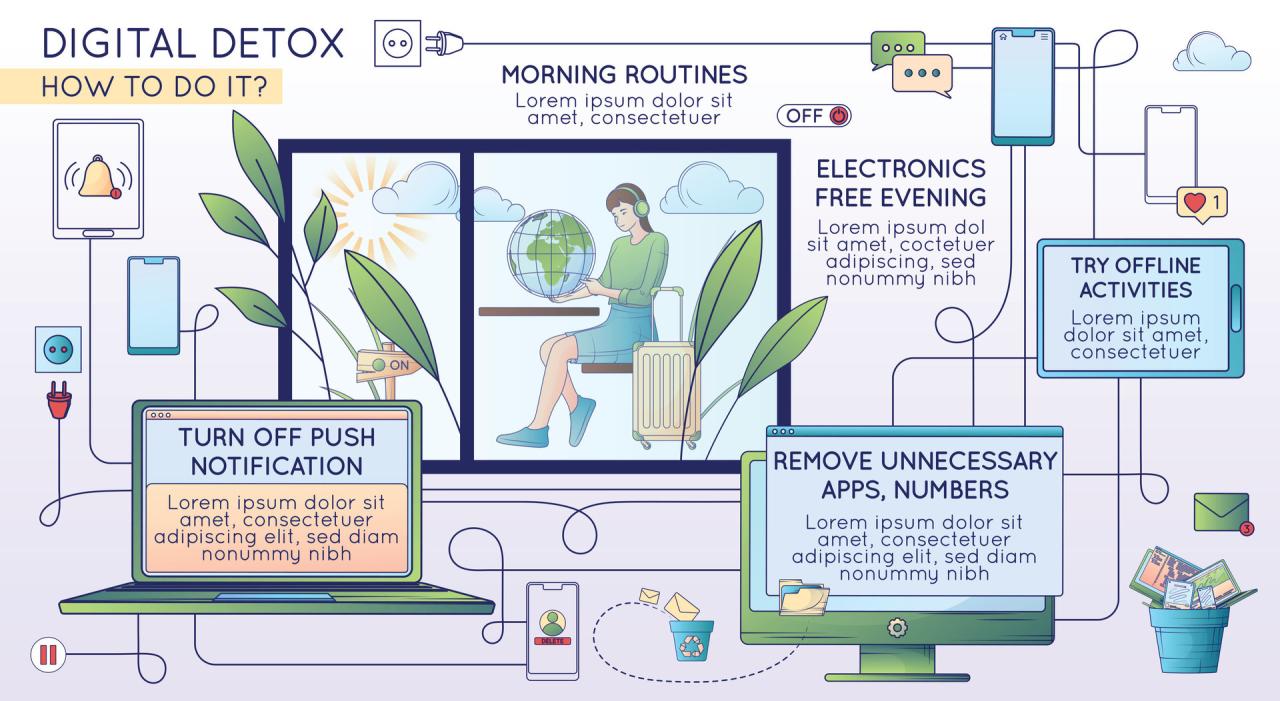
A digital detox is a deliberate period of time dedicated to reducing or eliminating screen time and other digital distractions. It’s a conscious effort to disconnect from technology to reconnect with oneself and the real world. This intentional disengagement can lead to significant improvements in mental and physical well-being.This practice offers a powerful opportunity for introspection, stress reduction, and a deeper appreciation for the non-digital aspects of life.
By consciously choosing to limit or eliminate digital stimulation, individuals can cultivate a more balanced and fulfilling lifestyle.
Types of Digital Detox
Digital detox comes in various forms, catering to different needs and preferences. Understanding these distinctions helps tailor a detox strategy that resonates with individual goals.
- Short-term digital detox: These are often brief periods, such as a weekend or a week, aimed at providing a temporary respite from technology. This type of detox can be used to address immediate stress or recharge before returning to a more intensive digital life. Short-term detoxes are highly accessible and can provide significant benefits with minimal disruption.
- Long-term digital detox: This type involves a more extended period of disconnection, potentially lasting weeks or even months. Long-term detoxes often necessitate a significant shift in lifestyle, including adjustments to work schedules and social interactions. They can be more challenging to sustain but often result in more profound changes and lasting benefits.
- Specific platform detox: This focuses on reducing or eliminating the use of particular digital platforms, such as social media, email, or gaming platforms. This type of detox can be highly effective in managing specific anxieties or reducing time spent on potentially addictive activities. For example, a social media detox can help individuals feel less pressured by the constant need to update their online presence.
Potential Benefits of a Digital Detox
A digital detox can offer a multitude of benefits across various aspects of life. It allows for a focused return to essential tasks and personal well-being.
- Improved mental well-being: Reduced stress, anxiety, and overwhelm are often reported by those who engage in digital detoxes. The absence of constant stimulation allows the mind to rest and recharge, promoting a more positive outlook.
- Enhanced focus and concentration: A digital detox allows the mind to focus on present tasks without the constant distractions of notifications and alerts. This can lead to increased productivity and efficiency in daily activities.
- Greater physical health: A detox often encourages more physical activity, such as spending time outdoors or engaging in hobbies. Reduced screen time can contribute to improved sleep quality, as well.
- Strengthened relationships: Digital detoxes can foster stronger connections with loved ones. By prioritizing face-to-face interactions and meaningful conversations, individuals can build deeper relationships.
Digital Detox vs. Other Self-Care Practices
Digital detox is a form of self-care that complements other methods, each with its unique benefits. It’s not a replacement but a powerful tool to improve overall well-being.
- Meditation and mindfulness practices: Digital detox often enhances the effectiveness of mindfulness and meditation. The quiet and stillness encouraged during a digital detox can foster greater awareness and introspection, making mindfulness practices more effective.
- Exercise and physical activity: A digital detox frequently promotes physical activity by encouraging individuals to engage in more physical activities. It can enhance the benefits of exercise routines, providing a more holistic approach to self-care.
- Journaling and creative expression: Digital detox can provide more time for journaling and creative pursuits. The reduction in digital distractions allows for deeper exploration of thoughts and emotions, fostering self-awareness and personal growth.
Types of Digital Detox and Duration
This table Artikels different types of digital detoxes and their recommended durations. It’s important to remember these are guidelines and can be adjusted based on individual needs and preferences.
| Type of Digital Detox | Duration |
|---|---|
| Short-term (Weekend) | 2-3 days |
| Short-term (Week) | 7 days |
| Long-term (Month) | 30 days |
| Specific Platform (e.g., Social Media) | 1-4 weeks |
Planning a Digital Detox
A digital detox isn’t just about turning off your phone; it’s about consciously managing your relationship with technology. Effective planning is crucial for a successful and sustainable detox experience. A well-structured plan helps you stay focused on your goals and navigate potential challenges, maximizing the benefits of unplugging.Planning a digital detox isn’t just about avoiding screens; it’s about proactively managing your digital habits and creating a healthier relationship with technology.
A well-thought-out plan empowers you to achieve your goals, stay focused, and effectively address potential roadblocks. By anticipating and addressing these potential obstacles, you can enhance your detox experience and reap its full rewards.
Importance of Planning
A meticulously crafted plan provides a roadmap for your digital detox journey. It helps you stay on track, manage cravings, and avoid impulsive digital distractions. This structured approach minimizes the likelihood of relapse and fosters a greater sense of control over your digital habits. A well-defined plan ensures a more meaningful and effective experience.
Steps in Creating a Digital Detox Plan
Creating a successful digital detox plan involves several key steps. First, identify your specific goals and motivations for the detox. Next, evaluate your current digital usage patterns to pinpoint areas for improvement. Establish clear boundaries and rules regarding your digital engagement. Prioritize activities that will replace your digital time.
Finally, determine a realistic timeframe for your detox. This process is crucial to ensuring your plan aligns with your needs and goals.
Examples of Digital Detox Schedules
Various schedules cater to different needs and preferences. A short, focused detox might last a weekend, while a longer period could encompass a week or even a month. Some individuals opt for a daily “digital curfew” to limit their usage during specific hours. Others might focus on reducing social media consumption. Experimenting with different schedules can help determine the best approach for you.
A flexible approach can also allow for adjustments as needed.
Setting Realistic Goals
Setting realistic goals is paramount to the success of a digital detox. Unrealistic expectations can lead to frustration and abandonment. Start with small, achievable steps. Gradually reducing your screen time or limiting specific apps can be more sustainable than attempting drastic cuts immediately. A phased approach allows for adaptation and gradual change.
Identifying Obstacles and Contingency Plans
Obstacles are inevitable. Anticipate potential challenges, such as social pressure to engage online or feelings of isolation. Develop contingency plans for these scenarios. Identifying these potential challenges early allows you to prepare solutions and avoid unexpected setbacks. For example, designating specific times for social media check-ins or establishing alternative communication methods can be helpful.
Sample Digital Detox Plan (One Week)
| Day | Specific Apps/Platforms to Avoid | Alternative Activities |
|---|---|---|
| Sunday | Social Media (Facebook, Instagram, Twitter), Online Gaming | Spending time in nature, Reading, Engaging in hobbies, Catching up with loved ones offline |
| Monday | Email, Instant Messaging (Whatsapp, Messenger), Streaming Services | Prioritizing tasks, Learning a new skill, Focusing on work/studies, Engaging in physical activities |
| Tuesday | Social Media (Facebook, Instagram, Twitter), Online Shopping | Spending time with family, Exploring local community activities, Engaging in creative pursuits, Catching up on personal projects |
| Wednesday | News Websites, Online Forums, Streaming Services | Engaging in volunteering, Connecting with community groups, Exploring local events, Trying new recipes |
| Thursday | Social Media (Facebook, Instagram, Twitter), Online Gaming | Working on personal projects, Catching up on sleep, Spending quality time with family, Exploring local events |
| Friday | Email, Instant Messaging (Whatsapp, Messenger), Streaming Services | Preparing for the weekend, Spending time with friends, Trying new restaurants, Engaging in hobbies |
| Saturday | Social Media (Facebook, Instagram, Twitter), Online Shopping, Email | Spending time with friends, Exploring new places, Engaging in recreational activities, Participating in community events |
Implementing the Detox
Embarking on a digital detox is more than just putting your phone down; it’s about cultivating a mindful relationship with technology. This phase involves practical strategies for gradual disconnection, targeted unplugging, and proactive engagement in alternative activities. A well-structured approach will significantly enhance the effectiveness and enjoyment of your detox experience.Effective implementation hinges on a gradual reduction in screen time, tailored to your individual needs and habits.
This prevents a sudden withdrawal and fosters a more sustainable shift towards a healthier digital lifestyle.
Strategies for Gradual Reduction in Screen Time
A sudden cessation of screen time often leads to frustration and a relapse. A gradual reduction, on the other hand, fosters a more sustainable shift towards a healthier relationship with technology. This method allows your body and mind to adjust to the changes, making the detox less challenging. Start by identifying your peak usage times and working on reducing screen time during those periods.
- Set daily screen time limits: Track your daily usage across different platforms and apps. Use built-in features or third-party apps to monitor your screen time. Gradually decrease these limits each day, aiming for a meaningful reduction over a period of several days.
- Schedule technology-free periods: Designate specific times each day when technology is completely off-limits. This could be during meals, before bed, or during specific activities like exercise or spending time with loved ones.
- Create technology-free zones: Establish certain areas in your home or during specific activities where technology is not allowed. This could be your bedroom, during family meals, or while spending time outdoors. This physical separation can significantly reduce the temptation to check your devices.
Methods for Unplugging During Specific Activities
Consciously disengaging from technology during activities that you enjoy or need to focus on enhances the experience and deepens the connection to the present moment.
Unplugging from the digital world for a bit can be seriously refreshing. One key part of a successful digital detox is being mindful of what you’re consuming, including supplements like CBD. Did you know that some CBD products are unfortunately mislabeled, sometimes containing THC, a psychoactive compound? Knowing the potential risks and checking labels carefully is crucial, like the information in this helpful article on cbd products often mislabeled some containing thc what to know.
Ultimately, a digital detox involves conscious choices, from the apps you use to the supplements you take, making sure you’re truly disconnecting and reconnecting with yourself.
- Unplug during meals: Put away your devices during meals. Engage with the people around you and savor the experience of the food. This promotes better digestion, social connection, and mindfulness.
- Disconnect during exercise: Focus on the physical activity instead of checking notifications. Enjoy the movement and the mental clarity that comes with physical exertion.
- Embrace mindful activities: Engage in activities that require focus and attention, like reading, listening to music, or spending time in nature. These activities enhance presence and reduce the urge to check your devices.
Disconnecting from Social Media and Messaging Apps
Social media and messaging apps are often the biggest culprits for digital distraction. Gradually reducing or eliminating engagement with these platforms can be a powerful step towards a healthier digital lifestyle.
Unplugging from the digital world can be surprisingly beneficial, especially if you’re looking for ways to improve your overall well-being. One area where digital detox can be surprisingly effective is in managing your health, like in cases where a crash diet can lead to diabetes remission. For example, a study on crash diet diabetes remission shows how a balanced approach, including mindful eating and reduced screen time, can significantly improve health outcomes.
Ultimately, a digital detox is about creating space for better focus, stress reduction, and a more mindful approach to your life.
- Limit social media usage: Reduce the time you spend on social media platforms, using time management tools or scheduling specific times for checking your feed.
- Schedule social media breaks: Instead of constantly checking, schedule specific times for checking your social media accounts. This allows you to manage your engagement instead of being reactive.
- Consider temporarily unfollowing or muting accounts: Unfollowing accounts that are highly distracting or stressful can drastically improve your mental well-being.
Activities to Engage In During the Detox Period
The detox period provides an opportunity to reconnect with activities that nurture your mind, body, and spirit. These activities can be a powerful antidote to the digital distractions that you might be experiencing.
- Spend time in nature: Go for a walk in the park, hike in the mountains, or simply sit and observe the natural world. The fresh air and scenery can have a calming and restorative effect.
- Engage in hobbies: Spend time pursuing hobbies and interests that you’ve neglected. This could be anything from painting or drawing to playing music or learning a new language.
- Connect with loved ones: Engage in meaningful conversations with family and friends, fostering stronger relationships and reducing feelings of isolation.
Managing Notifications and Alerts During the Detox
Managing notifications and alerts is crucial to maintaining a successful detox. The constant buzz and pings can disrupt focus and encourage impulsive checking.
- Turn off notifications: Turn off notifications for apps and social media platforms that are highly distracting.
- Use ‘Do Not Disturb’ mode: Employ ‘Do Not Disturb’ mode during specific periods to minimize distractions.
- Review and adjust notification settings: Periodically review and adjust notification settings to ensure that you’re not being bombarded by alerts.
Comparison of Screen Time Reduction Methods
| Method | Description | Pros | Cons |
|---|---|---|---|
| App Usage Limits | Setting daily or weekly limits on app usage | Easy to implement, readily available | May not be effective for all users, may require specific apps |
| Scheduled Breaks | Scheduling specific times for disconnecting | Promotes conscious disconnection, encourages focus | Requires discipline, may not suit all schedules |
Maintaining the Detox
Embarking on a digital detox is a significant step towards a healthier relationship with technology. However, the real challenge lies in maintaining this newfound freedom from constant connectivity. This phase requires conscious effort and strategies to avoid slipping back into old habits. Successful maintenance relies on understanding the triggers and developing proactive coping mechanisms.
Strategies for Maintaining the Routine
Sustaining a digital detox necessitates proactive strategies. These strategies go beyond simply abstaining from technology; they encompass understanding the underlying motivations for technology use and replacing those behaviors with healthier alternatives. This proactive approach builds a foundation for long-term digital well-being. Creating a supportive environment, both physically and mentally, can be a key factor in maintaining a digital detox.
Avoiding Digital Temptations
Recognizing and addressing digital temptations is crucial for a successful detox. These temptations can arise from various sources, including social media notifications, work emails, or even the simple allure of a game. Identifying triggers and developing alternative activities is paramount. For instance, if the lure of social media is a trigger, proactively scheduling non-digital activities can help curb the urge.
Managing Social Interactions Without Technology
Maintaining social connections without relying on technology can be surprisingly fulfilling. This often requires conscious effort to engage in face-to-face interactions, phone calls, or even handwritten notes. This approach can deepen relationships and foster a stronger sense of community. Learning to appreciate the richness of non-digital interactions is a valuable skill for a sustainable digital detox.
Staying Connected to Loved Ones Without Technology
Maintaining connections with loved ones during a digital detox doesn’t necessitate technology. Scheduled phone calls, video chats (less frequently), handwritten letters, or even planned in-person visits can strengthen bonds and foster meaningful interactions. These alternative methods can often lead to more meaningful and lasting connections.
- Scheduled phone calls: Regularly schedule phone calls with family members or friends to maintain connection.
- Video chats (limited): Use video calls sparingly, focusing on quality interactions over quantity.
- Handwritten letters: Reintroduce the art of letter writing to communicate thoughts and feelings in a tangible way.
- Planned visits: Schedule in-person visits to spend quality time with loved ones.
Incorporating Mindful Practices
Mindfulness practices can significantly support a long-term digital detox. These practices foster a deeper connection with the present moment, reducing the allure of digital distractions. Mindful activities can become a powerful tool for replacing technology-driven behaviors. This approach helps to cultivate a more balanced and intentional lifestyle.
- Meditation: Regular meditation can help to quiet the mind and reduce anxiety, diminishing the urge to reach for technology as a distraction.
- Yoga: Yoga combines physical postures with mindfulness, promoting a sense of presence and grounding.
- Journaling: Writing down thoughts and feelings can help to process emotions without the need for digital distractions.
- Nature walks: Spending time in nature can reconnect individuals with the present moment and promote relaxation.
Mindful Activities to Replace Technology Use
Replacing technology use with mindful activities is essential for a long-term digital detox. These activities offer a way to engage with the present moment and reduce reliance on digital distractions. Developing a range of non-digital activities is crucial for building a robust foundation for a healthy digital life.
| Mindful Activity | Description |
|---|---|
| Meditation | Focusing on the present moment, often using guided instructions or through focused breathing. |
| Yoga | Physical postures combined with breathwork and mindfulness, promoting flexibility and mental clarity. |
| Nature Walks | Connecting with the environment, appreciating sights, sounds, and sensations. |
| Reading | Engaging with a book, immersing in a story, and fostering a deeper connection with language. |
| Creative Activities | Engaging in artistic pursuits such as painting, drawing, or playing music, stimulating creativity and fostering self-expression. |
Addressing Potential Challenges
Embarking on a digital detox is a rewarding journey, but it’s crucial to anticipate and prepare for potential obstacles. Understanding the common challenges and having strategies in place to overcome them can significantly enhance your experience and increase the likelihood of success. This section delves into the hurdles you might face and provides actionable solutions.Successfully navigating a digital detox hinges on recognizing the challenges that might arise and proactively developing coping mechanisms.
Knowing how to address these issues head-on can make all the difference in maintaining your focus and achieving your goals.
Unplugging from the digital world can be surprisingly beneficial, and a digital detox is a great way to recharge. It’s about intentionally reducing screen time to focus on yourself and your well-being. While exploring ways to improve your health, it’s interesting to consider how immunotherapy works in treating melanoma; for example, how does immunotherapy work melanoma is a fascinating area of research.
Ultimately, a digital detox can be a powerful tool for mental clarity and a healthier lifestyle overall.
Common Challenges During a Digital Detox
Successfully navigating a digital detox often involves anticipating and addressing the potential challenges that may arise. Recognizing these hurdles and having strategies to overcome them is essential for a smooth and successful experience.
- Feeling Isolated or Lonely: A common concern during a digital detox is the potential for feelings of isolation or loneliness. The constant connection and interaction provided by social media and other digital platforms can create a sense of normalcy that is difficult to adjust to. This is especially true for individuals who heavily rely on these platforms for social interaction.
Recognizing this is the first step in addressing it.
- Managing Stress and Anxiety: Digital detox can trigger feelings of stress and anxiety for individuals who rely on technology for managing their daily routines. This is particularly true for those who use technology to schedule appointments, manage their tasks, or for entertainment and relaxation. Recognizing these triggers is crucial for developing coping mechanisms.
- Maintaining Productivity Without Technology: Individuals heavily reliant on technology for productivity often face challenges in maintaining their workflow during a digital detox. Finding alternative methods for organization, task management, and information gathering is crucial. The transition period can be challenging but finding new and effective ways to stay productive is vital.
- Dealing with Information Overload: The constant influx of information from various digital platforms can lead to overwhelming feelings during a digital detox. This is especially true for individuals who have always relied on technology for quick access to information. Developing strategies for managing information overload and focusing on essential tasks is vital.
Solutions to Overcome Challenges
Addressing these potential challenges proactively is key to a successful digital detox. Developing strategies to navigate these hurdles can significantly improve your experience.
- Addressing Feelings of Isolation or Loneliness: Maintaining a sense of connection during a digital detox is paramount. Engage in offline activities such as spending time in nature, pursuing hobbies, joining clubs, or connecting with friends and family in person. These activities can provide a sense of community and belonging, mitigating feelings of loneliness.
- Managing Stress and Anxiety: Employ relaxation techniques such as deep breathing exercises, meditation, yoga, or spending time in nature. Engage in activities that bring you joy and relaxation, such as reading a book, listening to music, or pursuing a creative hobby. Developing healthy coping mechanisms is crucial during a digital detox.
- Maintaining Productivity Without Technology: Embrace alternative methods for organization, task management, and information gathering. Utilize pen and paper, physical calendars, or project management tools not reliant on technology. Explore and utilize methods that align with your personal preferences and workflows.
- Dealing with Information Overload: Prioritize tasks and focus on one thing at a time. Set clear boundaries for information intake. Learn to filter information and identify the sources that provide the most relevant and reliable information. This will allow you to navigate the information overload more effectively.
A Table of Common Challenges and Solutions
This table summarizes the common challenges encountered during a digital detox and their corresponding solutions:
| Challenge | Solution |
|---|---|
| Feeling Isolated or Lonely | Engage in offline activities, connect with loved ones, and pursue hobbies. |
| Managing Stress and Anxiety | Practice relaxation techniques, engage in enjoyable activities, and prioritize self-care. |
| Maintaining Productivity Without Technology | Utilize alternative tools, plan tasks in advance, and embrace offline methods. |
| Dealing with Information Overload | Prioritize tasks, focus on one thing at a time, and filter information sources. |
Post-Detox Strategies: How To Do A Digital Detox
Re-integrating technology into your life after a digital detox requires careful planning and a proactive approach. It’s not about abandoning the benefits of technology but about cultivating a healthier, more mindful relationship with it. The goal is to avoid falling back into old, unproductive patterns of excessive use and instead establish sustainable habits that support your well-being.Successful reintegration hinges on strategies for setting boundaries, maintaining limits, and identifying sustainable patterns of use.
This phase is crucial, as it allows you to maintain the positive outcomes of the detox while preventing a return to previous problematic habits. This section provides practical steps and examples to achieve this transition smoothly.
Re-entry Strategies
A well-planned re-entry strategy is essential to avoid a relapse into previous excessive use patterns. Gradual reintroduction, combined with mindful use practices, helps maintain a healthy balance. This is not about eliminating technology entirely but about re-evaluating its role in your life.
- Gradual Integration: Instead of immediately jumping back into your previous tech-heavy routine, slowly introduce technology back into your daily schedule. Start by incorporating it for specific, limited tasks. For instance, checking email only during designated times or using social media for a set duration each day.
- Mindful Use Practices: Actively monitor your technology usage. Track how much time you spend on various platforms and identify patterns. This self-awareness is key to understanding your triggers and potential pitfalls. Note what activities are enjoyable without technology, and try to incorporate them into your schedule.
- Designated Tech-Free Zones and Times: Establish specific areas or time blocks where technology is off-limits. This could include designated meal times, relaxation periods, or time spent with loved ones. These boundaries reinforce healthy limits and create space for other activities.
Setting Boundaries and Limits, How to do a digital detox
Defining clear boundaries and limits with technology is vital for maintaining a healthy relationship. It’s about understanding your needs and prioritizing them over technology-driven distractions.
- Establish Daily Limits: Set specific time limits for social media, email, and other apps. Utilize phone and computer settings to enforce these limits. Set clear daily or weekly goals for your technology use.
- Prioritize Offline Activities: Schedule time for activities that don’t involve technology. This could include hobbies, exercise, spending time in nature, or connecting with loved ones in person. These activities provide a valuable counterpoint to technology-driven experiences.
- Digital Curfew: Establish a time each evening when you’ll put away your devices to prepare for sleep and unwind. This creates a transition to a calmer, more relaxed state before bedtime.
Sustainable Technology Use Patterns
Adopting sustainable technology use patterns is about balancing the benefits of technology with a healthy lifestyle.
- Purposeful Use: Focus on using technology for specific tasks and goals, rather than letting it consume your time. Avoid mindless scrolling or checking notifications repeatedly. For instance, use your phone for research, communication, or essential tasks.
- Scheduled Breaks: Schedule regular breaks from technology throughout the day. Take short breaks every hour or so to step away from screens and engage in other activities.
- Unplug Before Bed: Avoid using screens for at least an hour before bedtime. The blue light emitted from devices can interfere with sleep quality. Instead, read a book, take a warm bath, or engage in other relaxing activities.
Avoiding a Return to Old Habits
Avoiding a return to old habits requires consistent effort and a proactive approach. It’s not about avoiding technology completely but about understanding its potential impact on your well-being and adapting your use to suit your needs.
- Self-Reflection: Regularly reflect on your technology use patterns. Identify any triggers or situations that lead to excessive use and develop strategies to manage them.
- Support System: Connect with friends or family who share your goals for mindful technology use. This support network can provide encouragement and accountability.
- Positive Reinforcement: Celebrate your successes in managing technology use. Acknowledge and reward yourself for sticking to your limits and avoiding excessive use. This positive reinforcement will help you maintain motivation and build confidence.
Reintegration Tips
| Activity | Limit Guidelines |
|---|---|
| Email checking | Check email only during designated times, e.g., morning and evening. |
| Social media use | Limit social media use to specific time slots, e.g., 30 minutes per day. |
| Gaming | Set daily time limits for gaming, e.g., 1 hour. |
| Online shopping | Avoid online shopping during specific times, e.g., before bed. |
| Watching videos | Limit video consumption to specific time slots. |
Illustrative Examples
Taking a break from the digital world can be incredibly beneficial for mental and physical well-being. This section will explore real-life examples of individuals who successfully implemented digital detox strategies and experienced positive outcomes. We’ll delve into their experiences, providing concrete examples to inspire and guide your own journey towards a more balanced digital life.Seeing firsthand how others have benefited from a digital detox can be incredibly motivating.
These case studies highlight the tangible positive effects of disconnecting, demonstrating that a digital detox is more than just a trend; it’s a powerful tool for self-improvement.
Successful Detox Stories
These stories showcase how individuals from diverse backgrounds have found renewed focus, reduced stress, and improved relationships through intentional digital breaks. Their experiences underscore the wide-ranging benefits of disconnecting and reconnecting with the real world.
- Sarah, a busy professional, found herself constantly checking emails and social media, leading to heightened stress and anxiety. Implementing a weekly digital detox, including limiting phone use and abstaining from social media, allowed her to dedicate more time to hobbies like painting and spending time with loved ones. This resulted in a significant reduction in stress and an increase in creativity, and she reported feeling more grounded and present in her daily life.
- Mark, a student struggling with procrastination and overwhelming social media pressure, experienced improved focus and academic performance after a month-long digital detox. He discovered that by eliminating distractions, he could concentrate better on his studies and engage in productive activities like reading and exercising. He also noticed a reduction in feelings of anxiety and overwhelm.
Case Study: Emily’s Digital Detox
Emily, a 28-year-old marketing executive, experienced chronic feelings of overwhelm and burnout due to constant connectivity. She decided to embark on a 10-day digital detox. This involved setting specific boundaries, including turning off notifications, limiting screen time, and actively engaging in offline activities. During the detox, she reported feeling a significant reduction in stress levels. She discovered a newfound appreciation for mindful activities like journaling, spending time in nature, and engaging in creative pursuits.
Emily found that reconnecting with herself and her loved ones in person led to more meaningful interactions and a deeper sense of fulfillment. Her experience demonstrates how a focused digital detox can positively impact mental well-being and overall quality of life.
Activities for a Tech-Free Day
A digital detox is about more than just turning off your devices; it’s about actively engaging in alternative activities. These examples showcase how to fill your time with meaningful experiences and rediscover the joy of offline pursuits.
- Nature Walks: Spend time exploring parks, forests, or local trails. Observe the beauty of nature, listen to the sounds of birds, and appreciate the sights and smells of your surroundings. This can be a fantastic opportunity to disconnect from technology and reconnect with the world around you. Imagine yourself strolling through a lush forest, the sounds of nature enveloping you, the fresh air filling your lungs, and the tranquility washing over you.
This is a powerful way to de-stress and rejuvenate.
- Creative Pursuits: Engage in activities like painting, drawing, writing, or playing a musical instrument. These activities can be a fantastic way to express yourself creatively, stimulate your mind, and de-stress. Imagine the vibrant colors of a painting unfolding on canvas, or the soothing melodies of a guitar filling a room.
These experiences offer a unique sense of accomplishment and fulfillment.
- Board Games and Puzzles: Gather with family or friends for a game night featuring classic board games, card games, or puzzles. These activities can foster connection, stimulate your mind, and promote a sense of community. The satisfaction of working together, solving puzzles, and creating memories with loved ones is priceless.
- Cooking and Baking: Try a new recipe, experiment with different ingredients, or simply enjoy the process of preparing a meal. This activity can be both a creative and relaxing experience. Imagine the aroma of freshly baked bread filling your kitchen or the delicious flavors of a home-cooked meal warming your soul.
Final Thoughts
In conclusion, a digital detox is a powerful tool for self-care and well-being. By understanding the different types of detox, creating a personalized plan, and implementing effective strategies, you can successfully disconnect from technology and reconnect with yourself. Remember that consistency and mindfulness are key to reaping the full benefits. This guide provides a comprehensive roadmap to help you navigate the process and achieve lasting positive changes in your relationship with technology.
Enjoy the journey of rediscovering yourself, one screen-free moment at a time.