The Evolution of Inclusive Early Childhood Education
The movement toward inclusive education has undergone significant transformations over the last four decades. Historically, children with disabilities were often educated in segregated settings, separated from their typically developing peers. However, the passage of the Individuals with Disabilities Education Act (IDEA) in the United States and similar global mandates signaled a shift toward the "least restrictive environment" (LRE). This legal and ethical shift was predicated on the belief that children with disabilities benefit socially and academically from being part of a general education community, while their peers gain empathy and social understanding.
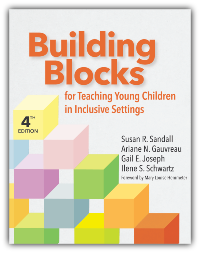
The fourth edition of "Building Blocks for Teaching Young Children in Inclusive Settings," authored by Susan R. Sandall, Ph.D., Ariane N. Gauvreau, Ph.D., BCBA-D, Gail E. Joseph, Ph.D., and Ilene S. Schwartz, Ph.D., BCBA-D, represents the culmination of years of evidence-based research. This framework addresses the practical challenges of inclusion, moving beyond the theoretical "why" to the practical "how." As classrooms become increasingly diverse in terms of neurodiversity, language, and physical ability, the need for structured, adaptable instructional strategies has never been more pressing.
The Building Blocks Framework: A Multi-Tiered Approach
At the heart of inclusive small-group instruction is the concept of intentionality. Educators must proactively design activities that anticipate barriers to participation. The "Building Blocks" framework identifies five key areas of support that allow for the seamless integration of children with varying needs into small-group settings. These strategies are not intended to replace the general curriculum but to enrich it, ensuring that the environment, materials, and social structures are conducive to learning for everyone.
Environmental Support: Structuring the Learning Space
Environmental support involves the strategic alteration of the physical, social, and temporal environment to promote engagement. In a small-group context, the physical layout can either facilitate or hinder a child’s ability to focus and interact. For instance, creating clearly defined boundaries using rugs or furniture can help children with sensory processing issues or attention deficits understand where the activity is taking place.
Temporal support refers to the management of time and routines. Providing visual schedules or "first-then" boards can assist children who struggle with transitions, allowing them to anticipate the sequence of events within a small group. Socially, the environment can be modified by carefully selecting the composition of the group. Pairing a child who is learning a new social skill with a peer who excels in that area creates a naturalistic learning environment where social modeling occurs organically.
Materials Adaptation: Ensuring Equitable Access
Materials adaptation is the process of modifying the tools of learning so that a child can participate as independently as possible. Independence is a primary goal of early childhood education, as it builds self-efficacy and confidence. Adaptation can range from simple physical modifications to high-tech assistive technology.
For a child with fine motor delays, an educator might wrap a foam grip around a paintbrush or use "adaptive" scissors that require less pressure to operate. In a literacy-based small group, books can be modified with "page fluffers"—small pieces of foam or velcro attached to the corners of pages—to make turning them easier. By removing the physical barriers to using materials, educators allow the child to focus on the cognitive and social goals of the activity rather than the frustration of the task itself.
Activity Simplification: Scaffolding for Success
Activity simplification involves breaking down a complex task into smaller, more manageable steps. This process, often referred to as task analysis or scaffolding, is essential for children who may become overwhelmed by multi-step instructions. In a science experiment involving several stages, an educator might provide a visual checklist where the child can mark off each step as it is completed.

Simplification does not mean lowering expectations; rather, it means providing the necessary support to reach the learning objective. For example, if the group goal is to create a collage, a child who struggles with planning might be given a pre-sorted tray of materials rather than being asked to find materials from across the room. This ensures the child remains engaged in the creative process of the collage without being derailed by the logistical challenge of gathering supplies.
Integrating Child Preferences: Leveraging Motivation
A fundamental tenet of the "Building Blocks" approach is the recognition that motivation is a powerful driver of learning. When a child is not taking advantage of available opportunities, educators are encouraged to identify and integrate the child’s specific interests and preferences into the activity.
If a child shows a profound interest in vehicles, a small-group math activity involving counting blocks could be transformed into counting toy cars. This simple adjustment can dramatically increase a child’s "time on task" and engagement level. By aligning instructional goals with a child’s intrinsic interests, educators reduce the likelihood of challenging behaviors and increase the child’s receptivity to new information. This person-centered approach acknowledges the child as an active participant in their own learning journey.

Peer and Adult Supports: The Power of Collaborative Learning
In an inclusive classroom, the social fabric of the group is one of the most effective tools for learning. Adult support involves the teacher or assistant providing prompts, cues, or encouragement to help a child navigate a task. However, the framework emphasizes that adult support should be "faded" over time to prevent prompt dependency.
Peer support, often underutilized, is equally vital. Typically developing peers can serve as "peer buddies," offering natural cues and social reinforcement. For instance, during a group game, a peer might model how to wait for a turn or how to ask for a turn using a communication device. Research indicates that peer-mediated interventions are highly effective in promoting social-communication skills in children with autism and other developmental delays. These interactions benefit the peer as well, fostering leadership skills and a deep-seated understanding of diversity from a young age.
Statistical Evidence and Educational Outcomes
The efficacy of these inclusive strategies is supported by a growing body of data. According to the National Center for Education Statistics (NCES), approximately 95% of children with disabilities ages 6–21 are served in regular schools, with over 60% spending more than 80% of their day in general education classrooms. In early childhood settings, the push for "Full Inclusion" has shown that children with disabilities who are educated in inclusive settings demonstrate higher levels of social play and more advanced language skills compared to those in segregated settings.

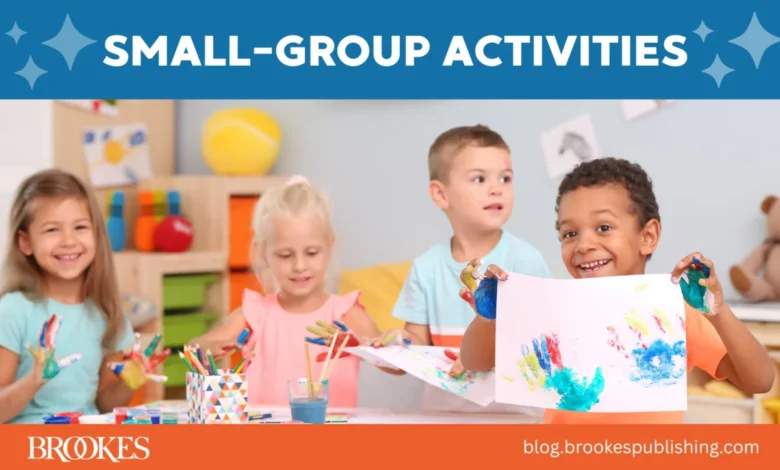
Furthermore, a study published in the Journal of Early Intervention highlighted that small-group instruction is significantly more effective than whole-group instruction for children with developmental delays, as it allows for a higher frequency of "learning trials" and more immediate feedback from educators. The ROI (Return on Investment) for high-quality inclusive early education is also substantial; long-term longitudinal studies, such as the Perry Preschool Project, suggest that early intervention reduces the need for costly special education services in later years and increases the likelihood of economic independence in adulthood.
Professional Perspectives and Implementation Challenges
Despite the clear benefits, implementing these strategies requires significant professional development and institutional support. Jennifer Grisham, a professor at the University of Kentucky, emphasizes that the "Building Blocks" framework is "essential reading for practitioners who wish to meaningfully support young children in inclusive settings." She notes that the success of these practices relies on "step-by-step guidance" and the use of classroom scenarios that allow teachers to visualize the implementation.
The challenges to inclusion often stem from a lack of resources, such as high student-to-teacher ratios or insufficient planning time. Educators frequently report feeling underprepared to manage diverse behavioral needs. This underscores the importance of the BCBA-D (Board Certified Behavior Analyst-Doctoral) expertise provided by authors like Gauvreau and Schwartz, who bring a rigorous, behavioral science lens to the classroom. Their contributions ensure that strategies are not just empathetic, but also scientifically sound and measurable.

Long-Term Implications for Inclusive Pedagogy
The strategies outlined in the fourth edition of "Building Blocks" reflect a broader societal shift toward accessibility and universal design. By focusing on environmental supports, material adaptations, and peer involvement, educators are creating a "Universal Design for Learning" (UDL) that benefits all students, not just those with identified disabilities. A child who is a dual-language learner, for example, may benefit just as much from visual schedules and activity simplification as a child with a cognitive delay.
As the field of early childhood education continues to evolve, the integration of these "Building Blocks" will likely become the standard rather than the exception. The goal is to move toward a future where "inclusion" is no longer a separate initiative but is woven into the very fabric of how we teach. By fostering environments where communication, social connections, and problem-solving are accessible to all, we lay the groundwork for a more inclusive and equitable society. The continued refinement of these strategies ensures that the most vulnerable learners are not merely "present" in the classroom but are active, thriving participants in their educational community.