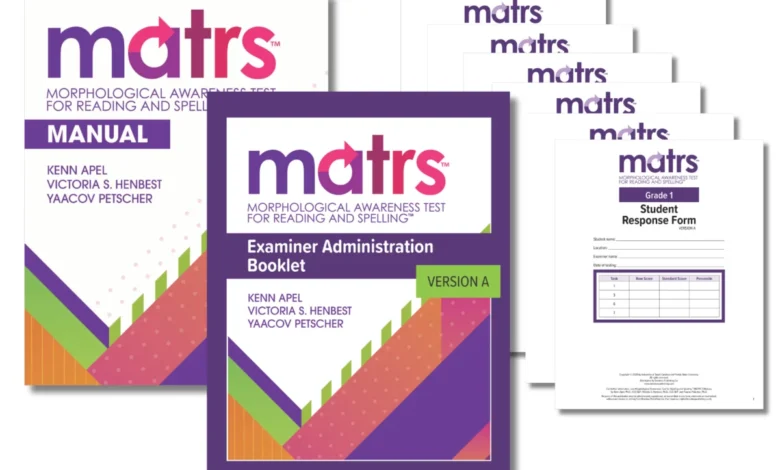
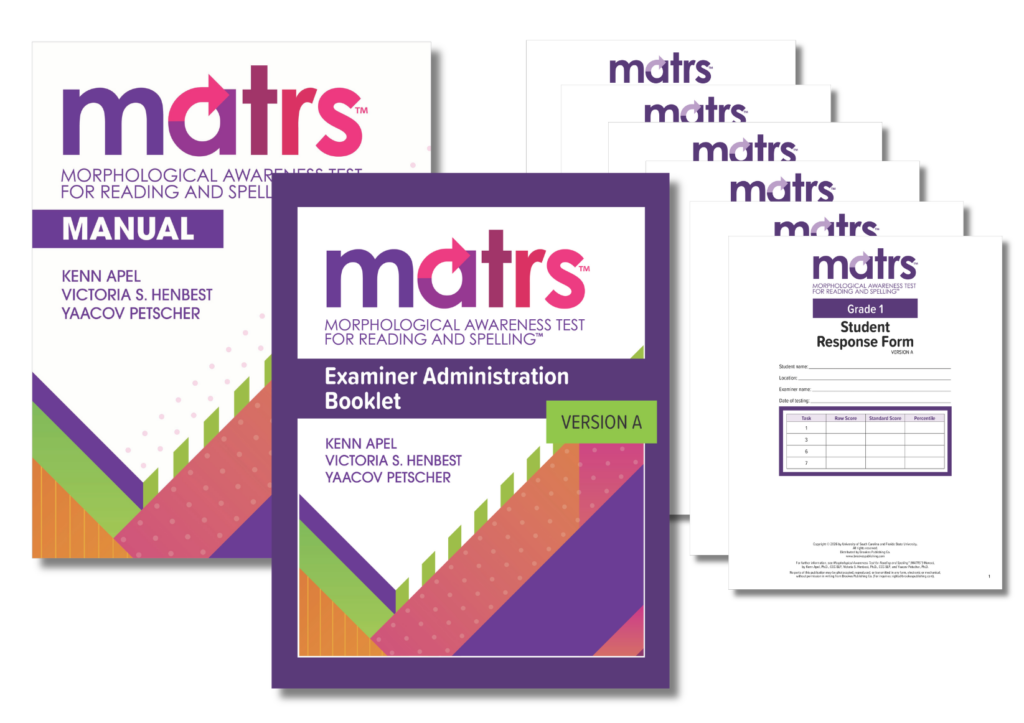
The landscape of American literacy education is undergoing a seismic shift as educators and researchers move toward more comprehensive, evidence-based practices known collectively as the Science of Reading. For decades, the primary focus of early literacy assessment has been phonological awareness—the ability to recognize and manipulate the sounds of spoken language. However, a significant number of students continue to struggle with reading and spelling despite showing proficiency in phonological tasks. To address this critical gap, Dr. Kenn Apel and Dr. Victoria Henbest have introduced the Morphological Awareness Test for Reading and Spelling (MATRS), a standardized diagnostic tool designed to identify the "missing link" in literacy development for students in Grades 1 through 6.
Morphological awareness refers to the ability to recognize, understand, and use morphemes, which are the smallest units of meaning in a language. While phonics deals with the relationship between sounds (phonemes) and letters (graphemes), morphology focuses on the building blocks of meaning, such as base words (e.g., "play"), prefixes (e.g., "re-"), and suffixes (e.g., "-ed"). In the English language, which is morphophonemic, spelling is determined not just by sound but by meaning and origin. For example, the "t" sound at the end of "jumped" is spelled with "-ed" to signify past tense, a morphological rule that transcends simple phonetic spelling. Without a strong grasp of these structures, students often hit a "literacy ceiling" in the middle elementary years as text complexity increases and multisyllabic words become more prevalent.
The Evolution of Literacy Assessment and the Morphological Gap
The development of MATRS comes at a pivotal time in education. According to the National Assessment of Educational Progress (NAEP), often referred to as the Nation’s Report Card, roughly two-thirds of American fourth graders are not reading at a "proficient" level. This stagnation has led researchers to look deeper into the underlying cognitive processes that support literacy. Historically, if a student struggled with reading, they were screened for phonological deficits. If those screens came back clear, educators were often left without a roadmap for intervention.
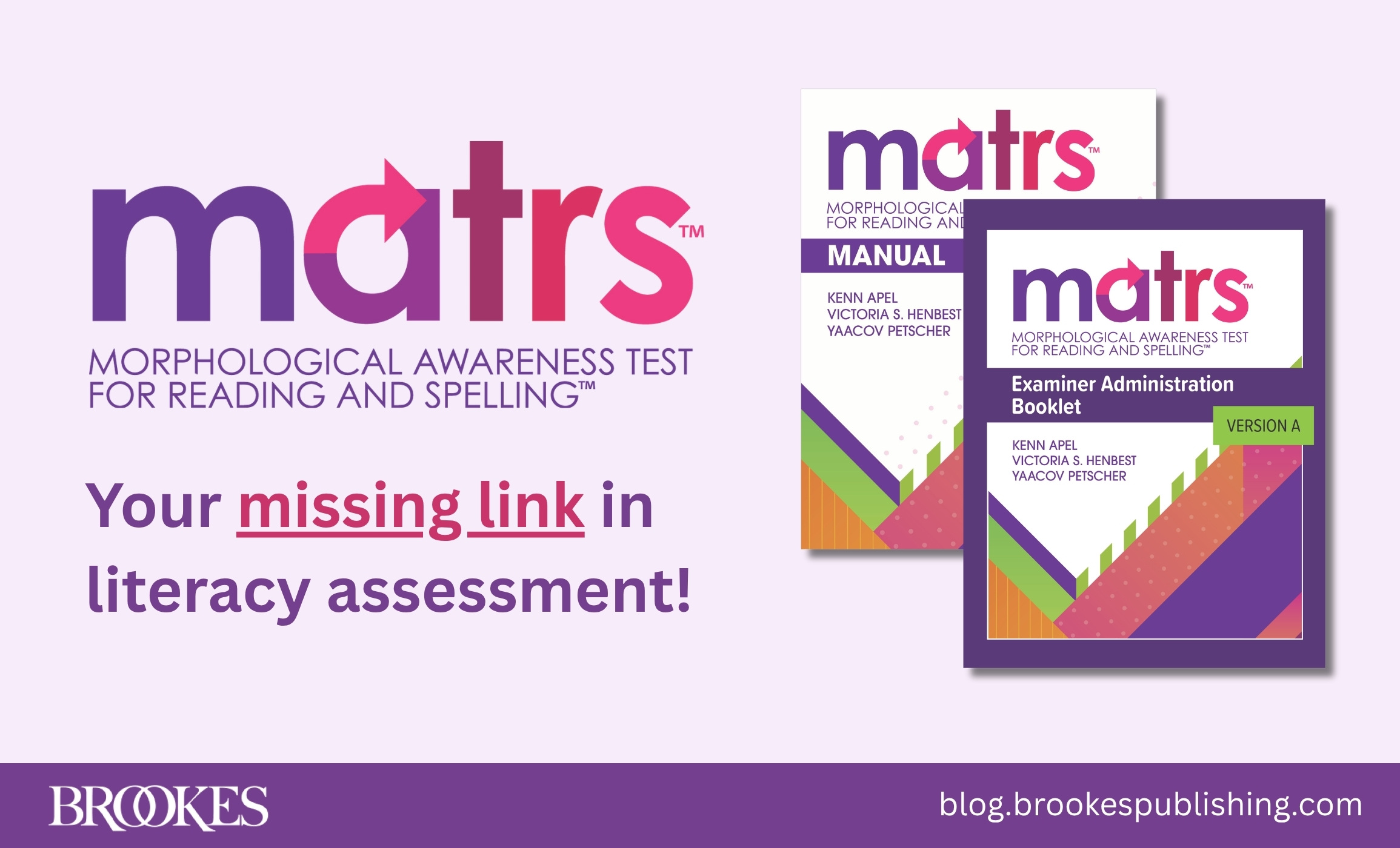
Dr. Apel and Dr. Henbest, recognized experts in communication sciences and disorders, identified that many of these "unexplained" literacy struggles were rooted in poor morphological processing. The International Dyslexia Association (IDA) formally updated its definition of dyslexia to include difficulties with morphological processing, yet until the release of MATRS, there were no standardized, norm-referenced diagnostic tests available to specifically measure this skill in a comprehensive manner. MATRS provides the empirical data necessary to qualify students for specialized services and to tailor instruction to their specific linguistic needs.
Understanding the Four Pillars of MATRS
MATRS is designed to be both diagnostic and prescriptive, meaning it not only identifies a problem but also points toward a solution. The test evaluates students across four primary components of morphological awareness, ensuring that no aspect of word structure is overlooked.
First, the assessment examines inflectional morphology. This includes the suffixes that change the grammatical form of a word without changing its core meaning or part of speech, such as plural "s," possessive "’s," and verb tenses like "-ing" or "-ed." Second, it assesses derivational morphology, which involves prefixes and suffixes that can change a word’s meaning or its part of speech, such as turning the verb "teach" into the noun "teacher" or the adjective "happy" into the noun "happiness."
The third component focuses on base word identification and compounding, which helps determine if a student can recognize the root of a complex word. Finally, the test looks at the application of these skills in the context of spelling. Because English spelling is highly regular when viewed through a morphological lens, a student’s ability to spell complex words is often a direct reflection of their morphological awareness. By breaking down performance into these categories, MATRS allows educators to avoid "one-size-fits-all" instruction and instead target the specific area where a student’s understanding has broken down.
Streamlining the Assessment Process for Educators
One of the primary challenges in modern classrooms is the "assessment burden"—the amount of time teachers must spend testing students rather than teaching them. MATRS was developed with efficiency in mind. The administration of the test typically takes only 15 to 20 minutes, making it a viable tool for busy school psychologists, speech-language pathologists (SLPs), and reading specialists.
The tool includes several features designed to ease the administrative load. It utilizes an online scoring system that provides immediate results, eliminating the need for manual calculations and reducing the margin for human error. Furthermore, the test generates clear, visual profiles of a student’s strengths and weaknesses. These profiles are instrumental during Individualized Education Program (IEP) meetings, as they provide parents and administrators with a data-driven explanation for why a student may be struggling despite having average scores on more generalized reading assessments.
The Role of the International Dyslexia Association and Clinical Standards
The significance of MATRS is further underscored by the clinical definitions provided by the International Dyslexia Association. The IDA states that dyslexia is often characterized by underlying difficulties with phonological and morphological processing. Despite this, the "morphological" half of that definition has frequently been ignored in standard school screenings.
"A student may meet normative expectations on some standardized tests that are typically given to determine why a student is struggling with reading and spelling," the developers noted in a recent briefing. "However, that does not mean there is no explanation for why the student is struggling. Instead, it likely means the tests used were not measuring morphological awareness in a standardized, norm-referenced manner."

By aligning with IDA standards, MATRS provides a level of clinical validity that allows schools to more accurately diagnose dyslexia and other language-based learning disabilities. This is particularly important for students in Grades 3 through 6, where the "shift from learning to read to reading to learn" occurs. In these grades, vocabulary becomes increasingly academic and Latinate, relying heavily on prefixes and suffixes. A deficit in morphological awareness that might have been masked in first grade can become a debilitating barrier by fifth grade.
Chronology of Development and the Shift Toward Science-Based Literacy
The development of MATRS follows a decade of increasing research into the "Reading Rope," a model proposed by Dr. Hollis Scarborough. The rope consists of two main strands: word recognition and language comprehension. Morphology sits at the intersection of both. It aids in word recognition by helping students "chunk" words into meaningful parts, and it aids in comprehension by providing clues to the meaning of unfamiliar words.
In the early 2010s, researchers began publishing longitudinal studies showing that morphological awareness in kindergarten was a significant predictor of reading comprehension in second grade. By 2020, as the Science of Reading movement gained legislative momentum across several U.S. states, the demand for specialized tools to measure these skills grew. The release of MATRS marks the culmination of this research-to-practice pipeline, providing a validated instrument for the theories that have been circulating in academia for years.
Broader Implications for Educational Equity and Future Success
The implications of implementing MATRS extend beyond individual classroom success. Literacy is a primary determinant of long-term socio-economic outcomes. According to the Department of Justice, there is a high correlation between low literacy rates and incarceration; conversely, students who reach reading proficiency by the end of third grade are significantly more likely to graduate high school and find stable employment.

By identifying morphological deficits early, schools can intervene before a student experiences the "Matthew Effect"—a phenomenon in which the rich get richer (strong readers read more and gain more vocabulary) and the poor get poorer (struggling readers avoid reading and fall further behind). MATRS allows for "prescriptive assessment," meaning the results lead directly to an instructional plan. If a test shows a student is struggling specifically with derivational suffixes, the teacher can focus on that specific area, saving time and resources while providing the student with the exact tools they need to unlock complex text.
Furthermore, MATRS serves as a vital tool for English Language Learners (ELLs). Many languages, such as Spanish, have rich morphological systems. A standardized tool that looks at morphological awareness can help educators distinguish between a student who is still acquiring the English language and a student who has an underlying language processing disorder.
Conclusion: A New Standard for Literacy Excellence
The introduction of the Morphological Awareness Test for Reading and Spelling (MATRS) represents a significant advancement in the field of educational diagnostics. By providing a standardized, norm-referenced way to measure a skill that has long been recognized but rarely tested, Dr. Apel and Dr. Henbest have provided schools with a powerful weapon against literacy failure.
As schools continue to refine their Multi-Tiered Systems of Support (MTSS) and Response to Intervention (RTI) frameworks, MATRS offers a way to ensure that the "missing link" of morphology is no longer missing. By investing in comprehensive assessment, educators are not just testing a student’s ability to read today; they are ensuring their ability to succeed, communicate, and thrive in the literate world of tomorrow.