Acclaimed Author and Cartoonist Kate Beaton Explores Sibling Loss and Generational Resilience in New Picture Book Rebecca

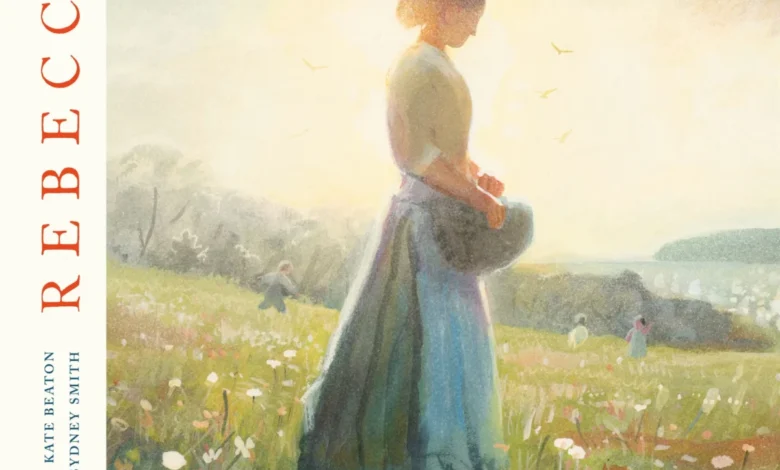
The intersection of personal tragedy and historical legacy forms the core of the latest literary work by renowned Canadian cartoonist and author Kate Beaton. Best known for her New York Times bestselling graphic memoirs and webcomics, Beaton has released a new children’s picture book titled Rebecca, published by Roaring Brook Press. The work serves as both a meditation on profound personal grief and an exploration of ancestral endurance, drawing heavily from the author’s own life experiences in Cape Breton, Nova Scotia, and the history of her family lineage.
The publication of Rebecca arrives several years after a period of intense personal loss for the author, establishing a narrative bridge between contemporary experiences of illness and historical survival in Atlantic Canada.
Chronology of Loss and Inspiration
The timeline of the events inspiring the book spans over two centuries, linking a modern-day family tragedy with an 18th-century maritime disaster.
- March 1789: Captain David Smith, a whaling captain, tragically fell through the ice near Port Hood Island, Nova Scotia, leaving his pregnant wife, Rebecca Lombard Smith, to raise their children alone on a remote island.
- November 30, 1821: Rebecca Lombard Smith passed away at the age of 76, leaving behind a legacy of survival that would be memorialized by her sons in the Old Protestant Graveyard.
- May 14, 2018: Kate Beaton’s older sister, Rebecca—affectionately known as Becky—passed away at the age of 38 following a three-year battle with an aggressive form of cervical cancer.
- May 13, 2019: Exactly one day before the one-year anniversary of her sister’s passing, Kate Beaton gave birth to her first child, a daughter, amidst complex emotions of sorrow and joy.
- September 2026: Roaring Brook Press officially released Kate Beaton’s picture book Rebecca, bringing the multi-generational narrative of resilience to a broader readership.
Main Facts and Narrative Framework
Kate Beaton and her sister Becky were named after their respective grandmothers, carrying forward a tradition of matrilineal nomenclature that deeply influenced the author’s sense of identity. Following Becky’s death in 2018, Beaton’s life underwent a profound bifurcation, separating her existence into the period before her sister’s illness and the reality shaped by her absence.
During the subsequent years, while residing in Port Hood, Nova Scotia—within sight of Port Hood Island where her ancestor Rebecca Lombard Smith once lived—Beaton navigated the dual realities of new motherhood and lingering grief. Daily walks with her infant child and dog frequently led her past the Old Protestant Graveyard, the final resting place of Rebecca Smith. The headstone, notably inscribed with the names of the deceased woman’s sons—Lewis, Parker, and David—served as a poignant reminder of familial devotion and survival.

Rather than writing a direct biographical account of her sister, which Beaton noted remained an open wound, the author channeled these themes into the historical figure of her great-great-great-great-grandmother. The resulting picture book, Rebecca, tells a story centered on adult loss and endurance, challenging traditional conventions of children’s literature.
Editorial and Publishing Perspective
Publishing Director Connie Hsu of Roaring Brook Press acknowledged the unconventional nature of the project within the children’s literature market. In statements regarding the acquisition and publication of the book, Hsu noted that Rebecca departs significantly from standard publishing guidelines for young readers, specifically by featuring an adult protagonist, addressing the heavy theme of loss, and incorporating mortality into the plotline. Despite these departures from industry norms, the emotional resonance and artistic strength of the work compelled the publishing house to move forward with its release.
Beaton’s literary career has previously established her capability for handling complex emotional and historical subject matter. Her graphic memoir, Ducks: Two Years in the Oil Sands, received widespread critical acclaim, including a spot on former President Barack Obama’s 2022 list of favorite books, in addition to being named a New York Times Notable Book. Her earlier collections, Hark! A Vagrant and Step Aside, Pops, established her reputation as a prominent voice in graphic storytelling. With Rebecca, she transitions her narrative scope to the picture book format, utilizing sparse text and evocative illustration to address universal themes of grief and generational continuity.
Broader Impact and Societal Implications
The release of Rebecca contributes to a growing body of contemporary literature that seeks to destigmatize conversations surrounding grief, sibling loss, and the integration of sorrow into daily life. Mental health advocates and grief counselors frequently emphasize the importance of narrative outlets in processing long-term trauma. By documenting the coexistence of profound sorrow and new life—symbolized by the birth of her children immediately following her sister’s death—Beaton offers a framework for understanding grief not as an obstacle to be overcome, but as an enduring aspect of human experience.
Furthermore, the book highlights the historical resilience of women in Atlantic Canada, drawing attention to archival histories that often marginalize female figures in favor of maritime exploits. By re-centering the narrative on Rebecca Lombard Smith’s survival and stewardship of her family, the work provides a broader cultural value, preserving local history through an accessible literary medium. As the book enters the public sphere, it stands as both a personal monument to a lost sister and a universal exploration of how families weather unimaginable loss across generations.