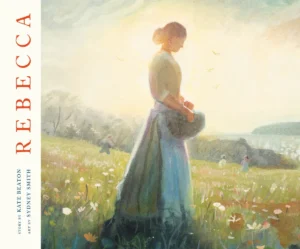
Renowned Author Kate Beaton Explores Sibling Loss and Generational Resilience in New Picture Book Rebecca

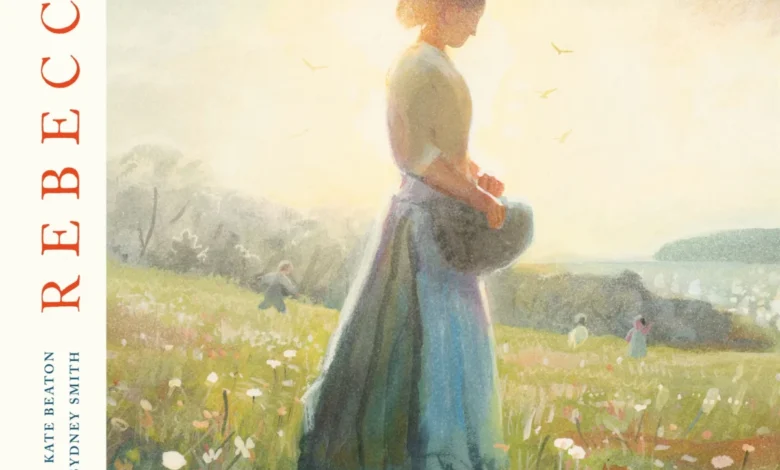
Acclaimed Canadian author and cartoonist Kate Beaton is expanding her literary repertoire with the release of her latest work, a children’s picture book titled Rebecca. Published by Roaring Brook Press, the book marks a distinct departure from Beaton’s previous bestselling works—which include the humor collections Hark! A Vagrant and Step Aside, Pops, as well as the critically acclaimed, award-winning graphic memoir Ducks: Two Years in the Oil Sands. Rebecca tackles profound themes of generational loss, grief, and maternal resilience, drawing heavily from Beaton’s personal history and the historical legacy of her ancestors in Cape Breton, Nova Scotia.
Main Facts and Literary Departure
The newly released picture book ventures into subject matter rarely explored in mainstream children’s literature. While traditional children’s publishing often avoids heavy topics such as the death of an adult protagonist or multiple fatalities within a single narrative, Roaring Brook Press publishing director Connie Hsu championed the project despite its defiance of conventional industry standards. Beaton’s narrative uses the framework of children’s storytelling to process complex emotional landscapes, specifically the enduring impact of sibling loss and the continuity of familial strength across centuries.
The book is deeply rooted in the author’s family history, sharing its name with Beaton’s late sister, Rebecca, who passed away from aggressive cervical cancer in May 2018 at the age of 35, following a three-year illness. Rather than serving as a direct biographical account of her sister’s illness, the book traces its lineage back to an 18th-century ancestor, Rebecca Lombard Smith, who lived on Port Hood Island off the coast of Cape Breton.
Chronology of Loss and Inspiration
The timeline of events shaping Rebecca spans over two centuries, bridging historical tragedy with modern personal grief:
- March 1789: Cape Breton whaling captain David Smith falls through the ice near Port Hood Island and dies, leaving behind his pregnant wife, Rebecca Lombard Smith, and their six children. Historical accounts predominantly focused on the captain’s maritime death, but Beaton’s work shifts the analytical lens to the resilience of Rebecca Smith, who successfully raised her children alone on the isolated island.
- November 30, 1821: Rebecca Lombard Smith passes away at the age of 76. Her headstone in the Old Protestant Graveyard features a rare and personal inscription erected by her three surviving sons—Lewis, Parker, and David—memorializing her endurance.
- May 14, 2018: Kate Beaton’s older sister, Rebecca ("Becky"), passes away after a three-year battle with cervical cancer. The loss divides Beaton’s life into distinct epochs defined by the presence and absence of her sister.
- May 13, 2019: One year following her sister’s death, Beaton experiences premature labor and gives birth to her first child on Mother’s Day eve, narrowly avoiding the anniversary of her sister’s passing. She subsequently has a second child, a boy. During quiet evening hours spent putting her children to sleep, the foundational narrative structure of the book takes shape.
- September 2026: Roaring Brook Press officially publishes Rebecca, bringing the historical narrative of survival and modern processing of grief to the public sphere.
Background Context and Ancestral Legacy
The geographic backdrop of Cape Breton, Nova Scotia, serves as a central character in both Beaton’s life and her literary creations. During her sister’s illness and the subsequent period of early motherhood, Beaton resided in the village of Port Hood, where the abandoned Port Hood Island remained visible across the water. Observing the landscape in the winter months evoked parallels between her own isolated grief and the historical isolation faced by Rebecca Lombard Smith.
Historical records indicate that the perseverance of female family lines heavily influenced Beaton’s perspective on endurance. While the Smith family expanded through multiple descendants, the direct maternal line and the preservation of the name Rebecca became symbolic of familial continuity. This generational strength mirrored the physical and emotional endurance Beaton observed in her sister during her medical treatments, as well as the resilience Beaton herself had to cultivate upon entering motherhood shortly after her sister’s death.

Editorial and Publishing Perspectives
Publishing executives have acknowledged the unconventional nature of Rebecca within the children’s literature market. In statements regarding the acquisition of the manuscript, Roaring Brook Press representatives highlighted the unique editorial challenges posed by the project.
"My initial reaction to Rebecca was awe," said Connie Hsu, publishing director at Roaring Brook Press. "My brain began to think about all the usual ‘rules’ about picture book publishing. Here, the main protagonist is an adult, the book is about loss, and two people die in the book! But I just had to publish it."
Industry analysts note that the willingness of publishers to accept darker, more emotionally resonant themes in children’s literature reflects a growing cultural shift toward acknowledging pediatric and familial grief. Books that address loss directly are increasingly recognized as vital tools for both child and adult comprehension of mortality, providing psychological frameworks that traditional, overly sanitized narratives often omit.
Broader Impact and Implications
The release of Rebecca arrives at a time when Beaton’s literary profile is at an all-time high. Her previous graphic memoir, Ducks: Two Years in the Oil Sands—which detailed her experiences working in the industrial landscapes of Alberta—received widespread critical acclaim, including a spot on former U.S. President Barack Obama’s personal list of favorite books for 2022. That work established Beaton’s capacity to translate harrowing personal and socioeconomic realities into universally relatable graphic literature.
By transitioning into picture books with Rebecca, Beaton applies her narrative depth to themes of collective memory and grief. Psychologists and literary critics have long emphasized the societal necessity of articulating grief, noting that creative expression often serves as a primary mechanism for integrating loss into daily existence. Through the dual lenses of an 18th-century pioneer widow and a modern sibling mourning a sister, Rebecca contributes to an ongoing cultural discourse on how families survive catastrophic loss across generations.
The book is currently available through major booksellers and independent publishers nationwide, accompanied by renewed interest in Beaton’s broader literary catalogue and public discussions surrounding grief support, familial communication, and the enduring nature of historical memory.
Related posts: