The Evolution of Family Oral History and the Enduring Appeal of Parental Childhood Anecdotes in Modern Parenting

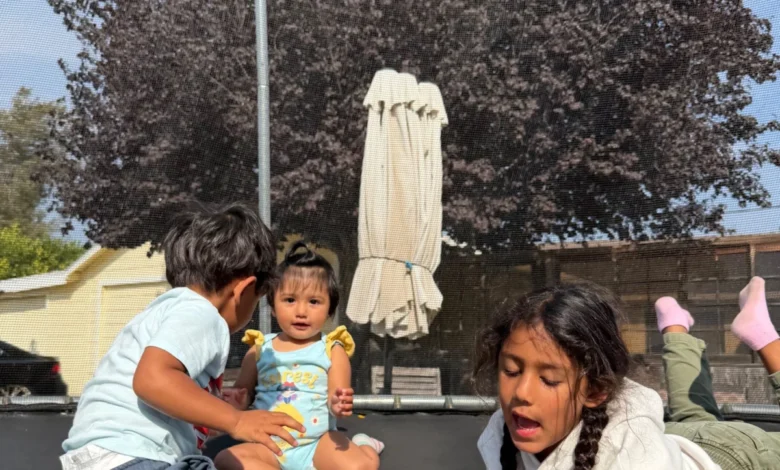
Family storytelling has long served as a fundamental cornerstone in child development, psychological bonding, and the intergenerational transmission of family culture. While traditional folklore and institutional histories were once the primary vehicles for societal lessons, contemporary domestic life increasingly relies on micro-narratives—specifically, humorous or embarrassing childhood anecdotes shared by parents to their offspring. A recent domestic interaction captured on a backyard trampoline involving a mother and her young children highlights this enduring psychological phenomenon, shedding light on how shared vulnerability and nostalgic storytelling actively shape childhood development, cognitive empathy, and family cohesion in the twenty-first century.
Main Facts of the Domestic Interaction
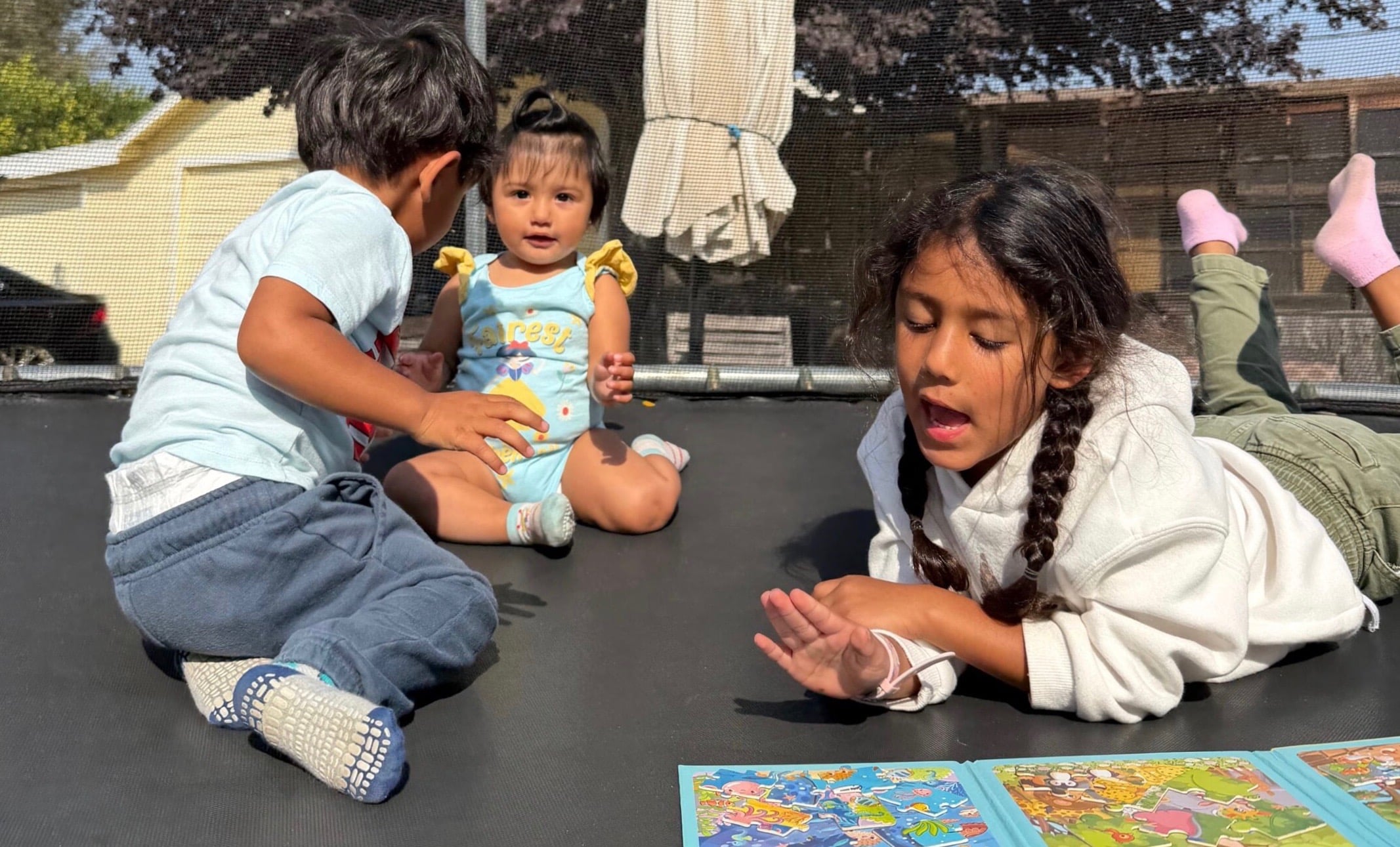
The event in question occurred during a routine afternoon gathering on a residential backyard trampoline. Jannelley, a parent of three, was accompanied by her children, including five-year-old daughter Ella, alongside siblings Emiliano and Evelynn. During a moment of casual recreation, Ella posed a direct request to her mother, asking for a narrative account detailing her own childhood experiences.
The prompt immediately triggered a specific, long-stored autobiographical memory from Jannelley’s early youth: an incident at a family summer barbecue involving her grandparents’ swimming pool. At approximately four years of age, the author faced a recurring logistical conflict common among young children engaged in aquatic recreation—the persistent physiological urge to urinate clashing directly with high-priority recreational activities, such as diving board rotations and elaborate imaginative games.
Faced with repeated interruptions to her swimming routine, the young child devised an unconventional, highly pragmatic, yet socially uninitiated solution. Upon completing her fifth restroom trip of the afternoon, rather than maneuvering her cold, damp one-piece sequined swimsuit back onto her body, she elected to peel the garment down around her ankles, step entirely out of it, deposit the wet swimwear directly into the ceramic bowl of the toilet, and depart the restroom entirely nude.
Operating under the uncomplicated logic of early childhood—namely, that physical exposure would go unnoticed provided she successfully bridged the physical distance between the house and the swimming pool—she proceeded outside. The strategy was immediately intercepted by a teenage cousin, Lupe, who verbally halted her progress to inquire about the absence of her garments. A prompt intervention by her mother concluded the naked dash with the provisioning of a towel and the premature termination of her pool privileges for the remainder of the afternoon.
Chronology and Evolution of the Narrative
To understand the weight of such anecdotes within a family unit, researchers and family historians often look at the chronology of memory-sharing. The timeline of the event spans several distinct phases: the primary childhood occurrence in the late 1980s or early 1990s; decades of personal internalization and psychological compartmentalization; the spontaneous retrieval of the memory triggered by a child’s prompt on a 2026 September afternoon; and the subsequent establishment of a repetitive nightly storytelling ritual.
Following the initial recounting on the trampoline—which elicited robust physical laughter and amusement from five-year-old Ella—the narrative transformed from a forgotten personal embarrassment into a cherished piece of domestic folklore. According to observations shared by the parent, the anecdote has since been integrated into the household’s evening routine, requested almost daily by the children. This repetitive consumption of parental misadventures points to a deliberate, albeit intuitive, narrative consumption pattern among young children.
Supporting Data and Psychological Frameworks
The sharing of personal childhood narratives is supported by a robust body of developmental psychology and sociological research regarding family communication patterns. Studies conducted by institutions such as the Family Research Consortium indicate that children who frequently hear narratives about their parents’ childhoods—particularly stories that highlight mistakes, vulnerabilities, or humorous miscalculations—exhibit higher levels of psychological resilience and self-esteem.
According to developmental psychologists specializing in narrative identity, children begin to construct their own sense of self through the stories told about them and their immediate social circles. When parents position themselves not as infallible figures of absolute authority, but as former children who once dropped their swimsuits into toilets, several developmental milestones are supported:
- De-escalation of Perfectionism: Children learn that making mistakes, committing social blunders, or failing to navigate basic tasks perfectly is a normal, universal part of the human growth trajectory.
- Enhanced Empathy and Perspective-Taking: Hearing about parental vulnerabilities allows children to view adults as complex individuals with their own historical timelines, fostering deeper emotional connections.
- Narrative Competence: Structured storytelling encourages children to grasp chronological sequencing, cause-and-effect relationships, and comedic timing.
Data from family literacy studies further demonstrate that oral storytelling traditions significantly enhance a child’s receptive vocabulary and listening comprehension skills compared to passive screen consumption. The interactive nature of a parent-child dialogue—where the child can interrupt, ask clarifying questions, and request specific emotional beats—transforms the anecdote into a dynamic educational tool.
Official Responses and Societal Context
While the event remains a private family occurrence, the public dissemination of the story via contemporary parenting platforms—such as the popular lifestyle and parenting journal Cup of Jo—elicited broad engagement from a wider community of parents and caregivers. The comments and community reactions reflected a universal consensus regarding the necessity of humor in modern parenting.
Sociologists observing modern parenting trends note a distinct cultural shift away from the rigid, authoritarian parenting models of previous generations toward a more transparent, egalitarian approach. Parents today increasingly utilize self-deprecation and shared humor as a primary method for establishing trust and open communication channels.
When parents openly share stories of their own early missteps, they effectively lower the affective filter between generations. This communicative bridge is particularly vital as children approach middle childhood and adolescence, developmental stages during which peer pressure and the fear of judgment often cause youths to withhold anxieties or mistakes from their parents. By establishing a household culture where humorous errors are openly discussed and laughed about early in life, families lay the groundwork for enduring transparency during more complex developmental phases.
Broader Impact and Implications for Family Dynamics
The enduring appeal of the "bathing suit down the toilet" story—and similar domestic lore shared in households globally—extends far beyond mere entertainment. It underscores the vital role that shared personal history plays in creating a cohesive family identity.
In an era dominated by digital media consumption and automated content streams, analog family storytelling remains a powerful anchor for interpersonal connection. It requires presence, active listening, and mutual engagement. For children like Ella, Emiliano, and Evelynn, hearing these stories provides a tangible link to their family lineage, transforming abstract concepts of ancestry and parental history into vivid, relatable, and deeply humorous realities.
Ultimately, the phenomenon demonstrates that the most effective parenting tools are often not sophisticated educational curricula or structured behavioral interventions, but rather the authentic, unvarnished recounting of human experiences—reminding both parents and children alike that growth is an inherently messy, unpredictable, and profoundly comical journey.
Related posts: