Transforming Early Education: How Classroom Post Office Centers are Boosting Preschool Literacy and Social Skills

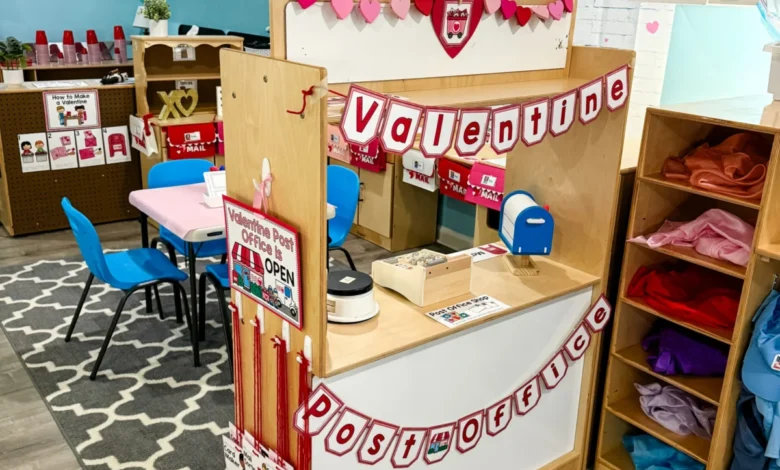
The integration of thematic dramatic play into early childhood education has long been recognized by child development experts as a powerful catalyst for cognitive and social growth. Among these immersive setups, classroom post office centers have emerged as a premier pedagogical tool in preschool and Pre-K classrooms nationwide. As schools across the country prepare for the February calendar, educators are increasingly turning to Valentine’s Day-themed post office stations to merge foundational literacy, fine motor skill development, and social-emotional learning into a single, cohesive curriculum.

Background Context and Educational Framework
The concept of dramatic play centers draws heavily on the constructivist learning theories of early childhood pioneers like Jean Piaget and Lev Vygotsky, who emphasized that children learn best through active engagement with their environment and peers. In a typical preschool setting, traditional literacy instruction often struggles to capture the attention of three- and four-year-old learners if presented purely through rote memorization or worksheet-based tasks.

By contextualizing reading and writing within a real-world scenario—such as running a functioning post office—educators provide tangible motivation for communication. Children are not merely practicing letter formation because an adult requested it; they are writing a message to a classmate, addressing an envelope, and applying a stamp to ensure their sentiment reaches a designated mailbox. According to recent educational data compiled from early childhood programs utilizing dramatic play modules, classrooms featuring interactive writing stations show a measurable increase in student engagement, vocabulary acquisition, and peer-to-peer cooperation compared to traditional classroom layouts.

Structuring the Classroom Post Office
Establishing a successful Valentine’s Day post office requires thoughtful spatial design and resource allocation. Educators typically repurpose existing classroom fixtures, such as play kitchen counters, dining tables, or wooden puppet theaters, transforming them into service windows and sales counters.

To maximize the educational impact of the space, teachers stock the area with a variety of literacy-rich props. These include folded cardstock, envelopes, custom-designed stamps, stickers, and neatly organized sorting baskets. Crucially, every item is labeled with both text and accompanying pictures, introducing young learners to environmental print—an essential stepping stone in early reading comprehension.

A central component of the physical setup is the mailbox bank. Each cubby or slot is personalized with a student’s photograph and printed name. This configuration not only aids in self-recognition and name identification among peers but also turns the physical act of checking mail into a daily literacy exercise. Seasonal backdrops and affordable, dollar-store decorations complete the immersive environment, signaling to the children that this space holds a special place in the classroom routine.

Chronology and Implementation Timeline
Implementing a thematic unit of this scale generally follows a structured multi-week timeline to ensure students can transition smoothly from passive observers to active participants:
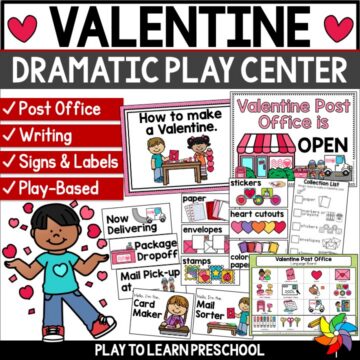
- Week One: Introduction and Role Definition. Educators introduce the concept of the postal service through read-alouds and group discussions. Teachers assign and explain specific roles using wearable lanyards—such as the customer, the postal cashier, the mail sorter, and the mail carrier. By clearly defining these responsibilities, children develop a structured understanding of community helpers and sequential workflows.
- Week Two: Card Making and Writing Stations. Writing stations are expanded beyond the central post office into various corners of the classroom. Children visit dedicated card-making tables outfitted with crayons, markers, and decorative elements. Literacy boards and step-by-step visual sequence charts are introduced, guiding students through the multi-step process of drafting, sealing, addressing, and delivering a message.
- Week Three: Operation and Sorting. The post office officially opens for business. Students engage in guided and independent play, sorting incoming mail by name and delivering it to the appropriate mailboxes. Fine motor skills are rigorously exercised as children manipulate small stickers, practice cutting paper, and trace their classmates’ names using specialized checklists.
- Week Four: Community Extension and Real-World Application. Many programs culminate the unit by taking a short, supervised class walk to a local or campus mailbox, allowing students to mail actual letters to family members. This bridges the gap between simulated classroom play and real-world civic participation.
Expert Analysis and Stakeholder Perspectives
Early childhood specialists and developmental psychologists have lauded the post office model for its multi-disciplinary approach. Dr. Elena Vance, a researcher in early childhood pedagogy, notes that dramatic play serves as a low-stakes environment for emotional expression. "When children write notes of appreciation or kindness to one another, they are internalizing empathy," Vance explains. "At the same time, the physical manipulation of writing tools builds the intrinsic hand strength required for future academic success."

Furthermore, educators report that structured role-play significantly reduces behavioral disruptions. Because the post office has clear rules, defined jobs, and a natural cycle of supply and demand, children naturally regulate their play based on social cues and peer expectations. If a customer fails to provide a stamp or an envelope, the transaction pauses, prompting collaborative problem-solving among the young participants.

Broader Impact and Policy Implications
As school districts nationwide continually evaluate pre-K literacy standards, the integration of thematic, play-based learning models offers a compelling blueprint for curriculum design. Standardized testing pressures often threaten to push formal instruction downward into preschool classrooms, favoring rigid drills over experiential learning. However, empirical observations from post office dramatic play centers suggest that foundational skills—such as phonemic awareness, sorting categorization, and cooperative communication—are more deeply retained when acquired organically through play.

By investing in versatile, reusable classroom dramatic play kits, schools can maintain rigorous academic standards while preserving the joy and wonder characteristic of early childhood education. As districts look toward future academic terms, the sustained popularity of the classroom post office underscores a vital truth: when learning mimics the meaningful interactions of the real world, children do not just learn—they thrive.