Baked Cod With Tomatoes and Olives Offers a Nutrient-Dense, Low-Calorie Option for Healthy Meal Planning

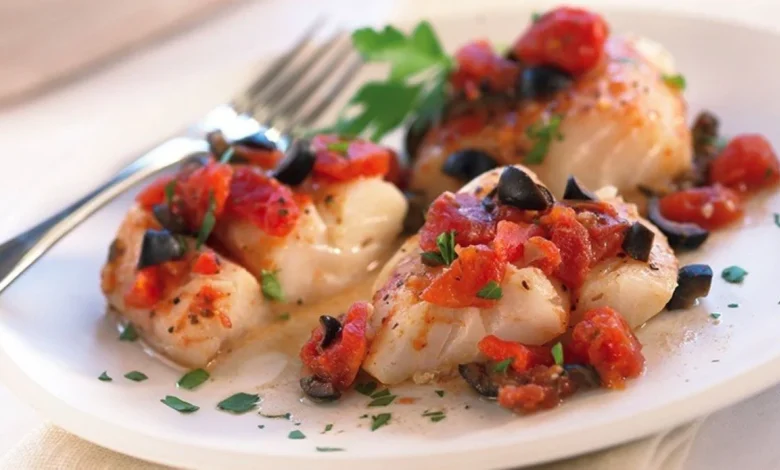
The modern culinary landscape within nutritional medicine has increasingly emphasized the profound clinical importance of incorporating lean seafood and Mediterranean-diet staples into everyday dietary management, particularly for individuals navigating metabolic conditions such as diabetes. A prime example of this intersection between gastronomy and evidence-based nutrition is the popular culinary formulation featuring baked cod adorned with a vibrant, antioxidant-rich topping of fresh tomatoes, briny olives, and aromatic garlic. Originally developed and popularized through culinary platforms dedicated to diabetic-friendly cooking, this dish represents a calculated effort by nutritionists and culinary experts to harmonize strict glycemic control with high-level flavor profiles. As chronic lifestyle-related diseases continue to present significant public health challenges globally, the formulation of meals that balance low caloric density with high satiety factors has transitioned from a niche recommendation to a cornerstone of modern preventative healthcare and dietary therapeutics.
The foundational science underpinning the recipe relies heavily on the physiological benefits of cod, a premier white-fleshed lean fish native to the cold waters of the North Atlantic and Pacific oceans. Cod has long been celebrated by dietitians for its exceptional protein-to-calorie ratio, providing substantial structural amino acids while remaining remarkably low in total fat content. For patients managing diabetes, cardiovascular disease, or weight-related metabolic dysfunctions, incorporating lean proteins like cod helps regulate postprandial blood glucose excursions by slowing gastric emptying without introducing excess saturated fats into the systemic circulation. When paired with a meticulously measured topping comprising diced tomatoes, cured olives, and minced garlic, the dish transcends a mere protein source, evolving into a complex culinary matrix rich in vital micronutrients, lycopene, and monounsaturated fatty acids.
Culinary Preparation and Chronological Execution
The standard operating procedure for preparing this nutritional entrée involves a precise culinary timeline designed to maximize flavor extraction while preserving the delicate texture of the fish. According to culinary guidelines established by nutritional cooking programs, the preparation sequence begins with the thermal preconditioning of the kitchen environment, specifically the preheating of a conventional oven to an exact temperature of 400 degrees Fahrenheit. This high-heat, dry-environment cooking method ensures that the exterior moisture of the cod is rapidly evaporated while the interior flesh steams gently within its own juices, preventing the rubbery or dry texture often associated with improper seafood preparation.
The chronology of assembly is structured for both efficiency and culinary integrity. First, a standard 13-by-9-inch baking dish is treated with a light application of nonstick olive oil-flavored cooking spray to prevent adhesion without introducing excess cooking lipids. Fresh cod fillets, portioned to standard serving sizes, are arranged uniformly across the vessel and seasoned moderately with table salt and freshly ground black pepper. Concurrently, a medium mixing bowl is utilized to combine the raw horticultural and botanical components: diced tomatoes, sliced or chopped olives, and finely minced garlic. This mixture is then spooned evenly across each individual fish fillet, ensuring that the moisture and aromatic compounds permeate the surface of the seafood during the thermal cooking phase.
The baking phase requires strict adherence to temporal parameters. The loaded dish is introduced into the preheated 400-degree Fahrenheit oven for a duration of precisely 20 minutes. Alternatively, culinary technicians monitor the internal doneness of the cod by observing its physical resistance to a fork; the fish is deemed complete the exact moment the translucent flesh begins to opaque and flake apart under gentle pressure. Upon extraction from the thermal environment, the dish is garnished immediately with freshly chopped parsley, which introduces both a bright visual contrast and a supplementary source of Vitamin K and bioflavonoids. For households seeking a more robust carbohydrate pairing, institutional serving suggestions recommend accompanying the baked cod with slices of French bread that have been lightly spread with softened butter, dusted with paprika and oregano, and subsequently broiled until achieving a golden, crisp exterior.
Detailed Nutritional Breakdown and Clinical Implications
A rigorous analytical examination of the nutritional profile associated with a single standard serving of the baked cod reveals a composition meticulously tailored to meet the dietary restrictions of metabolic health patients. Each discrete portion—defined as one cod fillet paired with approximately one and three-quarters cups of the tomato and olive topping—delivers an exceptionally modest caloric load of merely 121 calories. This low energy density makes the meal an optimal selection for individuals undergoing clinically supervised weight-loss regimens or those striving to maintain a strict daily caloric deficit to improve insulin sensitivity.
The macronutrient distribution further underscores the clinical utility of the recipe. Each serving contains a negligible 1 gram of total fat, with saturated fat restricted to a matching 1 gram, thereby safeguarding cardiovascular health by avoiding mechanisms that could exacerbate dyslipidemia or endothelial dysfunction. Carbohydrate content is similarly restrained, registering at just 5 grams per serving, largely derived from the fibrous components of the tomatoes and olives. This minimal carbohydrate footprint ensures that the glycemic impact of the meal remains virtually negligible, preventing the rapid spikes in circulating blood glucose that typically necessitate compensatory insulin secretion.

Conversely, the protein content is remarkably robust, providing 21 grams per serving. From a clinical perspective, this volume of high-biological-value protein is sufficient to support muscle protein synthesis, preserve lean muscle mass during caloric restriction, and promote sustained satiety by stimulating the release of anorexigenic gut hormones such as peptide YY and cholecystokinin. Micronutrient and electrolyte metrics indicate a cholesterol content of 48 milligrams, which aligns comfortably within daily dietary cholesterol recommendations for the general population. Sodium, a critical parameter for hypertensive patients who frequently overlap with diabetic demographics, is recorded at 574 milligrams per serving. While manageable within standard dietary guidelines, clinicians advise individuals with severe sodium-restricted medical protocols to account for this mineral load when balancing their total daily intake.
Dietary exchange systems, widely utilized by clinical registered dietitians to educate patients on portion control and macro-balancing, classify a single serving of this baked cod recipe as equivalent to three servings of lean meat. This classification simplifies the integration of the dish into structured meal plans, allowing patients to seamlessly substitute it for higher-fat protein sources such as red meat or processed poultry without disrupting their prescribed exchange quotas. Furthermore, the inclusion of 1 gram of dietary fiber per serving contributes incrementally to gastrointestinal motility and microbiome health, supported by the antioxidant properties inherent in the lycopene-dense tomato and garlic matrix.
Broader Public Health Context and Preventative Nutrition
The dissemination of specialized, dietitian-reviewed recipes through digital and print health publications reflects a broader institutional shift in how chronic disease management is addressed in the twenty-first century. Historically, dietary guidance for conditions like Type 2 diabetes focused heavily on restrictive prohibitions—detailing what foods patients must permanently eliminate from their diets. Modern nutritional science, however, emphasizes an inclusionary, culinary-medicine approach that empowers patients with positive, flavor-forward alternatives that promote long-term dietary adherence.
Public health organizations and diabetes advocacy groups have increasingly recognized that culinary education is just as vital as pharmacological intervention in mitigating the societal burden of metabolic disorders. By providing transparent, analytically verified nutritional data alongside accessible preparation instructions, platforms that distribute these recipes bridge the gap between abstract clinical recommendations and the practical realities of home cooking. Patients are no longer left to guess the nutritional consequences of their meals; instead, they are equipped with precise caloric, macronutrient, and exchange-value metrics that demystify food preparation.
Moreover, the emphasis on Mediterranean dietary elements—such as seafood, garlic, olives, and fresh tomatoes—is supported by an overwhelming body of epidemiological and randomized controlled trial data. The PREDIMED study and numerous subsequent investigations have consistently demonstrated that adherence to a Mediterranean-style eating pattern significantly reduces the incidence of major cardiovascular events, stroke, and microvascular complications among high-risk individuals. Cod, serving as an easily digestible and sustainable lean protein source, anchors these nutritional benefits by supplying essential amino acids without the inflammatory burdens often linked to excessive red meat consumption.
As digital health ecosystems continue to evolve, the subscription-based delivery of weekly, dietitian-approved recipes—such as those distributed by specialized diabetic cooking initiatives—plays a critical role in combating food fatigue and dietary monotony. Patients managing chronic health conditions frequently abandon healthy eating plans due to a lack of culinary variety. By continuously introducing novel, scientifically vetted recipes that require minimal specialized equipment and standard preparation times, nutritional educators foster sustained behavioral modification.
Ultimately, the recipe for Baked Cod With Tomatoes and Olives serves as a microcosm of modern nutritional science in practice: an intentional fusion of accessibility, culinary appeal, and rigorous physiological optimization. By translating complex biochemical requirements into an approachable, twenty-minute kitchen routine, such culinary initiatives demonstrate that effective metabolic management does not require the sacrifice of gastronomic pleasure. As healthcare systems increasingly pivot toward preventative medicine and lifestyle interventions, the proliferation of clinically sound, patient-accessible culinary resources will remain an indispensable tool in the global effort to reduce the prevalence and severity of diet-related chronic diseases.