The Power of Family Lore: Why Parents Share Embarrassing Childhood Stories with the Next Generation


Passing down personal anecdotes has long been recognized as a cornerstone of family culture, serving not only as entertainment but also as a vital developmental tool for children. Recently, a casual afternoon on a backyard trampoline involving a mother and her three young children—including five-year-old daughter Ella—highlighted this timeless tradition. When prompted to recount a memory from her own youth, the mother shared a humorous, decades-old incident involving a family barbecue, a swimming pool, and an impromptu decision regarding a sequined bathing suit that had been discarded directly into a restroom toilet. What began as a spontaneous backyard conversation has since evolved into a nightly ritual, prompting a broader examination of why children are endlessly captivated by the misadventures of their parents’ early years and how these stories impact family dynamics.
Main Facts and the Trampoline Genesis
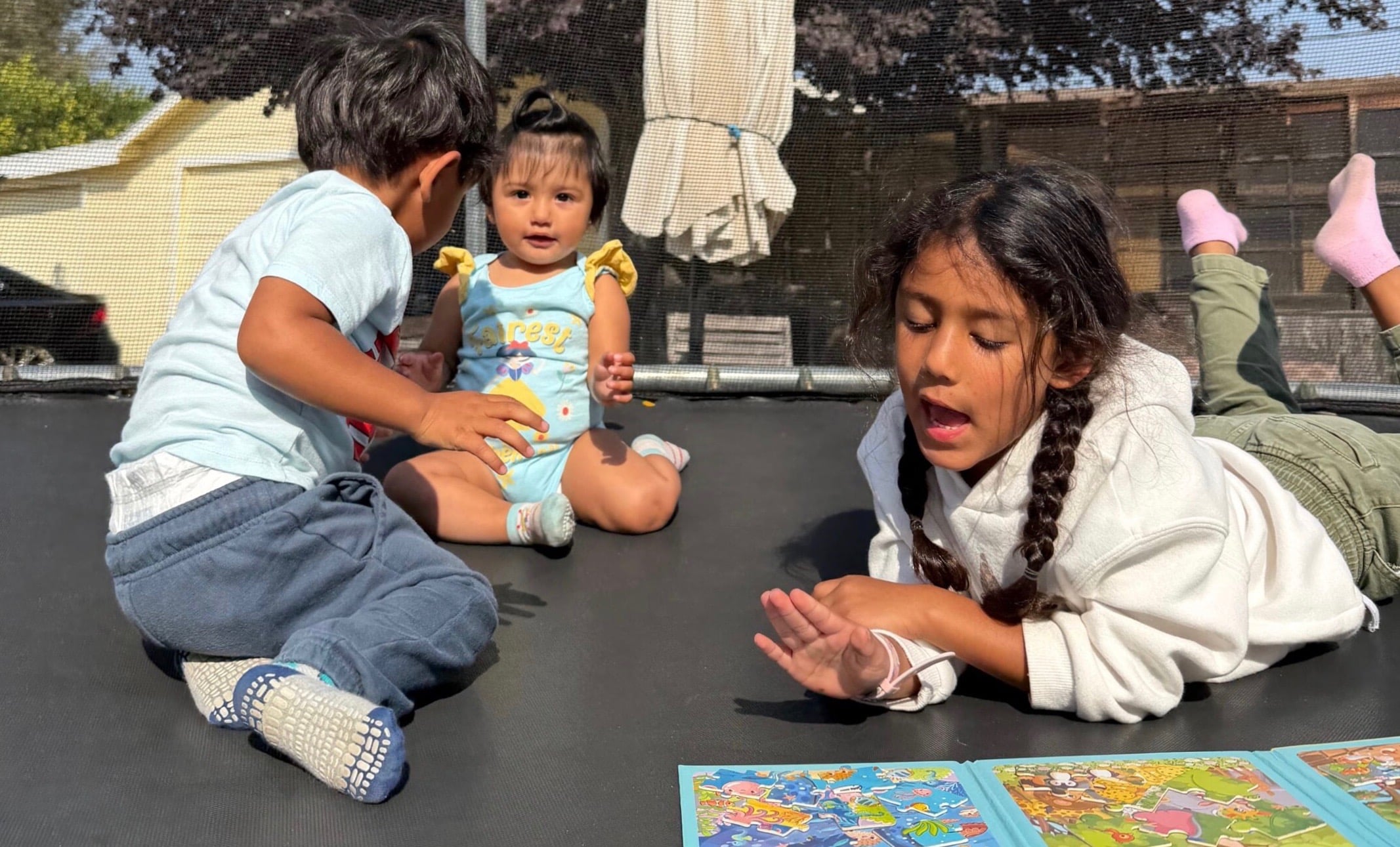
The episode occurred during a routine afternoon gathering on a residential trampoline, where the mother and her children—Ella, Emiliano, and Evelynn—were spending time together. Breaking the rhythm of play, five-year-old Ella posed a simple yet profound question frequently asked by children worldwide: "Mommy, can you tell me a story about when you were a kid?"
Rather than selecting a sanitized or heroic tale, the mother recalled a vivid event from when she was four years old. Attending a family barbecue, she had been alternating between swimming in her grandparents’ pool with her cousins and rushing inside to use the restroom. Frustrated by the constant interruption of her aquatic games—such as playing mermaids or waiting for her turn on the diving board—she reached a breaking point during her fifth bathroom trip.
Upon finishing, she made the pragmatic, albeit unconventional, decision to bypass pulling her wet swimsuit back up. Instead, she peeled the garment down around her ankles, stepped out of it, dropped the sequined one-piece directly into the toilet bowl, and walked away. Believing that a hasty return to the pool water would render her nudity unnoticed, she marched outside. The strategy failed immediately when her teenage cousin, Lupe, intercepted her, asking bluntly where her clothes were. Her mother quickly intervened with a towel, effectively ending her swimming session for the afternoon. Despite the embarrassment and parental intervention, the four-year-old maintained a distinct sense of pride, believing she had ingeniously solved a logistical problem entirely on her own.
Chronology of the Memory
To understand the enduring appeal of the anecdote, family psychologists and parenting experts often look at the timeline of memory and how historical family narratives are constructed. The sequence of the original event unfolded across a single summer afternoon in the late 1980s or early 1990s:
- Arrival at the Family Barbecue: The young protagonist joins extended family members for a seasonal gathering centered around her grandparents’ residential pool.
- The Aquatic Interruption: Repeated urges to urinate continuously disrupt high-engagement activities, including games of mermaids and diving board queues.
- The Decisive Fifth Trip: Frustration peaks during the fifth restroom visit of the afternoon, prompting a bypass of standard dressing protocols.
- The Toilet Incident: The sequined one-piece swimsuit is shed and left inside the toilet bowl.
- The Barefoot Return: An attempt is made to bypass visual detection by running straight from the restroom into the swimming pool.
- Immediate Discovery: Teenage cousin Lupe spots the child entirely unclad, prompting immediate interrogation.
- Parental Intervention: The child’s mother arrives with a towel, bringing an abrupt conclusion to pool activities for the day.
- Decades-Later Retelling: The memory resurfaces on a backyard trampoline in September 2026, transforming private embarrassment into shared familial comedy.
Supporting Data and Psychological Insights
While the anecdote itself is lighthearted, developmental psychologists note that sharing vulnerable or humorous stories about one’s youth serves a critical function in child development. According to research from organizations like the Family Narrative Lab, children who grow up hearing detailed stories about their parents’ childhoods—particularly stories that involve mistakes, mishaps, or emotional vulnerability—tend to exhibit higher levels of self-esteem, resilience, and emotional intelligence.
Studies indicate that when parents share stories where they were less than perfect, it demystifies adulthood for children. It teaches them that making mistakes, experiencing social awkwardness, or miscalculating a situation is a normal part of the human experience. Furthermore, longitudinal studies on family storytelling show that children who understand their family’s historical narrative possess a stronger sense of identity and belonging. The repetition of these stories—such as Ella requesting the bathing suit tale every single evening—helps children anchor themselves in a family timeline that existed long before they were born.
Reactions and Cultural Implications
The online response to the published anecdote, which garnered over 100 comments within days on the lifestyle platform Cup of Jo, suggests that this phenomenon is universal. Parents across various demographics frequently rely on their own childhood missteps to build rapport with their offspring.
Sociologists point out that modern parenting has shifted away from the authoritarian models of the past toward more egalitarian, communicative relationships. By admitting to past absurdities—such as flushing a swimsuit or committing minor social blunders—parents signal to their children that home is a safe space devoid of perfectionism. This transparency helps mitigate childhood anxiety, encouraging kids to confess their own daily errors without the paralyzing fear of severe reprimand.
Broader Impact on Family Traditions
As family structures continue to evolve in the digital age, the oral tradition of storytelling remains a powerful antidote to screen-based isolation. The interaction on the trampoline underscores the value of unstructured, intergenerational dialogue. Whether it involves a forgotten bathing suit at a grandparents’ pool or other classic childhood escapades, these narratives form the bedrock of familial culture.
Ultimately, the enduring popularity of "the bathing suit down the toilet story" demonstrates that children do not require polished, moralistic fables to feel inspired or entertained. Instead, they resonate most deeply with authentic, humorous glimpses into the imperfect humanity of the people they love the most—their parents.
Related posts: