The Evolution of Infant Sleep Safety Guidelines
The historical context of infant sleep safety is marked by a dramatic shift in public health policy. Prior to the early 1990s, the medical community frequently recommended placing infants on their stomachs to sleep, under the assumption that it prevented choking. However, following longitudinal studies that linked prone sleeping positions to higher rates of SIDS, the American Academy of Pediatrics (AAP) launched the "Back to Sleep" campaign in 1994. The impact was immediate and profound; between 1992 and 2001, the rate of SIDS in the United States plummeted by more than 50 percent.
This milestone marked the beginning of a standardized approach to infant sleep. Today, the guidelines go beyond simply sleep positioning, encompassing the entire environment in which a child rests. These standards are now recognized globally as the gold standard for reducing sleep-related infant fatalities, which include SIDS, accidental suffocation, and entrapment.
The ABCs of Safe Sleep: A Framework for Protection
The foundational pillar of modern infant safety is the "ABC" acronym, a mnemonic used by pediatricians and health agencies to ensure parents can easily recall the three most critical components of a safe sleep environment.
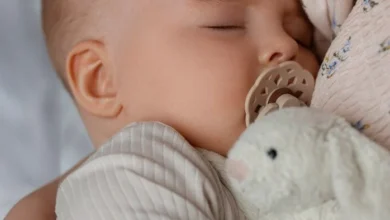
Alone: The requirement that a baby sleep alone is absolute. This means the sleep surface should be free of stuffed animals, blankets, bumpers, pillows, or any soft items that could obstruct an infant’s airway. While room-sharing is strongly encouraged—keeping the baby in the parents’ room for the first six to twelve months—bed-sharing is explicitly discouraged by health organizations. The physical proximity afforded by a bassinet or a specialized bedside sleeper allows for easy monitoring and nighttime feedings without the inherent risks of soft bedding or parental movement associated with co-sleeping in an adult bed.
Back: Placing an infant on their back for every sleep period—naps and nighttime alike—is perhaps the most effective action a parent can take. The physiology of an infant’s airway is such that sleeping on the back allows the trachea to sit on top of the esophagus, making it physically difficult for regurgitated milk to be inhaled into the lungs. Conversely, sleeping on the stomach can cause the airway to be compressed or allow for the re-breathing of carbon dioxide.
Crib: The physical structure of the sleeping environment must be safety-certified. A firm, flat mattress inside a crib, bassinet, or playard that meets the current Consumer Product Safety Commission (CPSC) standards is essential. Parents are advised to avoid second-hand cribs that may have missing hardware, broken slats, or have been subject to safety recalls. The mattress must fit snugly against the sides of the crib; if a gap exists where a finger can be inserted, the risk of limb entrapment or suffocation increases.
Statistical Context and Current Public Health Data
According to the Centers for Disease Control and Prevention (CDC), there are approximately 3,400 sleep-related infant deaths in the United States annually. While the decline in SIDS cases has been significant since the 1990s, the emergence of other sleep-related deaths—such as accidental suffocation and strangulation in bed—remains a concern.
Data suggests that the highest risk period for SIDS is between the ages of one and four months, though risks persist up to the first year of life. Research indicates that infants born prematurely or with low birth weights are at a statistically higher risk, necessitating an even stricter adherence to safe sleep practices. Furthermore, studies have shown that breastfeeding is associated with a reduced risk of SIDS, potentially due to the infant’s increased arousal levels and the transfer of maternal antibodies.
Environmental Factors and Temperature Control
Beyond the physical location of the sleep, the climate of the room plays a vital role in safety. Infants are less capable of regulating their own body temperature than adults. Overheating has been identified as a significant risk factor for SIDS. The recommended ambient temperature for an infant’s room should be comfortable for a lightly clothed adult.
To maintain warmth without the danger of loose blankets, which pose a suffocation risk, experts advocate for the use of wearable blankets or sleep sacks. These products ensure the infant remains covered without the risk of the fabric being pulled over the face. The goal is to keep the infant’s chest warm while ensuring the head and face remain clear and unobstructed at all times.
Developmental Milestones and Transitional Safety
As infants reach developmental milestones, such as learning to roll over, the safety guidelines remain consistent but require vigilance. Parents often ask if they should continue placing a baby on their back once the baby can roll over independently. The medical consensus is to continue placing the baby on their back to start the sleep cycle; if the baby rolls over on their own, it is generally considered safe to leave them in that position, provided they have the strength to lift their head and adjust their body.
However, once a baby begins to show signs of attempting to roll, the use of swaddles must be discontinued. Swaddling is an effective tool for calming newborns, but it becomes a hazard if the infant can roll onto their stomach while restricted by a blanket. Transitioning to a sleep sack allows for full arm mobility, which is essential for safety once the baby becomes mobile.
Institutional Guidance and Parental Responsibility
The American Academy of Pediatrics (AAP) and the National Institutes of Health (NIH) provide the most comprehensive, evidence-based recommendations. These organizations emphasize that safe sleep is not a "one-time" decision but a continuous commitment. Official responses from these bodies consistently underscore that there is no single product or device that can replace the necessity of a safe environment. While technology, such as smart monitors and specialized bassinets, can provide peace of mind, they should be viewed as supplements rather than replacements for the core tenets of safe sleep.
Parents are encouraged to consult with their pediatricians during well-child visits to discuss their specific sleep setups. Pediatricians act as the first line of defense in identifying environmental hazards in the home. If a parent is unsure about the safety of a particular product, they should verify its compliance with current CPSC regulations.
The Broader Impact on Infant Mortality Rates
The cumulative effect of these practices has fundamentally altered the landscape of infant care. The broader impact of promoting safe sleep is a reduction in preventable deaths, which remains a primary goal of public health initiatives. Beyond the statistical significance, these practices provide a structured approach that reduces parental anxiety. By creating a predictable and safe environment, parents can focus on the developmental needs of their child, knowing that the most dangerous risks have been mitigated through simple, consistent habits.
As the industry continues to innovate, companies are increasingly aligning their product designs with these clinical recommendations. From the development of breathable mattress materials to the engineering of bedside sleepers that prioritize both accessibility and safety, the market is reflecting the prioritization of infant welfare. Ultimately, the synthesis of parental vigilance, evidence-based medical advice, and high-quality, safety-conscious products creates the most effective defense against the hazards of infant sleep. As research continues to refine these recommendations, the message remains clear: the simplest, most traditional methods—alone, on the back, in a safe crib—remain the most effective way to ensure a lifetime of sweet dreams.