Vote Like a Mother: How a New Voter Guide is Bridging the Gap in U.S. Maternal Health Policy

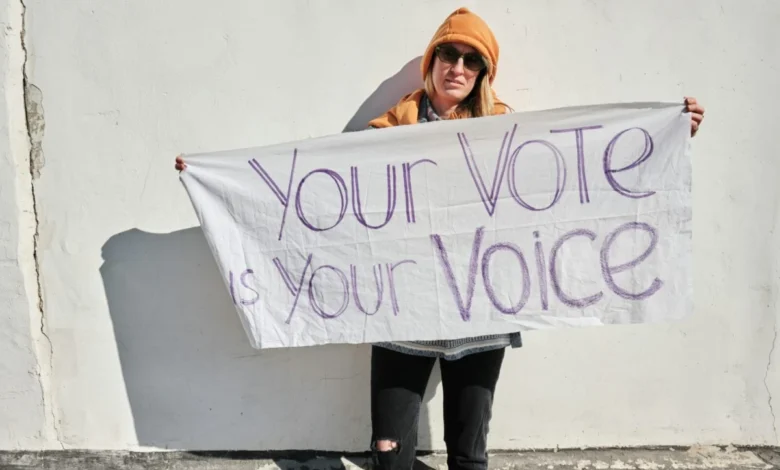
With over 85 million mothers currently residing in the United States, the collective influence of this demographic on the American political landscape is profound. Yet, a troubling paradox persists: while the U.S. represents one of the most affluent nations in the world, it simultaneously faces a maternal health crisis that ranks as the most dangerous among developed countries. As the 2026 election cycle approaches, a new nonpartisan initiative, Vote Like a Mother, is seeking to transform this crisis into a central issue at the ballot box by equipping voters with data-driven insights into their candidates’ records on maternal health.

The initiative is a joint venture between two prominent advocacy organizations: the Chamber of Mothers, a 501(c)(3) nonprofit with a network spanning over 50 local chapters, and Healthy Moms, Healthy Babies America (HMHBA), a national organization co-founded by Olivia Walton and Cara Osborne. By providing a centralized, free digital tool, the organizations aim to demystify the often-complex intersection of state-level policy and maternal outcomes.

The Anatomy of a Maternal Health Crisis
The statistics surrounding maternal mortality in the United States are both sobering and, according to the Centers for Disease Control and Prevention (CDC), largely preventable. CDC data indicates that approximately 87% of pregnancy-related deaths occur due to preventable factors, yet the system frequently fails to catch these complications during critical windows.

Research highlights that nearly one-third of all pregnancy-related fatalities occur within the first year postpartum. This window is often described as the "fourth trimester," a period where the intensity of medical oversight typically wanes. Compounding this issue is the fact that roughly 40% of new mothers fail to attend their postpartum follow-up appointments, according to studies cited by the American College of Obstetricians and Gynecologists (ACOG). These gaps in care often lead to untreated postpartum depression, undiagnosed hypertension, and complications related to pelvic floor health and lactation.

The disparities are further exacerbated by systemic inequities. Black women remain more than three times as likely to die from pregnancy-related causes as white women, while American Indian and Alaska Native women face risks approximately twice as high. Furthermore, the rapid closure of rural labor and delivery units has created "maternal care deserts," leaving many women in remote areas without access to the life-saving services required during childbirth and the immediate postpartum period.

Bridging the Knowledge Gap: The Vote Like a Mother Tool
The Vote Like a Mother tool, accessible at votelikeamother2026.com, serves as an educational bridge between abstract health statistics and individual voter agency. The platform provides a state-by-state breakdown of maternal mortality rates compared to national and international averages.

Beyond providing data, the tool offers a comprehensive directory of candidates running in the 2026 gubernatorial races. Because state governments hold primary jurisdiction over Medicaid expansion, rural hospital funding, and public health initiatives, the role of a governor is perhaps the most significant in determining the quality of care a new mother receives.

For instance, the tool tracks which states have extended postpartum Medicaid coverage to a full 12 months—a key policy recommendation supported by major health organizations—versus states that still restrict coverage to the traditional 60-day period. By mapping these policy positions directly to the individuals appearing on the 2026 ballot, the guide aims to remove the barriers to informed voting that many busy parents face.

The Political and Economic Stakes
The 2026 election cycle is particularly critical, with 36 states set to elect governors. These executives and their respective state legislatures serve as the gatekeepers for funding and regulation. The policy levers available to these officials include:

- Medicaid Extension: Ensuring coverage for low-income mothers for a full year post-birth, rather than the standard two-month window.
- Rural Healthcare Infrastructure: Providing subsidies or incentives to keep labor and delivery units open in rural, underserved counties.
- Home Visiting Programs: Funding nurse-led home visitation programs that have been shown to improve health outcomes for both parent and child.
- Paid Family Leave: Legislating state-level mandates for paid leave, which allows for physical recovery and bonding without the threat of financial ruin.
Erin Erenberg, CEO of the Chamber of Mothers, has stated that the current crisis is a failure of both major political parties to prioritize the basic needs of families. "The solution to America’s maternal health crisis isn’t hard to conjure, yet too many elected officials, regardless of party, continue to overlook what moms ask for and need," Erenberg said. She defines the goal of the campaign as empowering mothers to "vote their values" and prioritize the well-being of the next generation.

A Nonpartisan Vision for 2030
The formation of the HMHBA, led by Robin Reck, carries the specific, ambitious mandate of cutting the U.S. maternal death rate in half within five years. Both HMHBA and the Chamber of Mothers emphasize that maternal health is a rare issue that maintains high levels of bipartisan support among the electorate.

Recent polling suggests that more than 80% of American voters, regardless of their political affiliation, support significant investment in maternal healthcare and policy changes aimed at preventing maternal mortality. The Vote Like a Mother guide is, at its core, a mechanism to capitalize on this consensus and convert broad public support into concrete legislative change.

"It’s unacceptable that where you live still determines whether you survive having a baby in this country," said Robin Reck, executive director of HMHBA. "It is unconscionable that most moms have no idea how their own state stacks up."

The Path Forward: Implications for Voters
The implications of this initiative extend beyond the 2026 election. If successful, the tool could establish a new standard for how advocacy groups engage voters on complex public health issues. By simplifying the information retrieval process—an often daunting task for working parents—the organizations are betting that increased voter engagement will force candidates to address maternal health as a top-tier campaign issue.

For voters, the takeaway is clear: the health outcomes of their communities are directly linked to the policies enacted by their elected officials. By utilizing the data provided in the voter guide, citizens can evaluate whether their candidates’ platforms align with the goal of fostering a safe, supportive environment for families.

As the political season intensifies, the efforts of the Chamber of Mothers and HMHBA represent a growing movement to hold the political establishment accountable. With 85 million mothers in the electorate, the potential for this voting bloc to shift the needle on maternal health policy is significant. The challenge remains to move from awareness to action, ensuring that by the time the next cycle of state and federal elections concludes, the United States has made measurable strides in addressing the preventable, systemic failures that continue to endanger the lives of its mothers.

In summary, the Vote Like a Mother guide serves not just as a lookup tool, but as a call to action for a population that has historically been underserved by the political system. By linking personal health experiences to the ballot box, the initiative aims to ensure that maternal health is no longer a footnote in political debates, but a litmus test for every candidate seeking to lead at the state level. The future of American maternal health, according to the project’s founders, depends on the ability of mothers to recognize their own power and exercise it on behalf of their families and their communities.