The Ultimate Guide to Sustainable Vegan Leather Alternatives and the Realities of Plastic-Free Innovations

The global fashion industry is currently navigating a profound transformation as consumers increasingly demand transparency, ethical production, and environmental accountability. At the heart of this shift is the controversial debate surrounding leather. While conventional animal leather has long been criticized for its ecological footprint and ethical implications, its modern alternative—marketed broadly as "vegan leather"—is facing its own reckoning. The emergence of plant-based materials marks a new chapter in textile science, yet the distinction between true sustainability and "greenwashed" synthetic plastics remains a critical hurdle for the industry.
The Environmental Paradox of Conventional Leather
To understand the rise of alternatives, one must first examine the systemic issues inherent in traditional leather production. Conventional leather is often defended as a byproduct of the meat industry, yet it remains a highly profitable global trade valued at over $400 billion. The environmental costs are multifaceted. According to the Higg Materials Sustainability Index, leather ranks as one of the most impactful materials to produce, primarily due to the land use and methane emissions associated with livestock.
The processing of hides involves a chemically intensive tanning stage. Approximately 90% of global leather is tanned using chromium, a process that can result in the discharge of toxic heavy metals into local water systems, particularly in regions with lax environmental regulations. Furthermore, the expansion of cattle ranching remains a primary driver of deforestation in the Amazon rainforest, contributing to biodiversity loss and the acceleration of climate change.
The Rise and Criticism of Synthetic Vegan Leather
As awareness of these issues grew, the fashion industry pivoted toward "vegan leather." However, for decades, this term was largely a euphemism for petroleum-based plastics. Polyvinyl chloride (PVC) and polyurethane (PU) became the industry standards for "pleather."
PVC is widely regarded by environmental organizations, including Greenpeace, as the most damaging plastic to the environment. Its production releases dioxins and requires phthalates for flexibility, many of which are known endocrine disruptors. While PU is considered a "lesser evil" because it requires fewer toxic additives and does not release the same level of dioxins, it remains a fossil-fuel-based product that contributes to microplastic pollution and is not biodegradable.
The recent "Green Claims Directive" proposed by the European Commission highlights the growing legal scrutiny surrounding these materials. Brands are increasingly prohibited from using vague terms like "eco-friendly" or "sustainable" for products that are essentially virgin plastics, forcing a shift toward genuine bio-based innovations.
A Chronology of Material Innovation
The evolution of leather alternatives has moved through four distinct phases:
- The Era of Synthetics (1920s–1990s): The introduction of PVC and later PU as cheap, durable alternatives for upholstery and fast fashion.
- The Microfiber Movement (1990s–2000s): High-performance synthetics designed to mimic the breathability of animal skin.
- The Bio-Based Revolution (2010s–Present): The birth of materials utilizing food waste and plant fibers, such as Piñatex and Vegea.
- The Plastic-Free Frontier (Current): A burgeoning movement to eliminate synthetic binders (PU) entirely, achieving 100% circularity.
Comprehensive Directory of Plant-Based Alternatives
As of 2024, the landscape of plant-based leather is diverse, ranging from waste-stream innovations to laboratory-grown mycelium. Below is an analysis of the leading materials currently influencing the market.

Waste-Stream and Food-Industry Byproducts
AppleSkin (Vegatex): This material utilizes the skins and cores discarded by the industrial juicing industry in northern Italy. The waste is dried and ground into a fine powder, then mixed with PU and applied to a cotton/polyester canvas. While it reduces food waste, it currently relies on a roughly 50% synthetic composition.
Grape Leather (Vegea): Developed in Italy, Vegea uses "pomace"—the grape skins, stalks, and seeds left over from winemaking. Like AppleSkin, it is a bio-based hybrid, utilizing bio-plastics to create a durable, leather-like finish. It has gained traction through partnerships with luxury car manufacturers like Bentley and global retailers like H&M.
Pineapple Leather (Piñatex): One of the most commercially successful alternatives, Piñatex is made from pineapple leaf fibers. These leaves are a byproduct of the fruit harvest, requiring no additional land or water to produce. While the base is biodegradable, the finished sheets are often coated with a petroleum-based resin for durability, meaning they are not currently plastic-free.
Banana Leather (Banofi): Utilizing the stems and leaves of banana plants that would otherwise be burned, Banofi provides a secondary income for smallholder farmers. The process involves extracting fibers and blending them with natural and synthetic additives to create a sturdy textile.
Coffee Leather: Innovative brands like Culthread have experimented with recycled coffee grounds. These materials typically consist of 30% coffee waste and 70% recycled plastics (rPET), finished with a PU coating.
Plant and Leaf Innovations
Cactus and Agave Leather (Desserto): Produced by the Mexican company Adriano Di Marti, these materials use the leaves of the nopal cactus and agave waste from the tequila industry. The nopal cactus is a carbon sink and requires minimal irrigation. While highly sustainable in terms of raw material, the finished product typically incorporates a bio-polyurethane binder.
Teak Leaf Leather: This artisanal material involves harvesting fallen teak leaves, which are then dyed and bonded with a fabric backing. To ensure the leaves do not crack, a thin PU laminate is applied, providing water resistance and flexibility.
Corn Leather: Often referred to as "maize leather," this material uses dextrose extracted from corn to create a biopolymer. While it reduces reliance on fossil fuels, the end product is still a form of plastic, albeit one derived from a renewable source.
The Quest for Plastic-Free Solutions
The primary critique of the materials listed above is their "hybrid" nature; by mixing organic matter with plastic, they become difficult to recycle or compost. However, a select group of innovators is achieving the "holy grail" of 100% plastic-free leather.
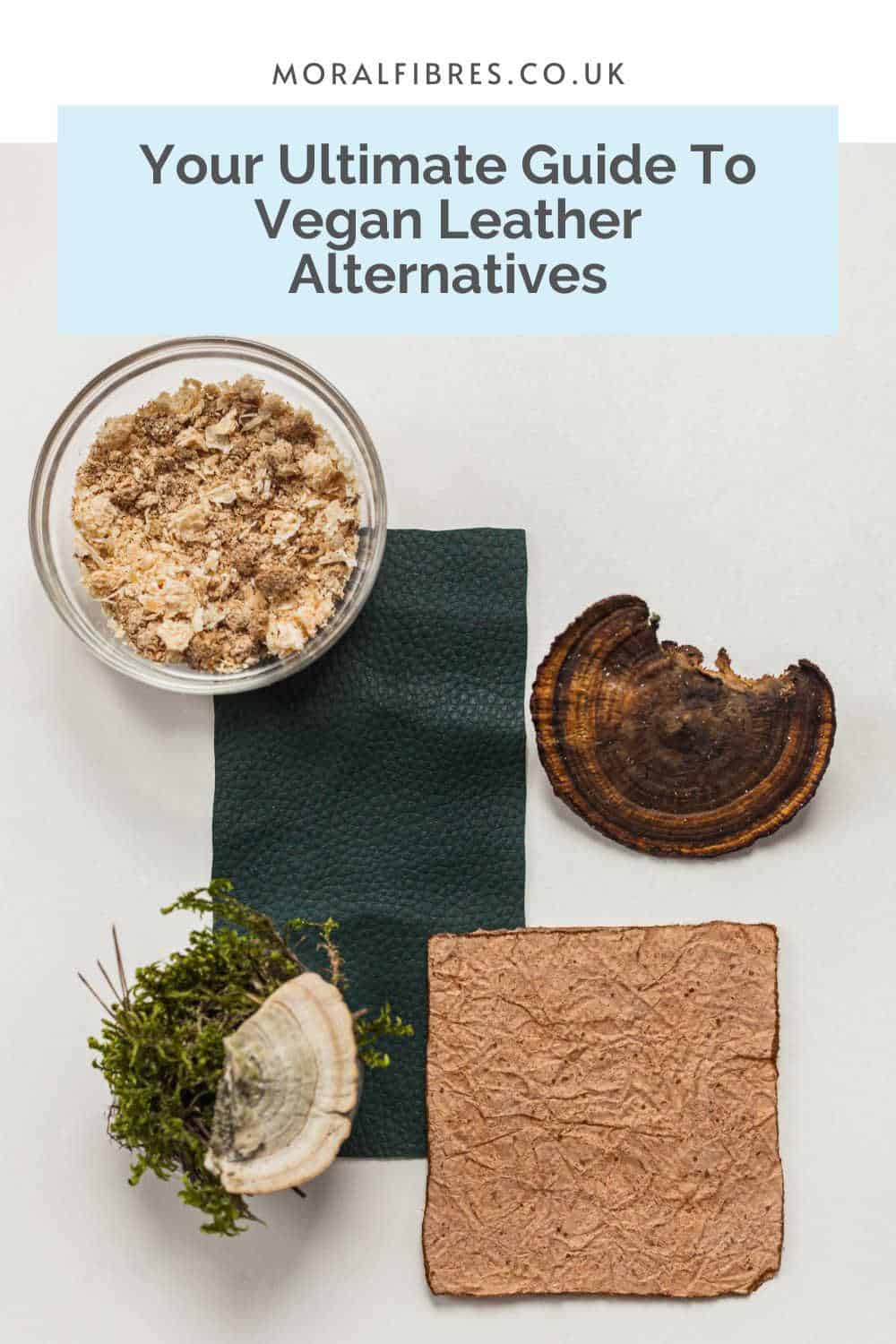
Mushroom Leather (MuSkin): Derived from the Phellinus ellipsoideus fungus, MuSkin is a purely organic material. It is treated with natural substances and is entirely biodegradable and compostable. Large-scale competitors like Mylo (by Bolt Threads) have faced scaling challenges, but the technology remains a pinnacle of sustainable textile science.
Coconut Leather (Malai): Malai is grown using bacterial cellulose from fermented coconut water. This process results in a material that feels like a cross between leather and paper. It is entirely vegan and, crucially, free from synthetic coatings, making it fully compostable at the end of its life.
Tomato Leather: Bioleather, an Indian startup, has developed a process to extract cellulose from tomato plant waste. By layering the fibers, they have eliminated the need for a PU topcoat, winning accolades from animal rights organizations like PETA for their innovation.
Cork Leather: Cork is harvested from the bark of the cork oak tree without harming the tree itself. It is naturally water-resistant and durable. While many manufacturers use a polyester or PU backing for strength, a 100% sustainable version can be achieved by using a cotton backing and natural adhesives.
Economic and Market Implications
The shift toward these materials is not merely an ethical choice but an economic necessity. The global synthetic leather market is projected to reach $67 billion by 2030. High-end luxury groups, including LVMH and Kering, are investing heavily in biotech startups to secure their supply chains against future regulations on carbon emissions and animal welfare.
However, challenges remain regarding scalability and cost. Currently, high-quality plant-based leathers like MuSkin or Malai are more expensive to produce than traditional PU or even low-grade animal leather. Experts suggest that as production facilities scale and "bio-factories" become more common, the price point will drop, allowing these materials to move from niche luxury goods into the mass market.
Analytical Outlook: The Future of Materials
The "greenwashing" of vegan leather is a temporary phase in a larger technological evolution. As consumers become more educated, the demand for transparency regarding "bio-content" vs. "plastic-content" will intensify. We are likely to see a move toward "circular" materials—those that can either be returned to the earth as nutrients (compostable) or kept in a closed-loop recycling system.
The ultimate success of plant-based leather will depend on three factors:
- Durability: Can a plastic-free material last as long as a chrome-tanned hide?
- Scalability: Can we produce enough mushroom or coconut leather to satisfy global demand without creating new ecological imbalances?
- Transparency: Will brands be honest about the PU content in their "plant" bags?
The transition away from animal-based and petroleum-based materials is inevitable, driven by both climate reality and shifting social values. While the "perfect" alternative is still being refined, the current diversity of innovations—from tequila waste to fermented tea—represents a significant leap toward a more harmonious relationship between the fashion industry and the planet.