The Ultimate Guide to Sustainable and Ethical Bag Brands in the United Kingdom

The fashion industry, responsible for approximately 10% of global carbon emissions and 20% of global wastewater, is facing increasing pressure to adopt circular economy principles. As consumer awareness regarding the environmental impact of textile waste grows, the market for sustainable accessories in the United Kingdom has expanded significantly. For individuals seeking to align their purchasing power with environmental stewardship, selecting an ethical bag involves navigating a complex landscape of material sourcing, labour practices, and waste management. This report examines the leading brands operating within the UK market that are setting new benchmarks for sustainability in accessory manufacturing.
The Environmental Imperative of Sustainable Accessories
The global bag and luggage market is projected to reach significant valuations by 2030, yet the traditional manufacturing process remains heavily reliant on virgin plastics and resource-intensive leather production. The environmental cost of a single conventional handbag often includes high water consumption, chemical tanning agents that pollute local water tables, and a high probability of ending up in a landfill within five years of purchase.

To mitigate this, the brands highlighted in this guide utilize a variety of circular methodologies. These include the repurposing of industrial waste, the application of plant-based leather alternatives, and the implementation of “closed-loop” production cycles. By prioritizing durability and repairability, these manufacturers are shifting the narrative from disposable fashion to long-term investment pieces.
Leading Brands in the UK Sustainable Market
BEEN London: Redefining Waste as a Resource
BEEN London operates on a model of extreme circularity. Founded to address the accumulation of textile and material waste in urban centers, the company specializes in crafting bags from what would otherwise be considered refuse. Their supply chain utilizes leather offcuts from the luxury industry, recycled nylon, and innovative bio-materials such as pineapple leaf fibre and apple skin.
The brand’s design strategy is notable for its zero-waste cutting patterns. By utilizing strictly rectangular and square panels, they eliminate the offcut waste typically associated with traditional pattern cutting. Furthermore, their manufacturing takes place entirely within the United Kingdom, which serves to minimize the carbon footprint associated with international logistics.

Baggu: Scalable Sustainability and Ethical Labour
While originating in the United States, Baggu has established a significant presence in the UK through high-end retailers. Their operational focus is on the efficiency of material usage. Their signature totes are constructed from a single continuous piece of recycled nylon, a design choice that maximizes material yield and minimizes seam stress, thereby increasing the product’s lifespan.
From an ethical standpoint, Baggu has aligned its operations with the International Labour Organisation (ILO) Fundamental Principles and Rights at Work. Their supply chain transparency reports indicate that factories are subjected to regular audits to ensure compliance with international fair wage standards and workplace safety regulations, addressing a common criticism of the mass-produced accessory market.
Elvis & Kresse: Pioneering Upcycling in Luxury
Elvis & Kresse represent the vanguard of British upcycling. Since their inception, they have focused on the reclamation of decommissioned materials—specifically fire hoses discarded by the British Fire Brigades. These hoses, which would otherwise be sent to landfills, possess inherent durability and weather resistance, making them ideal for high-utility bags.

The brand’s commitment to social impact is evidenced by their partnership with The Fire Fighters Charity, to which they donate 50% of the profits from their fire-hose collections. Beyond the hose range, their use of reclaimed parachute silk and Burberry manufacturing offcuts demonstrates a sophisticated approach to material recovery that preserves the structural integrity and aesthetic value of luxury goods.
Roka: Weather-Resistant Performance and Pre-Consumer Waste
Roka’s approach focuses on the intersection of utility and environmental responsibility. Their bags, characterized by a weather-resistant finish, are constructed from recycled nylon derived from pre-consumer waste. By sourcing fibres from unused garments and industrial textile scraps, Roka reduces the demand for virgin synthetic production, which is a primary driver of microplastic pollution in the fashion sector. Their focus on multi-pocketed, ergonomic design caters to the growing demand for functional, durable accessories that can withstand daily urban commuting.
Sandqvist: Fair Wear and Environmental Stewardship
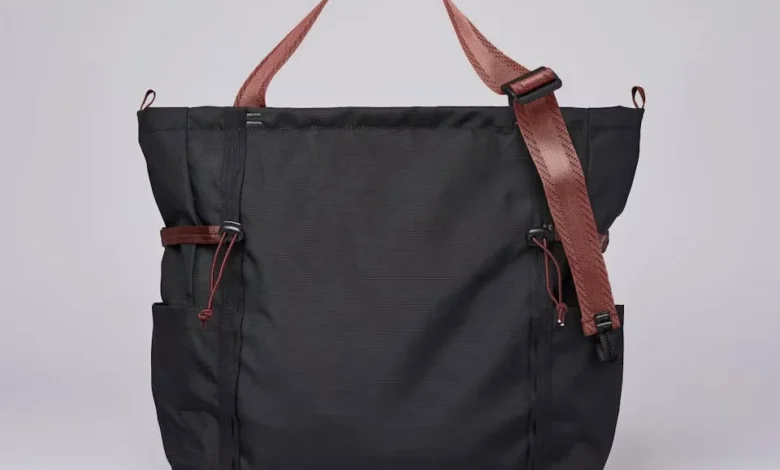
The Swedish brand Sandqvist emphasizes the importance of systemic industry change through its membership in the Fair Wear Foundation. This organization mandates a rigorous code of conduct, ensuring that all workers in their supply chain receive a living wage and work in safe, regulated environments.

Sandqvist’s commitment to sustainability extends to the chemical management of their production processes. By strictly monitoring the use of dyes and water-treatment facilities, they aim to reduce the ecological impact of their manufacturing in regions where environmental regulations may be less stringent. For UK-based consumers, the brand has streamlined its logistics to ensure that import duties and taxes are integrated into the purchase price, simplifying the process of buying from a European supplier.
Data Analysis: The Shift in Consumer Purchasing
According to recent industry reports, over 60% of UK consumers are now willing to pay a premium for products that can be verified as sustainable or ethically produced. This shift in sentiment is forcing a change in the accessory sector.
- Longevity: Sustainable bags now average a 10-year lifespan compared to the 2-3 year industry average for high-street fast fashion accessories.
- Carbon Footprint: Brands that prioritize local manufacturing (such as BEEN London and Elvis & Kresse) report up to 40% lower transport-related carbon emissions compared to brands relying on globalized, long-distance supply chains.
- Material Sourcing: The rise of vegan leathers—specifically those derived from apple, pineapple, and cactus—has created a new market segment that is increasingly competitive with bovine leather in terms of both durability and aesthetics.
Broader Implications and Future Trends
The transition toward sustainable accessories is part of a broader regulatory movement in the UK and Europe. The introduction of the "Right to Repair" legislation and upcoming Extended Producer Responsibility (EPR) schemes will soon make it mandatory for fashion brands to take responsibility for the end-of-life stage of their products.

The brands listed in this guide are already ahead of these potential regulations. By offering lifetime repair services—as seen with Elvis & Kresse—and designing products for eventual recycling, these companies are effectively creating a blueprint for the future of the retail sector.
However, challenges remain. The scaling of upcycled materials is difficult, as the supply of high-quality waste is not always consistent. Furthermore, the "greenwashing" of the fashion industry remains a critical concern for regulators. To ensure authentic sustainability, consumers are encouraged to look for certifications such as the Fair Wear Foundation, GRS (Global Recycled Standard), and B-Corp status when evaluating new brands.
Conclusion
The evolution of the sustainable bag market in the UK demonstrates that ethical consumption no longer requires a compromise on style or functionality. By supporting brands that prioritize transparency, material innovation, and fair labour practices, consumers can exert significant influence on the fashion industry’s trajectory. As these brands continue to refine their supply chains and circular design methodologies, they offer a viable path toward a more sustainable and equitable future for global retail. For the modern consumer, the "upgrade" to an ethical bag represents more than a personal convenience; it is a measurable contribution to the reduction of global textile waste.
Related posts: