Parental vigilance regarding vehicular safety has evolved significantly over the past several decades, driven by advancements in biomechanical research and longitudinal crash data. Among the most critical safety mandates supported by pediatric experts and automotive engineers is the practice of keeping children in rear-facing car seats for as long as their seat’s height and weight limits allow. While the transition to a forward-facing position is often viewed by parents as a developmental milestone, safety advocates emphasize that delaying this transition is one of the most effective measures to mitigate the risk of catastrophic injury in the event of a collision.
The Biomechanics of Pediatric Crash Protection
The physiological vulnerability of young children is a primary factor in the design of rear-facing safety systems. Anatomically, children possess disproportionately large heads relative to their bodies, and their skeletal systems are still in the process of ossification. Specifically, the cervical spine—the area of the neck—is not yet fully developed, and the ligaments are significantly more flexible than those of an adult.
In a forward-facing position during a frontal collision, the sudden deceleration of a vehicle causes the child’s torso to be restrained by the harness system while the head continues to move forward with significant momentum. This creates a "hinge" effect at the neck, which can lead to severe injury or death. Conversely, a rear-facing seat acts as a protective cradle. During an impact, the seat shell absorbs the force of the collision and supports the child’s entire back, head, and neck. By spreading these forces across the entire surface area of the seat, the seat prevents the violent forward excursion of the head and the subsequent strain on the spinal cord.
Historical Context and Evolving Safety Standards
The history of child passenger safety has seen a steady progression toward more stringent guidelines. In the 1970s and 1980s, car seats were often viewed as secondary accessories; however, as the National Highway Traffic Safety Administration (NHTSA) began collecting more granular data on pediatric injuries, the focus shifted toward universal standards. The mandatory implementation of LATCH (Lower Anchors and Tethers for Children) systems in the early 2000s marked a turning point, allowing for easier and more secure installation of rear-facing devices.
The American Academy of Pediatrics (AAP) solidified its stance in 2011, shifting away from a one-year-old/20-pound threshold to a broader recommendation that children remain rear-facing for as long as possible. This policy was informed by a 2007 study published in the journal Injury Prevention, which analyzed crash data and concluded that children under the age of two are 75 percent less likely to die or sustain serious injury if they are riding in a rear-facing seat compared to a forward-facing one.
Comparative Crash Dynamics
Data from collision analysis consistently highlights the superiority of the rear-facing orientation. In a frontal crash—the most common type of severe automotive accident—the forces involved are directed into the seat shell rather than the child’s skeleton. This protection is not limited to frontal impacts; rear-facing seats also provide improved security during side-impact collisions. Because the seat’s design wraps around the child, it limits the lateral movement of the head and torso, which are often the primary points of injury when a vehicle is struck from the side.
Furthermore, statistics provided by the Insurance Institute for Highway Safety (IIHS) suggest that while modern vehicle safety features like airbags and side-curtain protection are highly effective for adults, they are not calibrated for the physical dimensions of children. A child’s smaller stature means they are often sitting below the optimal deployment zone of a vehicle’s integrated airbag system, making the protective shell of a rear-facing car seat the primary defense against kinetic energy transfer.
Addressing Parental Misconceptions
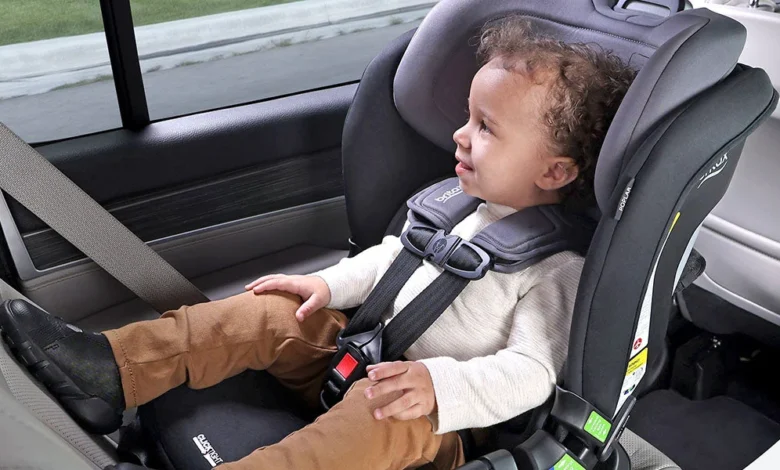
Despite the overwhelming clinical evidence, parents often express concerns regarding the practicalities of extended rear-facing. The most frequent concern involves perceived discomfort due to limited legroom. Many parents believe that because their child’s legs appear cramped—often bent against the vehicle seat back—they are experiencing physical pain.
Orthopedic experts, however, point out that children have significantly more flexible joints than adults. Pediatricians frequently observe that children seated in a rear-facing position often find creative, comfortable ways to sit, such as crossing their legs or resting them against the seat back. Furthermore, crash data indicates that lower extremity injuries are, in fact, more common in forward-facing children whose legs are allowed to hang freely, as they are more susceptible to snapping forward during the secondary impact phase of a crash.
A second common concern relates to motion sickness. While some children are prone to vestibular sensitivity, clinicians suggest that this is often a manageable condition that does not necessitate moving the child to a forward-facing position prematurely. Strategies such as ensuring the child has a clear view out of the rear window, avoiding heavy meals before travel, and ensuring adequate ventilation can significantly reduce symptoms without compromising safety.
The Role of Modern Manufacturing
The automotive and juvenile products industries have responded to these safety recommendations by engineering a new generation of convertible car seats. Current market offerings frequently boast weight capacities reaching 40 to 50 pounds, allowing the vast majority of children to remain rear-facing well into their toddler and preschool years.
These seats incorporate advanced energy-absorbing materials, such as EPP (Expanded Polypropylene) foam and steel-reinforced frames, which further enhance the protective capabilities of the device. When shopping for a car seat, safety experts advise parents to look for high rear-facing weight limits and to verify that the seat fits both the vehicle and the child correctly. The transition to a forward-facing seat should be viewed as a final option rather than an inevitable milestone, and it should only occur once the child has reached the maximum height or weight capacity of their current seat.
Implications for Public Health and Policy
The push for extended rear-facing travel is a central component of broader public health initiatives aimed at reducing pediatric mortality rates. According to the Centers for Disease Control and Prevention (CDC), motor vehicle crashes remain a leading cause of death for children in the United States. Consequently, state-level legislation has begun to reflect these clinical recommendations. Several states have moved to codify the "age-two" rule, requiring children to remain rear-facing until they reach their second birthday, with many advocates pushing for legislation that aligns with the AAP’s more flexible, weight-based recommendations.
The societal impact of these guidelines is quantifiable. As compliance with extended rear-facing practices increases, the frequency of severe cervical spine and head trauma in pediatric patients is expected to decline. This not only preserves the long-term health and development of children but also reduces the long-term economic burden on healthcare systems tasked with treating complex, often permanent, crash-related injuries.
Conclusion
The decision to keep a child rear-facing is an exercise in evidence-based parenting. While the convenience of a forward-facing seat may seem appealing as a child grows and begins to engage more with their surroundings, the physiological reality of crash forces dictates a conservative approach. By prioritizing the structural integrity of the rear-facing position, parents ensure that their children are protected by the most effective technology currently available. As automotive safety standards continue to evolve, the consensus remains clear: for the protection of a child’s delicate developing body, the longer a child remains rear-facing, the safer they will be.