Navigating Teen Nutrition: A Comprehensive Guide to Protein Requirements, Whole-Food Snacks, and Dietary Realities for Growing Adolescents


The phenomenon of the "second dinner"—whether it manifests as a late-night culinary excursion after the household has retired or a substantial sandwich consumed mere minutes after a complete evening meal—is a familiar reality for households with teenagers. This constant state of hunger is not merely a behavioral quirk, but a physiological necessity driven by one of the most rapid developmental phases in the human lifespan. During adolescence, the body undergoes profound skeletal, hormonal, and metabolic changes, requiring a steady influx of macronutrients and micronutrients. Among these, protein plays a critical role in providing satiety and supporting tissue growth, yet contemporary nutritional trends often mischaracterize adolescent requirements in favor of fitness-industry aesthetics.
To address the practical challenges of fueling growing teenagers without succumbing to social media-driven dietary fads, registered dietitians and pediatric nutritionists emphasize a return to whole-food sources. Understanding the baseline physiological needs of teenagers, the limitations of popular supplementation, and the practical implementation of nutrient-dense snacking is essential for parents navigating this demanding developmental window.
Physiological Demographics and Baseline Protein Requirements
Adolescence is characterized by an accelerated velocity of growth second only to infancy. During this period, both boys and girls experience significant increases in lean body mass, skeletal volume, and blood volume. Protein, composed of essential and non-essential amino acids, serves as the fundamental building block for these new tissues, as well as enzymes, hormones, and immune cells.
Nutritional science establishes baseline requirements through the Recommended Dietary Allowances (RDA), which represent the minimum daily intake sufficient to meet the nutrient requirements of nearly all healthy individuals in a specific life stage and gender group. For children aged 9 to 13, the RDA for protein is approximately 34 grams per day. For adolescent boys aged 14 to 18, the requirement increases to 52 grams per day, while adolescent girls in the same age bracket require approximately 46 grams per day.

Despite these minimum benchmarks, national dietary surveys—such as the National Health and Nutrition Examination Survey (NHANES)—consistently indicate that the vast majority of teenagers in developed nations comfortably exceed these baselines through standard dietary patterns. Data shows that teenage boys consume an average of roughly 86 grams of protein daily, while teenage girls average approximately 62 grams. Consequently, true protein deficiency is exceedingly rare among adolescents consuming a varied diet.
The primary exception to this trend involves adolescents, particularly teenage girls, who engage in restrictive dieting practices for weight management or aesthetic purposes. Caloric restriction frequently leads to an inadvertent reduction in protein intake, which can compromise linear growth, immune function, and the development of peak bone mass. Pediatric healthcare providers recommend clinical evaluation for adolescents exhibiting signs of restrictive eating or unexplained fatigue.
The Pitfalls of Protein-Maxxing and Dietary Supplementation
In recent years, internet culture—particularly platforms like TikTok—has popularized the concept of "protein-maxxing," a colloquial term for maximizing protein consumption under the assumption that greater intake invariably yields superior athletic performance, accelerated muscle hypertrophy, and enhanced body composition. This trend has filtered down to teenagers, many of whom have incorporated commercial protein powders, bars, and specialized beverages into their daily routines.
Nutritional experts caution against applying adult bodybuilding paradigms to adolescent physiology. While extra protein is frequently marketed as a shortcut to muscle growth, human physiology operates under strict utilization parameters. Scientific evidence indicates that the human body can utilize only a finite amount of protein—typically estimated around 25 to 30 grams per eating occasion—for muscle protein synthesis. Excess dietary protein is not stored as functional muscle tissue; rather, the nitrogen is removed and excreted via urea, while the remaining carbon skeletons are oxidized for energy or converted into adipose tissue (fat). Furthermore, excessive protein consumption without adequate fluid intake can contribute to dehydration, as the kidneys require additional water to clear nitrogenous waste products.
Compounding these physiological considerations is the regulatory landscape surrounding dietary supplements. Unlike pharmaceutical drugs, protein powders and nutritional supplements are not subjected to pre-market safety and efficacy evaluations by regulatory agencies such as the U.S. Food and Drug Administration (FDA). Independent laboratory analyses of commercial protein powders have frequently detected heavy metals, residual pesticide traces, and undisclosed ingredients not listed on the product label. Additionally, many commercial formulations contain high concentrations of non-nutritive sweeteners, herbal extracts, and proprietary blends whose safety profiles in growing adolescent populations have not been thoroughly evaluated through long-term clinical trials.

Nutritional Priorities for Adolescent Athletes
Adolescents engaged in competitive athletics or rigorous training schedules have elevated nutritional requirements compared to their sedentary peers. Physical exertion places micro-stress on muscle fibers, necessitating amino acids for repair and adaptation, while concurrent growth demands continued tissue expansion.
Sports dietitians generally recommend that teen athletes consume between 0.6 and 0.9 grams of protein per pound of body weight, depending on the intensity and duration of their training. For a 130-pound adolescent athlete, this translates to approximately 78 to 117 grams of protein daily.
However, timing and distribution are far more critical than total daily accumulation. Consuming massive quantities of protein in a single evening meal is inefficient. Instead, sports nutritionists advocate for a distributed approach—incorporating moderate amounts of protein across all meals and snacks. Furthermore, post-exercise recovery requires a synergistic combination of protein and carbohydrates. Carbohydrates replenish depleted glycogen stores in the skeletal muscle and liver, while protein provides the necessary amino acids to initiate muscle repair. Practical examples include traditional whole-food combinations such as Greek yogurt with fresh fruit, whole-grain toast with nut butter, or chocolate milk, which naturally provides an optimal carbohydrate-to-protein ratio.
Whole-Food Sourcing Versus Processed Alternatives
While convenience often drives families toward pre-packaged protein bars and shakes, whole foods offer superior nutritional density. Whole-food protein sources—such as eggs, poultry, fish, dairy, legumes, nuts, and seeds—are accompanied by a complex matrix of essential micronutrients that are frequently absent in isolated protein powders.
For instance, dairy products provide calcium and phosphorus, which are vital for the mineralization of the adolescent skeleton during peak bone-building years. Beans, lentils, and whole grains supply dietary fiber, supporting gastrointestinal health and maintaining stable blood glucose levels. Nuts and seeds contribute healthy monounsaturated and polyunsaturated fats, along with fat-soluble vitamins essential for neurological and endocrine development.
Relying on whole foods also mitigates the financial burden associated with specialty fitness products, which often carry a significant marketing markup. By stocking domestic kitchens with accessible, ready-to-eat whole-food items, parents can facilitate independent snacking behaviors that align with physiological needs.
Categorized Protein Snacks for Adolescents
To assist families in bridging the gap between convenience and nutritional quality, dietitians categorize snacks based on their protein content, utilizing whole foods as the primary foundation.
Snacks Providing 5 to 9 Grams of Protein
These options are ideal for minor energy dips between classes or structured activities, providing light satiety without displacing appetite for principal meals:
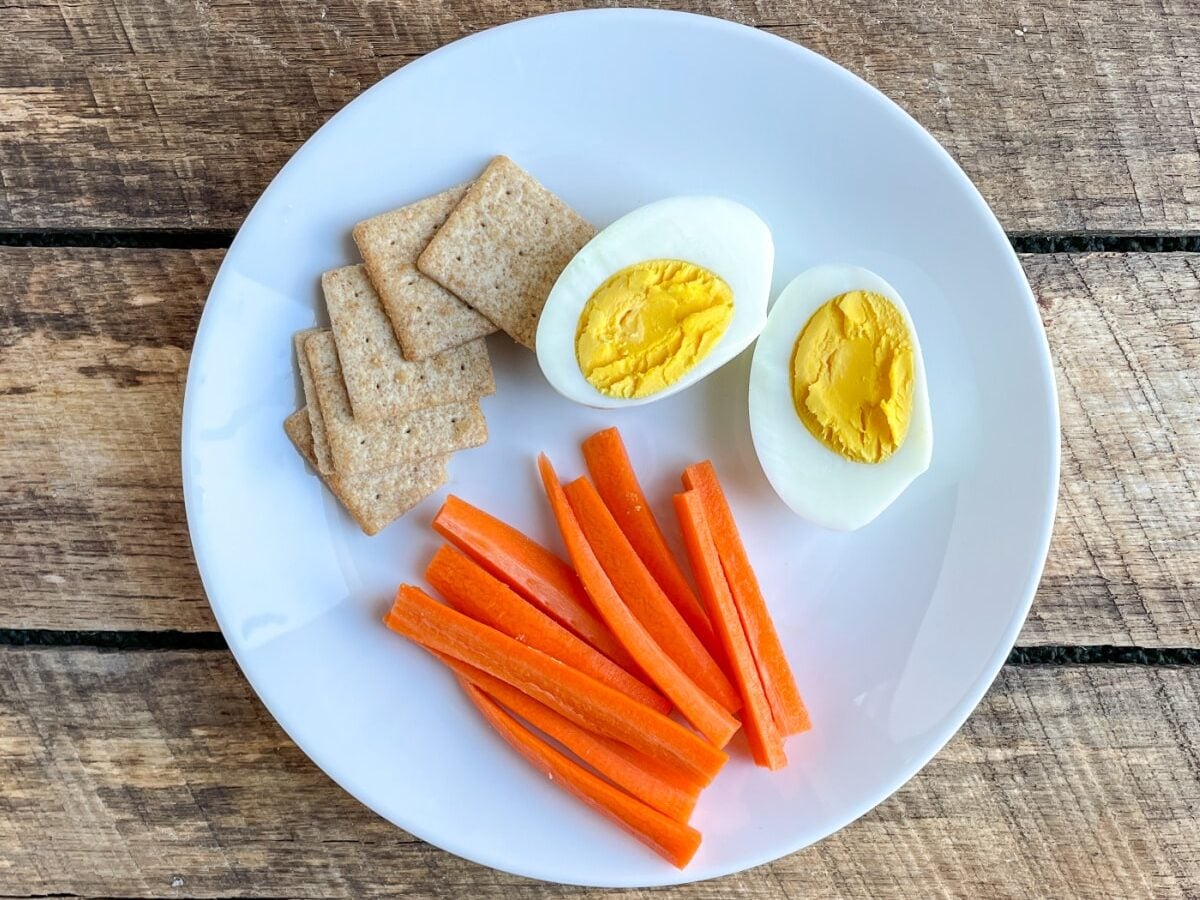
- One hard-boiled egg paired with a piece of fruit.
- A single string cheese or cheese stick with whole-grain crackers.
- A standard individual container of regular yogurt.
- A small handful (approximately one ounce) of almonds, walnuts, or mixed nuts.
- A quarter-cup of roasted chickpeas.
Snacks Providing 10 to 15 Grams of Protein
These moderate-protein choices support sustained focus during afternoon study sessions or pre-practice fueling:

- One cup of low-fat or Greek yogurt.
- A half-cup of cottage cheese served with sliced cucumbers or tomatoes.
- Two tablespoons of peanut butter or almond butter spread on apple slices or whole-wheat toast.
- A small individual pouch of tuna or salmon mixed with olive oil, served on whole-grain crackers.
- Edamame (steamed in the pod), yielding approximately one-half cup of shelled beans.
Snacks Providing 15 to 20 Grams of Protein
Substantial enough to satisfy ravenous post-school hunger, these selections bridge the gap until the evening meal:
- A smoothie blended with one cup of milk (or a fortified plant-based alternative), a scoop of nut butter, and half a frozen banana.
- Two hard-boiled eggs mashed with avocado on whole-grain toast.
- A standard serving of whole-grain waffles topped with Greek yogurt instead of traditional syrup.
- A quesadilla prepared with a whole-wheat tortilla and a quarter-cup of shredded cheese or black beans.
Snacks Providing 20 to 30 Grams of Protein
Designed for high-output adolescent athletes or growth spurts requiring significant caloric and macronutrient density:
- A substantial bowl of Greek yogurt layered with berries, hemp seeds, and a measured portion of granola.
- A turkey and cheese wrap utilizing whole-grain flatbread and lean deli meats.
- Leftover grilled chicken breast slices served with hummus and raw vegetables.
- A recovery smoothie incorporating a modest, partial serving of a rigorously vetted, low-additive protein powder blended with milk, oats, and frozen fruit.
Broader Implications and Public Health Perspectives
The dietary habits established during adolescence frequently persist into adulthood, shaping long-term chronic disease risk, metabolic health, and relationship with food. Public health initiatives increasingly emphasize food literacy—educating adolescents and their families on how to interpret nutritional information critically, distinguish evidence-based dietary science from social media marketing, and listen to internal hunger and satiety cues.
Pediatricians and registered dietitians stress that parental guidance should focus on creating a supportive food environment rather than policing intake. By maintaining a well-stocked pantry of accessible, nutrient-dense whole foods and fostering open communication regarding physical activity, body image, and nutrition, families can successfully navigate the demanding nutritional landscape of the adolescent years.
Related posts: