Acclaimed Author and Cartoonist Kate Beaton Bridges Sibling Loss and Ancestral History in Her Groundbreaking New Children’s Book Rebecca

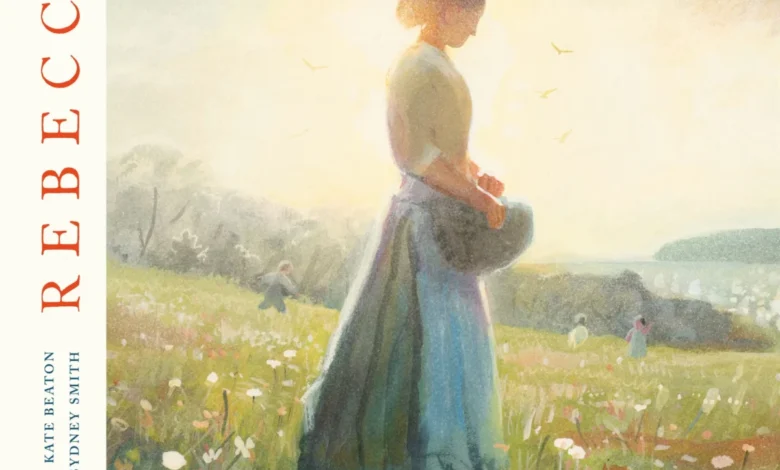
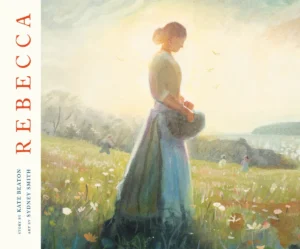
Acclaimed Canadian author and cartoonist Kate Beaton has released her latest literary work, a children’s picture book titled Rebecca, published by Roaring Brook Press. The release marks a profound departure from traditional children’s literature conventions, tackling heavy themes of adult mortality, historical tragedy, and enduring grief through a narrative deeply rooted in Beaton’s personal history and the maritime heritage of Nova Scotia.
Best known for her New York Times bestselling graphic memoirs and webcomics, Beaton brings a unique perspective to this latest publication. The book channels the profound sorrow of losing her older sister, Becky, to cervical cancer in 2018, while simultaneously connecting that modern familial grief to the survival story of an 18th-century ancestor, Rebecca Lombard Smith.
Main Facts and Chronological Framework
The genesis of Rebecca spans decades of personal trial, historical research, and creative evolution. Kate Beaton and her sister Becky were named after their grandmothers, carrying forward a maternal nomenclature that deeply connected them to generations of women. However, the trajectory of Beaton’s life shifted dramatically in the spring of 2018.
- May 14, 2018: Becky Beaton passes away after a rigorous three-year battle against aggressive cervical cancer, leaving behind a grieving family and dividing Kate Beaton’s life into distinct eras before and after the loss.
- May 13, 2019: Exactly one year after her sister’s passing, during a premature labor on Mother’s Day, Beaton gives birth to her first child, a daughter, narrowly missing the anniversary date of her sister’s death.
- 2019–2022: While spending quiet evening hours putting her young children to sleep in Port Hood, Nova Scotia, Beaton conceptualizes the storyline for Rebecca, utilizing writing as a therapeutic mechanism to process unresolved grief.
- September 2026: Roaring Brook Press officially publishes Rebecca, bringing a narrative featuring an adult protagonist, death, and profound loss into the children’s literature marketplace.
Historical Context and Ancestral Inspiration
While the emotional core of the book originates from the modern loss of Beaton’s sister, the narrative architecture of Rebecca is built upon the historical record of Rebecca Lombard Smith. In March 1789, Rebecca Lombard Smith was pregnant with her last child when her husband, whaling Captain David Smith, fell through the ice near Port Hood Island, Nova Scotia, and drowned.
While regional historical accounts traditionally emphasized the tragedy of Captain David Smith’s death, Beaton’s work shifts the analytical focus to the matriarch. Left alone on a remote island off the coast of Cape Breton, Rebecca Lombard Smith successfully raised six sons and one daughter through the harsh North Atlantic winters. She lived until November 30, 1821, passing away at the age of 76.

Beaton frequently walked with her infant child and dog to the Old Protestant Graveyard in Port Hood, where Rebecca Lombard Smith is interred. The historic headstone bears a rare personal inscription carved by her surviving sons—Lewis, Parker, and David—identifying her not merely as a casualty of circumstance, but as a deeply loved mother. This historical resilience provided Beaton with a framework to process contemporary sorrow, noting the stark contrast between her sister’s modern story ending in loss and her ancestor’s narrative concluding with survival and generational hope.
Publishing Industry Response and Analytical Implications
The publication of Rebecca has generated significant discussion within the North American publishing industry regarding the boundaries and subject matter appropriate for children’s literature. Traditionally, children’s picture books steer clear of complex adult grief, historical mortality, and the explicit death of primary figures.
Connie Hsu, publishing director at Roaring Brook Press, acknowledged the unconventional nature of the project. "My initial reaction to Rebecca was awe," Hsu stated. "My brain began to think about all the usual ‘rules’ about picture book publishing. Here, the main protagonist is an adult, the book is about loss, and two people die in the book! But I just had to publish it."
Literary analysts note that Beaton’s transition into children’s publishing follows a trajectory of increasingly vulnerable autobiographical and historical work. Her previous graphic memoir, Ducks: Two Years in the Oil Sands—which chronicled her time working in the industrial camps of Alberta—garnered widespread critical acclaim, including selection as one of former U.S. President Barack Obama’s favorite books of 2022 and designation as a New York Times Notable Book.
By applying her distinct storytelling capabilities to the picture book format, Beaton challenges the commercial assumptions of the publishing sector, demonstrating that young readers and families possess an appetite for emotionally resonant narratives that address real-world human experiences. Through Rebecca, Beaton establishes a bridge across centuries, linking the quiet endurance of an 18th-century Nova Scotian widow to contemporary maternal strength and the ongoing navigation of familial grief.
Related posts: