Connecting Developmentally Appropriate Practice and the Science of Reading


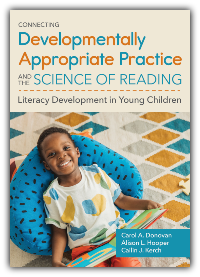
The pedagogical landscape of early childhood education has long been defined by a perceived dichotomy: the tension between Developmentally Appropriate Practice (DAP) and the Science of Reading (SOR). For decades, educators have debated whether the focus should remain on child-led, play-based exploration or shift toward the explicit, systematic instruction of literacy skills. However, a growing consensus among researchers and practitioners suggests that these two frameworks are not merely compatible but are mutually reinforcing. A new publication, "Connecting Developmentally Appropriate Practice and the Science of Reading," authored by Dr. Carol A. Donovan, Dr. Alison L. Hooper, and Dr. Cailin J. Kerch, provides a roadmap for integrating these approaches to optimize early literacy outcomes.
The Evolution of the Literacy Debate
To understand the current shift in classroom strategy, one must examine the history of early literacy instruction. DAP, rooted in the principles established by the National Association for the Education of Young Children (NAEYC), emphasizes that learning must be responsive to the social, emotional, and cognitive development of the individual child. It favors environments where children construct knowledge through play and active engagement.
Conversely, the "Science of Reading" is an umbrella term referring to a body of interdisciplinary research—including cognitive psychology, neuroscience, and linguistics—that explains how the human brain learns to read. The SOR movement gained significant momentum following reports from the National Reading Panel in 2000, which underscored the necessity of systematic phonics instruction. In the years that followed, many states passed legislation requiring schools to move away from "balanced literacy" models in favor of structured literacy.

For many practitioners, this legislative push created a false dilemma: adopt rigorous, teacher-led phonics and abandon play, or prioritize play and risk falling behind the current scientific evidence. This tension reached a boiling point in early childhood centers, where teachers often felt caught between administrative mandates for data-driven instruction and their professional commitment to child-centered learning.
Debunking the Myth of Incompatibility
The central argument for reconciliation lies in dismantling three persistent myths that have hindered progress in early education.
The first myth suggests that DAP is inherently non-instructional, while SOR is purely rigid. In reality, DAP does not advocate for "free-for-all" environments; it promotes intentional teaching. High-quality DAP environments require educators to scaffold learning based on specific developmental markers. Similarly, proponents of SOR argue that while explicit instruction is a component of the model, it is not synonymous with "drill-and-kill" worksheets. True application of SOR in early years focuses on engagement, where children apply decoding skills to meaningful play scenarios.
The second myth pertains to creativity versus rigor. Critics of SOR often claim that it stifles the imaginative nature of the preschool classroom. However, researchers point out that explicit skill-building—such as building a vocabulary-rich narrative—actually empowers children to express themselves more creatively. Conversely, the idea that DAP lacks rigor is a mischaracterization of the "scaffolding" process. Providing a child with the tools to master phonemic awareness at the appropriate developmental stage is a rigorous, highly skilled act of teaching.
The third myth posits that SOR is solely about decoding and DAP is solely about play. This ignores the holistic nature of literacy. SOR research acknowledges that oral language, comprehension, and background knowledge are essential pillars of reading. DAP acknowledges that children learn best when they are active participants in their environment. By combining these, teachers can use play to reinforce the very skills (like phonological awareness) that are the bedrock of reading readiness.
Translating Theory into Classroom Practice
The practical application of these combined frameworks can be observed in a common scenario: a childcare center transitioning to a more research-informed curriculum. Many lead teachers, like the fictionalized "Megan" in recent professional development workshops, initially fear that a focus on "the science of reading" will result in toddlers being forced into sedentary, flashcard-heavy instruction.
The transition, however, is far more nuanced. Experts suggest that for children aged 2–5, integrating SOR looks like:
- Phonological Awareness through Play: Singing songs that emphasize rhyme and alliteration.
- Environmental Print: Labeling classroom items to help children associate symbols with sounds and meanings.
- Interactive Read-Alouds: Using high-quality children’s literature to develop vocabulary and narrative comprehension through questioning.
- Manipulatives: Using alphabet blocks or magnetic letters to allow children to physically engage with the shapes and sounds of the alphabet.
This approach ensures that the instruction remains developmentally appropriate—respecting the child’s need for movement and choice—while simultaneously grounding that activity in the science of how language and literacy are acquired.

Data and Implications for Policy
The need for this synthesis is supported by sobering literacy data. According to the National Assessment of Educational Progress (NAEP), often referred to as the "Nation’s Report Card," a significant percentage of fourth-grade students consistently score below "proficient" in reading. Educational researchers argue that if the foundation is not laid correctly during the critical window of birth to age five, the achievement gap becomes significantly harder to close in later grades.
The implication for policy is clear: professional development for early childhood educators must move beyond the binary of "play vs. phonics." If states and districts want to improve long-term literacy outcomes, they must provide teachers with the training to implement evidence-based practices within a developmentally appropriate framework. The goal is to move toward a "Science of Early Learning" that respects the developmental needs of the child while honoring the cognitive realities of how literacy develops.
The Path Forward for Educators
The recent surge in resources, including the book by Donovan, Hooper, and Kerch, marks a turning point in the field. By providing educators with authentic video examples and actionable strategies, the professional development sector is moving toward a more sophisticated understanding of the classroom.
For school directors and program coordinators, the first step is creating a culture of inquiry rather than compliance. Instead of mandating a rigid, pre-packaged curriculum, administrators are encouraged to provide staff with the research literacy required to evaluate their own practices. When teachers understand the why behind the what, they are better equipped to adapt their instruction to the unique needs of their students.

As the field of early childhood education continues to grapple with these shifts, the consensus is shifting away from the exclusionary nature of the past. The future of early literacy is not found in choosing between the child’s play and the science of the brain; it is found in the deliberate, expert-led intersection of the two. This synthesis ensures that children are not only gaining the technical skills required for reading but are also developing a lifelong enthusiasm for learning, supported by an environment that understands the rhythm of their growth.