Rich Talk With Young Children: Transforming Literacy Through Dialogic Reading

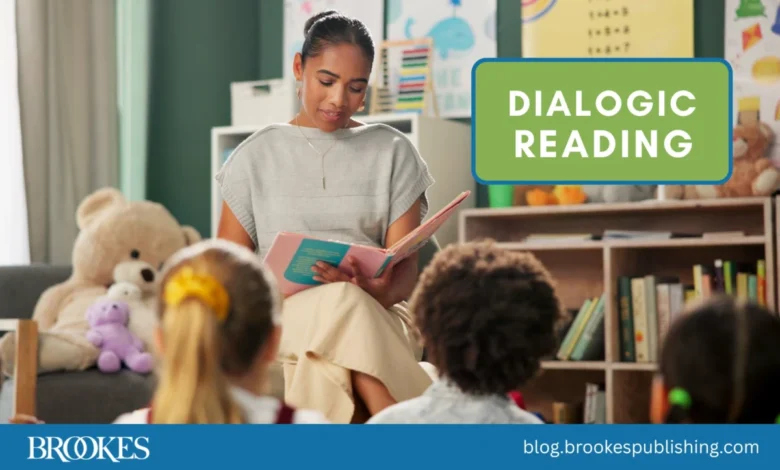
The evolution of early childhood education has shifted significantly toward interactive, student-centered learning environments, with dialogic reading emerging as a cornerstone pedagogical strategy. Derived from the core concepts presented in Rebecca Rolland’s latest work, "Rich Talk With Young Children," this method moves beyond the traditional passive listening model of storytelling. Instead, it positions the child as an active participant, fostering critical thinking, vocabulary acquisition, and deep narrative comprehension. By transforming the act of reading into a dynamic exchange, educators and parents can cultivate a richer, more intentional learning environment that prepares children for long-term academic success.
The Foundation of Dialogic Reading
At its core, dialogic reading is defined by a collaborative process where the reader and the child engage in a series of open-ended, analytical conversations about the text. Unlike standard read-aloud sessions where the adult dictates the narrative, dialogic reading requires the adult to facilitate a dialogue that invites the child to interpret illustrations, predict plot developments, and connect themes to their own lives. This approach is rooted in the belief that children learn most effectively when they are encouraged to articulate their internal thought processes aloud.
The practice relies on shifting from closed-ended questions—those that elicit a simple "yes" or "no"—to expansive, "how" and "why" inquiries. This technique pushes a child’s cognitive load, requiring them to synthesize information rather than merely recall facts. As Rolland notes in her research, the goal is not to reach the end of the book as quickly as possible, but to maximize the "conversational real estate" available within each page.
Chronology and Research Evolution
The scholarly interest in interactive reading strategies has a well-documented history. In the early 1990s, seminal research conducted by Dickinson and Smith (1994) provided a definitive link between the quality of classroom interaction and student literacy outcomes. Their longitudinal study, which observed preschool teachers’ reading habits, found that children who were exposed to "analytic" book talk—conversations that required reflection and critical thinking—showed statistically significant improvements in vocabulary and story comprehension.
This discovery served as a catalyst for future educational frameworks. By the early 2000s, educators began incorporating these findings into standard early childhood curricula. The transition moved from a focus on phonemic awareness alone to a more holistic view that included oral language development. Over the last decade, this approach has gained further traction as developmental psychologists and linguists have emphasized that the quality of language input in early childhood is a primary predictor of later academic performance.
Supporting Data and Literacy Metrics
Empirical evidence consistently supports the efficacy of dialogic reading in diverse classroom settings. According to various longitudinal studies, children participating in dialogic reading programs demonstrate higher scores in standardized language assessments compared to control groups who engaged only in traditional, passive reading.
The data suggests that the benefits are multifaceted:
- Vocabulary Expansion: Children exposed to dialogic reading are prompted to define new words within the context of the story, leading to better retention than rote memorization.
- Cognitive Flexibility: By discussing hypothetical scenarios within a story, children develop the ability to think abstractly.
- Narrative Construction: Engaging in dialogue helps children understand the structure of a story—the beginning, middle, and end—which directly improves their own future writing skills.
Research has also indicated that these benefits are most pronounced in low-income populations, where access to high-quality, language-rich interactions can serve as a vital intervention to bridge the "word gap." By prioritizing these intentional conversations, educators can mitigate the effects of early literacy disparities.
The Mechanics of Effective Implementation
For educators and parents looking to implement this strategy, the process involves a structured approach to questioning. For toddlers, questions might focus on labeling and simple identification, such as, "What is the dog doing in this picture?" As children move into the preschool and early elementary years, the complexity of the inquiry increases.
Advanced dialogic strategies include:
- Completion Prompts: Leaving a sentence unfinished for the child to complete, which encourages them to predict the narrative flow.
- Recall Prompts: Asking the child to summarize what has happened so far, which tests retention and sequential logic.
- Open-Ended Prompts: Encouraging the child to express their interpretation of a character’s motivation.
- Distancing Prompts: Bridging the gap between the book’s narrative and the child’s real-life experiences, such as, "Have you ever felt sad like the character in this story?"
Conversely, there are pitfalls to avoid. The practice should remain fluid; if a child appears disengaged, forcing a rigid questioning structure can prove counterproductive. Over-correcting a child’s grammar or prioritizing testing over the enjoyment of the story can stifle curiosity. The priority must remain on maintaining a warm, welcoming environment that encourages the child to see reading as a pleasurable and collaborative activity.
The Necessity of Cultural Responsivity
While the methodologies of dialogic reading are supported by rigorous research, experts like Rebecca Rolland emphasize that the implementation must be culturally responsive. One-size-fits-all education is rarely effective. In some cultures, storytelling traditions prioritize quiet, respectful listening over active interruption. Educators must be mindful of these nuances to ensure that dialogic reading feels inclusive rather than intrusive.
Cultural responsivity in this context means tailoring the strategy to the specific linguistic and social norms of the classroom. It involves selecting books that reflect the diverse backgrounds of the students and allowing children to participate in ways that feel comfortable to them. If a child is hesitant to speak, the educator should adjust the approach to focus on non-verbal cues or shared engagement, ensuring the process remains an invitation to learn rather than an interrogation.
Broader Impact and Educational Implications
The widespread adoption of dialogic reading has implications that reach far beyond the classroom walls. By training educators and caregivers to engage in "rich talk," schools are effectively expanding the toolkit available to the next generation of learners. This method transforms the book into a bridge—a tool that connects the child’s world to the broader concepts of society, history, and human emotion.
The implications for policy makers are also clear: investment in early childhood literacy programs should prioritize the training of educators in interactive pedagogical techniques. When teachers are equipped to facilitate deeper, more meaningful conversations, the long-term impact on literacy rates and academic attainment is substantial.
As society continues to grapple with the complexities of digital media and its impact on attention spans, the simple, human-centric act of reading and talking remains a radical and necessary intervention. The research provided by experts in the field reaffirms that human connection—mediated through books and sustained through intentional, thoughtful dialogue—remains the most effective technology for building the foundational skills required for critical thinking and lifelong learning. By embracing these strategies, we ensure that the next generation of students is not just literate, but articulate, reflective, and intellectually curious.
Related posts: