Mastering the Art of the Grilled Top Sirloin and Mediterranean Salad Pairing: A Comprehensive Culinary Guide

The modern culinary landscape is experiencing a significant shift toward balanced, protein-forward meals that seamlessly integrate vibrant Mediterranean flavors with accessible home-cooking techniques. As consumers increasingly seek restaurant-quality dining experiences within their own kitchens, the demand for reliable, step-by-step culinary methodologies has reached an all-time high. Central to this gastronomic trend is the strategic pairing of lean, versatile cuts of beef—specifically the top sirloin—with crisp, nutrient-dense salads featuring classic Mediterranean staples such as artichoke hearts, Kalamata olives, and fresh vine-ripened tomatoes.
Culinary professionals and home economists alike have long championed the top sirloin for its exceptional balance of rich beef flavor and relatively lean profile. Unlike heavily marbled cuts that require specialized preparation or extended cooking times, the top sirloin offers a high degree of versatility, lending itself equally well to outdoor grilling, indoor broiling, or traditional skillet cooking. When combined with a thoughtfully dressed bed of greens and robust vegetables, this cut transforms from a simple weeknight protein into a sophisticated, nutritionally complete entree. Industry data indicates that home-cooking trends over the past decade have increasingly favored dishes that combine high-protein meats with fresh produce, reflecting broader public health initiatives and dietary preferences favoring Mediterranean-style eating patterns.
Main Facts of the Preparation Process
Executing a successful steak and salad pairing requires precision, timing, and an understanding of foundational cooking physics. The preparation methodology begins with proper temperature control, whether utilizing an outdoor grill configured for direct cooking or a standard kitchen appliance set to broil. The primary objective is to develop a flavorful outer crust while maintaining a tender, juicy interior—traditionally achieved at a medium-rare doneness.
Seasoning forms the initial critical phase of the process. Rather than relying on complex marinades that can overpower the natural umami of the beef, culinary standards recommend a straightforward application of garlic and freshly cracked black pepper. This minimalist approach allows the inherent qualities of the top sirloin to take center stage, complementing rather than competing with the assertive flavors of the accompanying salad.
Cooking mechanics dictate that the steak must be exposed to high, direct heat for a relatively brief duration—approximately four minutes per side when placed four inches from a broiler heat source or cooked over medium-hot coals. This rapid searing locks in the natural moisture of the meat. However, the cooking process does not conclude the moment the beef is removed from the heat source. Professional chefs universally emphasize the necessity of the resting phase: transferring the cooked steak to a cutting board, tenting it loosely with aluminum foil, and allowing it to rest for a minimum of five minutes. This critical resting period permits the muscle fibers, which contract and push juices toward the center during heating, to relax and reabsorb the flavorful liquids throughout the cut.
Chronology and Step-by-Step Execution
A structured timeline is essential for synchronizing the preparation of a warm protein and a cold, crisp salad to ensure both components are served at their optimal temperatures and textures.
Phase One: Thermal Preparation and Seasoning
The operational sequence begins well before the meat touches the heat. The cooking apparatus—whether a charcoal or gas grill or an indoor oven broiler—must be thoroughly preheated to ensure an immediate, searing temperature upon contact. While the heat source reaches equilibrium, the top sirloin steak is prepared by generously sprinkling all surfaces with garlic and pepper.
Phase Two: The Thermal Transformation
The second phase involves the active cooking of the protein. Placed directly over medium-hot coals or positioned four inches beneath the broiler element, the steak undergoes a four-minute searing process on the first side. This is followed by a precise flip and an additional four minutes on the reverse side, targeting an internal temperature consistent with medium-rare doneness. Upon completion, the steak is immediately transferred to a clean cutting board and tented with foil to begin the crucial resting cycle.
Phase Three: Assembly of the Mediterranean Accompaniment
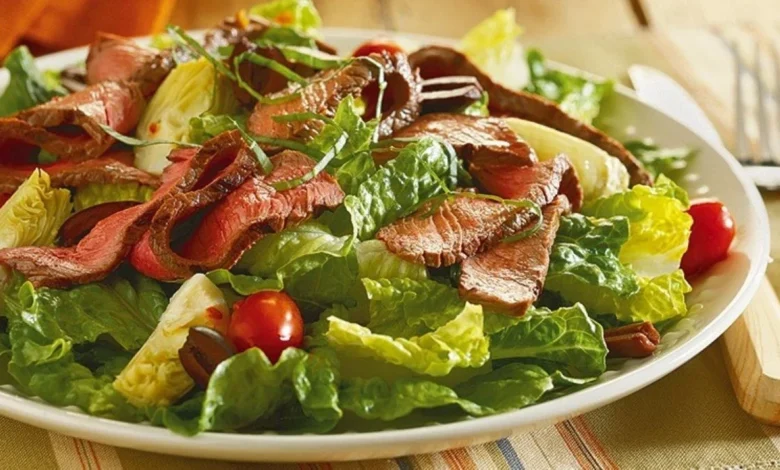
While the steak rests—utilizing the mandated five-minute window to allow internal juices to stabilize—attention shifts entirely to the salad components. A large mixing bowl serves as the vessel for combining fresh lettuce, ripe tomatoes, briny olives, and tender artichoke hearts. A balanced dressing is introduced, and the ingredients are tossed vigorously to ensure uniform coating before being divided equally across four distinct serving plates.
Phase Four: Final Plating and Integration
The final operational sequence brings the two culinary elements together. The rested top sirloin is sliced crosswise into thin, even strips, a technique that shortens the muscle fibers and enhances tenderness upon consumption. These slices are artfully arranged atop the prepared salads. To maximize flavor retention, any resting juices that have accumulated on the cutting board are drizzled directly over the sliced beef. The dish is completed with a final garnish of fresh basil, bridging the earthy notes of the herbs with the savory beef and tangy salad.
Supporting Data and Nutritional Implications
Dietary analysis of the top sirloin and Mediterranean salad combination reveals a highly favorable macronutrient profile that aligns with contemporary nutritional guidelines. Beef top sirloin is recognized by agricultural and health authorities as a nutrient-dense food, providing substantial amounts of high-quality protein, essential amino acids, B-vitamins—particularly B12 and niacin—and highly bioavailable iron and zinc.
From a caloric and structural perspective, pairing a lean protein source with a vegetable-heavy base naturally moderates energy density while maximizing micronutrient intake. The inclusion of ingredients native to the Mediterranean diet introduces significant quantities of monounsaturated fats, dietary fiber, and powerful antioxidants. Tomatoes provide lycopene, known for its cellular-protective properties; olives and their associated oils supply beneficial fatty acids; and artichoke hearts contribute prebiotic fibers that support gastrointestinal health.
Data from consumer research organizations highlight that meals featuring lean cuts of beef accompanied by fresh produce have seen steady growth in menu placement across both casual and fine dining establishments. This trend underscores a broader consumer shift away from heavily processed convenience foods in favor of whole, recognizable ingredients that can be prepared efficiently within a home environment.
Professional Insights and Methodological Best Practices
Culinary experts and food safety authorities continually emphasize specific handling techniques to optimize both the quality and safety of beef preparation. Foremost among these recommendations is the implementation of proper kitchen tools. As highlighted by professional kitchen standards, the use of tongs or a spatula is mandatory when handling steaks during and after the cooking process. Piercing the meat with a fork or sharp instrument ruptures the muscle tissue prematurely, causing valuable natural juices to escape onto the cooking surface, resulting in a drier, less flavorful final product.
Furthermore, the utilization of the cutting board resting period is not merely a suggestion of convenience but a fundamental biochemical necessity. Food scientists explain that cooking meat causes muscle proteins to denature and tighten, forcing moisture toward the center. Allowing the steak to rest permits these proteins to denature partially back into a relaxed state, re-distributing the moisture evenly throughout the cut. Consequently, when the steak is sliced, the juices remain within the meat rather than pooling wastefully on the serving platter—though capturing and drizzling any residual board juices over the plated beef ensures that no aspect of the flavor profile is lost.
Broader Impact and Culinary Implications
The enduring popularity of foundational recipes such as the grilled top sirloin and Mediterranean salad reflects a broader evolution in domestic culinary culture. As home cooks gain access to professional-grade techniques through digital media and culinary education, the boundary between restaurant execution and home preparation continues to blur.
The emphasis on simple, high-impact seasoning—relying on garlic, pepper, and fresh herbs rather than masking ingredients with heavy sauces—speaks to a growing appreciation for authentic, unadulterated flavors. Moreover, the adaptability of the top sirloin ensures its relevance across diverse demographic and economic segments, offering an accessible entry point into gourmet home cooking without requiring specialized culinary training or exorbitant financial investment.
In conclusion, the meticulous execution of temperature control, precise timing, proper resting protocols, and thoughtful ingredient integration transforms a standard cut of beef and a basic green salad into a cohesive culinary achievement. By adhering to established kitchen methodologies and respecting the chemical properties of the ingredients involved, home cooks can consistently replicate the standards of professional gastronomy, ensuring both nutritional satisfaction and a superior dining experience.