Pedaling for a Cure: Pat McAleer’s Solo 5,000-Mile Cross-Country Bicycle Journey Raises Vital Funds and Awareness for Type 1 Diabetes

The rhythmic hum of bicycle tires on asphalt has become a familiar soundtrack for Pat McAleer over the past several months, as the endurance cyclist tackles a grueling, continent-spanning expedition. On July 15, McAleer stood on the rugged shores of La Push, Washington, dipping his bicycle tires into the frigid waters of the Pacific Ocean. That ritual marked the official start of "Ride Pat Ride," an ambitious, self-supported 5,000-plus-mile solo bicycle trek destined for the Atlantic waters of Virginia Beach, Virginia.
Now past the halfway mark of his journey, McAleer is navigating the rolling plains and expansive horizons of the American Midwest. More than just an extraordinary test of physical endurance, the three-month expedition serves a higher purpose: raising critical funds and awareness for type 1 diabetes (T1D) research and cures through Breakthrough T1D (formerly JDRF), the leading global type 1 diabetes research and advocacy organization.
From Mountain Passes to the Endless Horizon: The Journey So Far
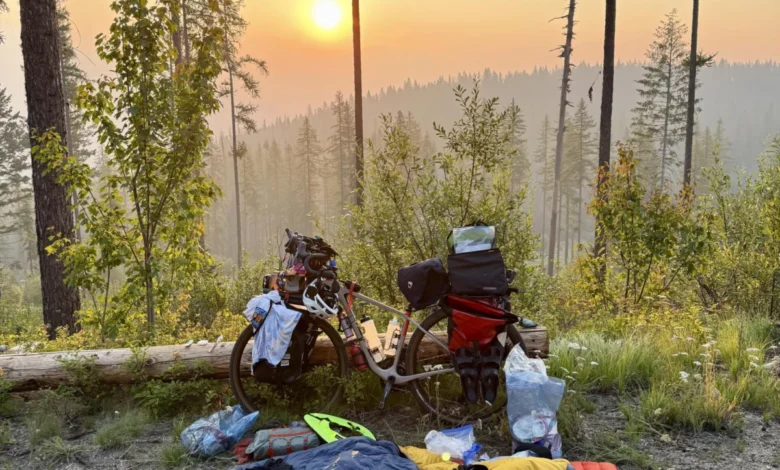
McAleer’s cross-country route has offered a dramatic geographical education, transitioning from the towering peaks and dense pine forests of the Rocky Mountains to the sweeping vistas of Montana and North Dakota.
Reflecting on the landscape shifts from a picnic table in Leonard, North Dakota, roughly 1,850 miles into his trek, McAleer described the stark contrast of the American terrain. "You go from this forest mountain thing, where you can see a bit into the distance and then you get these big mountaintop views, and then pretty quickly, you’re in the rolling hills and the prairies and plains kind of scenario," he remarked. "They don’t call it ‘big sky country’ for nothing. You can just see from horizon to horizon, and at night, the stars are amazing."
While the altitude drops and technical mountain descents are behind him, the Great Plains introduced an entirely new physical hurdle: relentless, punishing headwinds. To the unprepared cyclist, the topography of the Midwest can appear deceptively benign. However, McAleer quickly learned that atmospheric conditions demand as much respect as steep inclines.
"It’s deceiving because in the morning, you look at your route, you look at the topography, and you’re like, ‘Oh, this will be great.’ Not so quick—check the wind!" McAleer explained. "It does feel like you’re climbing one of those mountain passes."
Navigating Infrastructure and Safety on the Northern Tier Route
For the vast majority of his transcontinental undertaking, McAleer has adhered closely to the Adventure Cycling Association’s renowned Northern Tier Route. This established touring corridor is designed to provide cyclists with a viable, scenic, and relatively safe path across the northern tier of the United States.
However, long-distance bicycle touring often requires pragmatic compromises regarding infrastructure. In North Dakota, safety and practicality necessitated a brief, highly coordinated stint directly on Interstate 94. For cyclists unaccustomed to major thoroughfares, riding an interstate can spark safety concerns, but McAleer noted that it was the most prudent choice given the regional road network.

"It’s the safest way to get from here to there, and there are also no small roads that I could get on," McAleer noted. He explained that parallel service roads frequently terminate in dead ends after a dozen miles, forcing cyclists to backtrack and adding unnecessary risk and fatigue.
To ensure safety on the interstate corridor, McAleer maintained high visibility, noting that commercial truck drivers and passenger vehicle operators exercised exceptional caution. "It was a good route, trucks gave me a ton of room—cars did the same, but it was really the trucks, they would all get in the left lane," he observed. Outside of this specific I-94 stretch, his path has primarily utilized quiet two-lane state and county highways across the Upper Midwest.
The Logistics of a Self-Supported Expedition
A critical decision made in the preliminary planning phases of Ride Pat Ride was whether to travel light—relying heavily on motels, restaurants, and external support services—or to carry the full equipment load necessary for complete self-sufficiency. McAleer ultimately chose the latter, granting him absolute autonomy over his daily mileage and stopping points.
Hauling a complete mobile household requires meticulous packing. McAleer’s bicycle is outfitted with heavy-duty saddlebags carrying a tent, sleeping bag, insulated mattress pad, camp pillow, portable cooking stove, food rations, and multiple gallons of water. This gear is stacked alongside essential travel commodities, electronics, chargers, and a limited wardrobe.
While the added weight demands significantly more physical output from the rider, the logistical payoff is immeasurable. "It adds some weight, which is a little more work, but it gives me an incredible amount of flexibility," McAleer said. "You’re able to just say, ‘Well, I’m tired and then this is as far as I’m going.’"
Despite careful planning, long-distance touring inevitably involves overpacking. Shortly after launching his journey from Seattle, McAleer evaluated his cargo, used a one-way suitcase to mail redundant items back to Virginia, and streamlined his setup. Unnecessary garments, redundant straps, and a cumbersome hydration backpack were swapped for simpler, more efficient gear purchased at regional hardware stores and general merchants along the route.
Adaptability has been a recurring theme of the expedition. When regional wildfire smoke drifted across portions of his path in the West, McAleer promptly acquired a respirator mask to protect his respiratory health without halting his daily progress. Later, to combat intense solar exposure on the treeless plains, he integrated a wide-brimmed sun hat engineered to fit securely over his cycling helmet.
Human Connection and Midwest Hospitality
While the physical demands of cycling thousands of miles are immense, McAleer emphasizes that the emotional core of Ride Pat Ride lies in the spontaneous interactions with local residents in small, rural communities.
In mountainous regions, camping logistics were dictated by the presence of regional wildlife, requiring strict adherence to campground regulations and bear-proof food storage containers. As McAleer transitioned into the plains, the nature of overnight accommodations shifted dramatically toward impromptu hospitality.

In the tiny North Dakota crossroad community of Moffit—a settlement featuring little more than a post office, a local tavern, and a handful of residential structures—McAleer experienced quintessential rural hospitality. Arriving late on a Sunday evening, he stopped at the local bar to inquire about a safe, unobtrusive place to pitch his tent for the night.
The local bartender offered immediate reassurance: "No, no, you’re fine. No one’s gonna care. And if anyone asks you anything, you just tell them Darnell said it’s okay." The casual encounter provided McAleer with both peace of mind and a local point of contact, a comforting touchstone for solo travelers navigating unfamiliar towns. The following morning, as he packed down his campsite behind the post office, a local resident delivered two hot cups of coffee, noting that a visiting cyclist would surely appreciate a warm morning brew.
Another memorable encounter occurred at a rural convenience store where McAleer stopped for a midday meal. The establishment offered complimentary ice cream to cross-country cyclists wearing designated advocacy apparel. Exhausted from the morning’s physical exertion, McAleer inadvertently fell asleep at his table while reviewing his maps.
Upon waking, the store employees informed him that they had deliberately allowed him to rest undisturbed. Intrigued by his jersey and the mission of Ride Pat Ride, the staff researched the initiative online. Moved by the cause, the two workers collectively contributed $140 to his fundraising campaign.
"This guy working this counter, and this other lady working on the other side of the counter making lunches and stuff, together, they kick in 140 bucks because I was taking a nap and they get curious about why this guy’s sleeping in a convenience store," McAleer reflected. "They were hosting me in their store by, you know, just taking care of me. It just brought out the goodness of people and let me, once again, be reminded of that."
The Broader Mission: Supporting Type 1 Research Through Community Action
McAleer’s cross-country undertaking is part of a larger, grassroots fundraising movement facilitated by Breakthrough T1D Your Way, a DIY philanthropic platform that empowers individuals to design independent campaigns in support of diabetes research. By providing customizable tools, organizational resources, and structured support networks, the platform enables everyday athletes, community organizers, and advocates to channel their passions into meaningful financial contributions.
Type 1 diabetes is a chronic, autoimmune condition in which the pancreas produces little or no insulin, requiring individuals to carefully monitor their blood glucose levels multiple times a day and administer insulin manually or via automated devices just to survive. Organizations like Breakthrough T1D utilize funds raised through grassroots initiatives like Ride Pat Ride to accelerate life-changing breakthroughs, advance artificial pancreas technology, support encapsulation research, and ultimately work toward a permanent biological cure.
For individuals inspired by McAleer’s journey who may not possess the availability or endurance required for a three-month continental bicycle tour, alternative pathways exist. Breakthrough T1D hosts organized destination rides across the United States annually, while virtual initiatives like "My Ride" allow participants to contribute mileage and raise funds from any location, at any time.
As Pat McAleer continues pedaling eastward across the American landscape—moving steadily from Wisconsin toward the final stretches of his Atlantic terminus—he continues to document his journey through regular updates on his dedicated social media channels. Each mile logged brings the cycling community one step closer to transforming type 1 diabetes into type none.
Related posts: