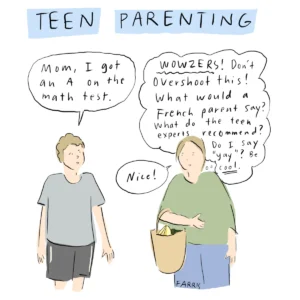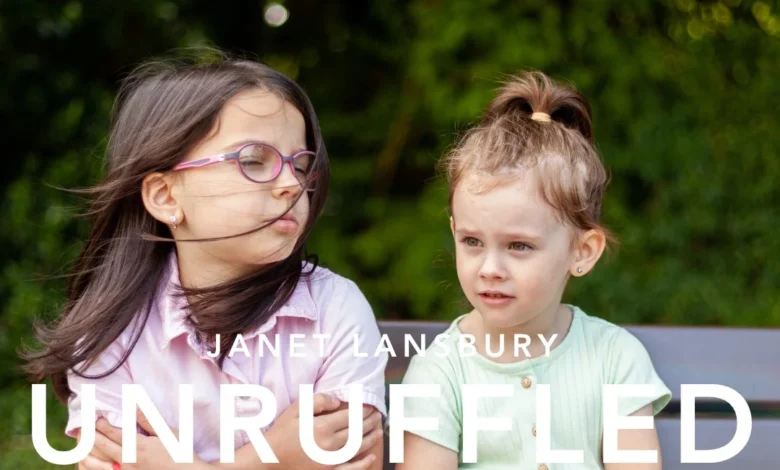
In a recent expert discussion, renowned parenting specialist Janet Lansbury addressed the pervasive and often distressing challenge parents face when their children encounter unkindness, rejection, and exclusion from peers. Drawing on her extensive experience and the "Rie" philosophy of respectful childcare, Lansbury offers an empowering perspective for navigating these complex social dynamics, emphasizing the critical lesson that individuals possess inherent power over their own emotional responses. Her insights, initially presented through a series of parental inquiries concerning young daughters, underscore the importance of fostering resilience and self-efficacy rather than relying on over-intervention.
Understanding the Core Principle: The Locus of Personal Power
Lansbury’s central thesis posits that "people only have power over us when we give it to them." This foundational concept, she argues, is more pertinent than ever in an era marked by heightened social pressures, the pervasive influence of social media, and the ubiquitous "fear of missing out" (FOMO) that encourages constant comparison among children. While acknowledging legitimate power structures (e.g., employers, elected officials, teachers), Lansbury asserts that in most peer interactions, individuals retain the agency to choose how much emotional power they grant to others’ actions or opinions. She likens this to focusing on a few dissenting voices in a supportive crowd, thereby misallocating mental and emotional energy to negativity.
The implications for children are profound. By internalizing this principle, children are equipped with a vital tool for emotional self-regulation and personal empowerment. Lansbury explains that the most impactful way children learn this lesson is not through explicit instruction alone, but through parental modeling. When parents refrain from overreacting or imbuing unkind peer behavior with excessive significance, they subtly teach their children not to grant that behavior undue power. This approach requires parents to manage their own anxieties and remain "one step behind" their child’s emotional experience, validating feelings without amplifying the perceived severity of the external event.
The Landscape of Childhood Social Dynamics: Relational Aggression and Exclusion
Relational aggression, characterized by behaviors such as exclusion, gossip, and manipulation of social relationships, is a common developmental phenomenon, particularly noticeable in early to middle childhood. Research from institutions like the National Institute of Child Health and Human Development indicates that while physical aggression may decrease with age, relational aggression often persists and can intensify, especially among girls. Studies show that a significant percentage of children, even at young ages, report experiencing some form of social exclusion or teasing from peers. For instance, a 2018 study published in Developmental Psychology found that relational aggression is prevalent across various age groups, impacting children’s well-being and academic performance. The advent of digital communication further complicates this, with cyberbullying and online exclusion adding new dimensions to these challenges.
Lansbury’s observations align with these trends, noting a recent "wave" of parental inquiries concerning daughters around five years old experiencing such issues. This age often marks a crucial period where children begin to navigate complex social hierarchies and develop more nuanced understandings of friendship, making them particularly susceptible to the emotional impact of unkind peer behavior.
Case Study 1: Navigating Ultimatums and Emotional Withholding
One parent described a recurring scenario where her five-and-a-half-year-old daughter’s friend exhibited relational aggression, frequently using ultimatums ("If you don’t do X, I won’t be your friend") and emotional withholding (ignoring, refusing goodbyes or hugs). The mother noted the friend "feels the power in withholding," a keen observation that Lansbury highlights as central to the issue. The parent, despite recognizing that she herself "grew out of" similar dynamics with cousins without adult intervention, felt compelled to mediate, even suggesting a pact with the other parent for children to always respond to each other.
Lansbury advises against such direct interventions, which, while well-intentioned, can inadvertently "give power" to the aggressive behavior. Instead, she recommends a stance of minimal involvement: acknowledging the child’s feelings ("Yes, I saw that," "That hurt your feelings") without projecting parental distress or attempting to force a resolution. The goal is to help the child process their emotions and understand the underlying dynamics—that the friend’s actions stem from a desire for control or insecurity, not necessarily a reflection of the child’s worth. Empowering the child means allowing them the space to decide if they wish to continue engaging with such a dynamic, fostering their ability to choose their associations.
Case Study 2: Widespread Exclusion in a New Environment
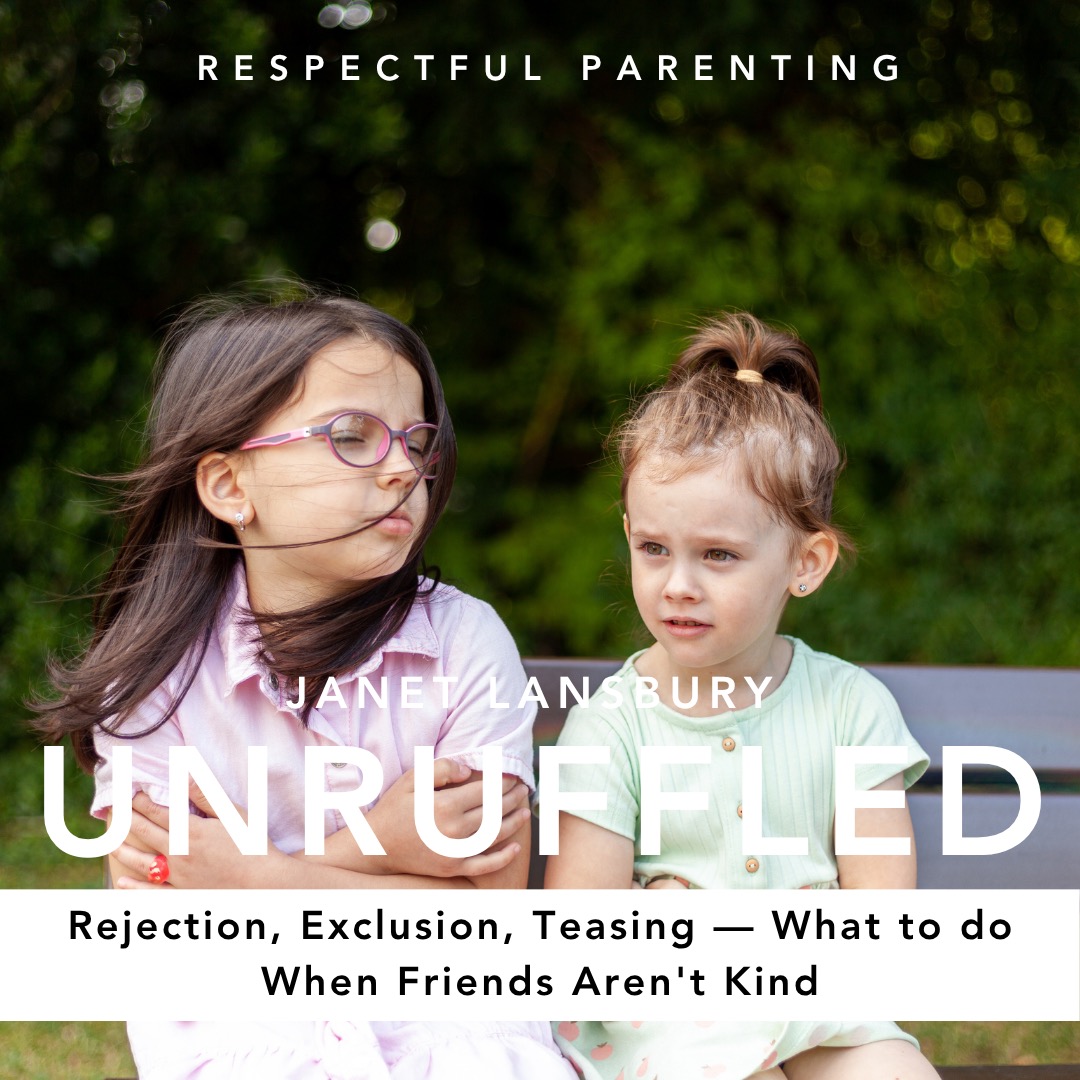
A second parent shared the distress of her nearly six-year-old daughter, a naturally social and outgoing child, suddenly facing widespread exclusion in a new neighborhood by two sisters. These sisters actively encouraged other children to shun her, monopolized communal play spaces, and even engaged in "run away" games designed to leave her isolated. The parent struggled with the dilemma of intervention versus fostering independence, especially when witnessing the incidents firsthand. She had already spoken to the other parents, who were receptive, and even attempted "peace-offering situations" like inviting the girls over, which proved temporarily effective but ultimately futile.
Lansbury supports the parent’s instinct to allow the daughter to largely solve the issues herself, with parental support. She advises against "peace offerings" at this stage, as they can unwittingly "add to the negative power" the aggressive children are seeking. The emphasis remains on trusting the daughter’s inherent strength and social acumen. Parents should communicate a clear message: "I know they’re trying to do all this stuff. You don’t have to give them power. None of this is a reflection on you; it’s a reflection on their weakness." This narrative reframes the aggressors’ actions as manifestations of their own insecurity, stripping them of the power they derive from their victims’ distress. Instead, parents should encourage and facilitate friendships with children who are genuinely kind and reciprocal, reinforcing the value of healthy relationships.
Case Study 3: Parental Projections and Fostering Resilience
A third parent articulated a deep personal connection to her five-year-old daughter’s experiences, recognizing her daughter as a "carbon copy" of her younger self—sweet, kind, and naive, but also prone to being "walked all over." The parent, who had suffered bullying herself until college, expressed terror that her daughter’s kindness would be perceived as weakness in kindergarten. She wrestled with the urge to teach her daughter to "be mean back" or "stand her ground," while simultaneously knowing these were inappropriate lessons for a five-year-old.
Lansbury applauds the parent’s self-awareness, noting that such parental projections, while understandable, can hinder a child’s development of authentic coping mechanisms. She challenges the parent’s interpretation of her daughter’s acceptance and walking away as weakness, instead framing it as a display of strength. "Cruelty is weak, compassion is strong," Lansbury asserts. The daughter’s ability to "accept, to let it go, walk away" is, in fact, "the most powerful position to be in." The advice centers on nurturing the daughter’s existing strengths—her kindness and empathy—by conveying unwavering belief in her ability to navigate social challenges. This involves actively seeking out and fostering positive friendships rather than dwelling on the negative ones. Lansbury also suggests the parent address her own residual feelings of past suffering, perhaps through self-calming techniques or therapy, to ensure her anxieties do not inadvertently undermine her daughter’s budding resilience.
Case Study 4: When the Child is the Aggressor: Navigating Mutual Bickering
The final case presented a unique twist: a parent struggling with her own five-year-old daughter being the "unkind one" in a close friendship. The daughter, an only child described as strong-willed and confident, frequently bickered with her best friend, often making disparaging remarks like "You’re shy" or "I’m better at X than you." The parent admitted to finding their bickering "triggering" and often ended up scolding her own daughter, despite recognizing the mutual nature of their teasing and her own discomfort with sibling-like conflict. She noted her daughter’s impeccable behavior with other children, suggesting the dynamic was specific to this familiar friendship and her presence.
In this scenario, Lansbury emphasizes that the parent’s discomfort and intervention might be inadvertently "giving power" to her daughter’s negative behaviors. She advises a shift to a supportive role for both children, without judgment or attempting to "fix" her daughter’s actions. When the friend runs to her upset, the parent’s response should be neutral and validating: "Oh, what happened? You didn’t like that, huh? Did you tell her?" This approach allows the children to experience the natural consequences of their interactions and develop their own conflict-resolution skills. By not amplifying the conflict or assigning blame, the parent removes herself as a source of power or attention for the negative behavior, thereby allowing the children to learn from their own social experiments.
Broader Implications for Child Development and Parental Role
Lansbury’s comprehensive perspective offers a vital framework for parents navigating the complexities of childhood friendships. Her advice consistently pivots on the belief in a child’s inherent capabilities and the critical role of parental trust. By empowering children to understand their own agency in social interactions, parents can foster:
- Emotional Resilience: Children learn to withstand unkindness without being emotionally overwhelmed or internalizing negative messages.
- Self-Efficacy: They develop a sense of competence in managing social challenges, building confidence in their ability to make choices about their relationships.
- Discernment in Friendships: Children learn to identify and gravitate towards reciprocal, supportive friendships, understanding that not all relationships are worth investing their emotional energy in.
- Authentic Social Skills: Rather than adhering to externally imposed rules, children develop genuine negotiation, communication, and boundary-setting skills.
- Reduced Parental Anxiety: When parents trust their children’s process, they can alleviate their own fears and anxieties, leading to a more harmonious family environment.
The core message is one of support, not rescue. Parents are encouraged to be a secure base for their children, offering empathy, validation, and a sounding board for their feelings, while consciously refraining from taking ownership of the child’s social challenges. This nuanced approach acknowledges the pain of seeing a child hurt but prioritizes their long-term development of inner strength and self-reliance over immediate, albeit temporary, parental fixes. In an increasingly interconnected and often challenging social landscape, teaching children to "own their power" stands as a cornerstone of healthy emotional development.
Related posts: