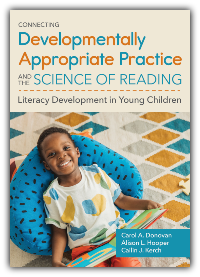
However, a new consensus is emerging within the field of early childhood education. As states across the United States move to mandate phonics-based reading instruction, the pressure on early childhood programs to adapt has intensified. The release of the book Connecting Developmentally Appropriate Practice and the Science of Reading, authored by Dr. Carol A. Donovan, Dr. Alison L. Hooper, and Dr. Cailin J. Kerch, serves as a pivotal intervention in this discourse, offering a roadmap for how educators can integrate the rigorous findings of reading science with the essential, responsive nature of developmentally appropriate teaching.
The Historical Context of the Literacy Divide
The tension between these two methodologies is rooted in the divergent goals of 20th-century educational theory. DAP, popularized by the National Association for the Education of Young Children (NAEYC), was developed as a reaction against overly academic, worksheet-driven preschool models that ignored the psychosocial needs of young children. It emphasizes that children learn best through active engagement, social interaction, and hands-on discovery.
Conversely, the "Science of Reading" is not a single program, but a vast, multi-disciplinary body of research from cognitive psychology, neuroscience, and linguistics. This research confirms that reading is not a natural process—like speaking—but one that requires explicit instruction in phonemic awareness, phonics, fluency, vocabulary, and comprehension. The friction between these models reached a boiling point in the early 2020s, as literacy proficiency rates plummeted nationwide, prompting a "back to basics" movement. Many administrators, eager to improve test scores, began pushing primary-grade curricula into pre-K classrooms, often to the detriment of child-centered learning environments. This shift has left many educators feeling that their professional autonomy and pedagogical expertise are under siege.

Debunking Persistent Pedagogical Myths
The prevailing narrative that DAP and SOR are mutually exclusive relies on three fundamental misconceptions that complicate the daily lives of teachers.
First, there is the myth that DAP mandates a purely child-led environment devoid of instruction, while SOR mandates rigid, whole-group lecture. Data from contemporary classrooms suggests this is a categorical error. Research indicates that the most effective early childhood environments employ a "balanced intentionality." In such settings, teachers provide direct, systematic instruction—a hallmark of SOR—while simultaneously respecting the child’s need for agency and play, which is a core tenet of DAP.
Second, critics often argue that SOR stifles creativity, reducing reading to rote decoding, while DAP ignores the need for rigorous academic foundations. Experts now contend that these views are reductive. Literacy development requires both the cognitive "plumbing" of phonemic awareness and the "house" of language comprehension and creative expression. A rigorous early childhood classroom is not defined by the presence of flashcards, but by the presence of scaffolds that support a child’s transition from oral language to written text.
Third, there is the common misunderstanding that SOR is exclusively about decoding. While phonics is a non-negotiable component of reading, the science of reading also emphasizes the critical importance of oral language, background knowledge, and comprehension. When educators view SOR through a narrow lens, they risk missing the holistic nature of literacy, which encompasses everything from shared book reading to phonological awareness games played during center time.
Implications for Early Childhood Infrastructure
The implications of reconciling these frameworks are significant for the broader educational infrastructure. In the United States, public investment in universal pre-K (UPK) has expanded rapidly. According to the National Institute for Early Education Research (NIEER), state-funded preschool enrollment has seen consistent growth, yet the quality of literacy instruction remains inconsistent.
The lack of alignment between pre-K and K–3 standards creates a "transition cliff" for young students. When pre-K programs are either too play-based or too academic, children often struggle to bridge the gap into the primary grades. By integrating SOR and DAP, districts can create a seamless continuum of learning. This approach necessitates a shift in professional development. Rather than providing "off-the-shelf" curricula, school districts are increasingly being encouraged to invest in teacher training that helps practitioners identify "teachable moments" where literacy skills can be woven into the fabric of play.
Case Study: Bridging the Gap in the Classroom
The real-world application of this synthesis is best illustrated through the experiences of frontline staff. In many child care settings, the announcement of a new literacy mandate can cause immediate staff anxiety. A recent anecdotal report from a metropolitan child care center serves as a bellwether for the industry. When a director introduced the "Science of Reading" to her staff, the initial reaction from veteran teachers was one of defensive apprehension.
The fear was that the center would shift toward desk-based, teacher-led instruction, effectively ending the play-based model that the staff knew was effective for toddler development. However, the intervention of a teacher trained in the modern synthesis of these methods changed the trajectory of the training. By demonstrating that SOR-aligned practices—such as singing rhyming songs, analyzing the initial sounds of children’s names, and using manipulatives during play—are not only compatible with, but actually enhance, the DAP model, the staff was able to move past the fear of "primary-grade phonics."

This highlights a vital takeaway: the Science of Reading does not demand the abandonment of developmentally appropriate practice. Instead, it provides a more nuanced toolkit for educators to support literacy growth in a way that remains respectful of the child’s developmental stage.
Professional Development and Future Directions
For school administrators and policymakers, the path forward involves shifting the focus from curriculum mandates to teacher capacity. The integration of DAP and SOR requires educators who possess a deep, dual-expertise. They must understand the developmental milestones of young children while simultaneously mastering the cognitive science of how the human brain learns to read.
As the industry moves toward 2026 and beyond, the demand for resources that provide concrete, evidence-based examples of this integration will likely grow. The transition is not merely an academic exercise; it is an economic and social imperative. With foundational literacy serving as the primary predictor of long-term academic success, the cost of failing to align these practices is high.
Ultimately, the goal of modern early childhood education is to cultivate a learning environment where the rigor of science meets the heart of early childhood development. By replacing the narrative of conflict with one of cooperation, educators can ensure that the next generation of students is not only capable of reading but also supported in a way that nurtures their natural curiosity and joy for learning. The challenge now lies in the systemic implementation of these ideas, moving beyond the debate and into the practical, daily work of classrooms nationwide. Through intentional planning, specialized training, and a commitment to both the science and the child, the educational community is poised to create a more effective, and more equitable, approach to literacy.