What Are Forever Chemicals (PFAS)? Where They Hide and How to Avoid Them


Per- and polyfluoroalkyl substances, universally known as PFAS, represent one of the most significant environmental and public health challenges of the 21st century. These synthetic compounds, characterized by their nearly indestructible chemical bonds, have permeated every corner of the globe, from the depths of the Mariana Trench to the heights of the Tibetan Plateau. Often referred to as "forever chemicals," PFAS were engineered for durability, yet it is this very resilience that has created a persistent contamination loop affecting human biology and global ecosystems. With the Centers for Disease Control and Prevention (CDC) reporting that nearly all Americans have measurable levels of PFAS in their blood, the conversation has shifted from industrial utility to urgent mitigation and regulatory reform.
The Chemistry of Persistence: Understanding the Carbon-Fluorine Bond
The term PFAS serves as an umbrella for a family of nearly 15,000 synthetic chemicals. At the heart of their "forever" nature is the carbon-fluorine bond, one of the strongest in organic chemistry. This bond is so stable that it does not occur naturally in the environment, meaning there are no biological or geological processes capable of breaking it down effectively.

Manufacturers utilized this stability to create products that resist heat, water, oil, and stains. Developed in the late 1930s and entering widespread commercial use by the 1950s, PFAS became the backbone of modern conveniences. However, the same properties that make a pan nonstick or a jacket waterproof ensure that once these chemicals enter the environment or the human body, they remain there for years, if not decades.
Decoding the Alphabet Soup: PFOA, PFOS, PTFE, and GenX
To navigate the landscape of forever chemicals, it is essential to distinguish between the most common variants:
- PFOA (Perfluorooctanoic Acid): Historically used in the manufacturing of Teflon, PFOA is a "long-chain" chemical. In late 2023, the International Agency for Research on Cancer (IARC) classified PFOA as a Group 1 carcinogen, confirming it is carcinogenic to humans.
- PFOS (Perfluorooctane Sulfonic Acid): The primary ingredient in legacy versions of Scotchgard and aqueous film-forming foam (AFFF) used for firefighting. It is classified as "possibly carcinogenic" and has been linked to significant immune system suppression.
- PTFE (Polytetrafluoroethylene): Best known by the brand name Teflon, PTFE is a fluoropolymer. While stable at room temperature, it can release toxic PFAS-laden fumes when heated above 500°F (260°C).
- GenX and Short-Chain PFAS: Introduced as "safer" replacements for PFOA and PFOS, these chemicals have fewer carbon atoms. While they leave the human body faster than long-chain versions, emerging research suggests they may be just as toxic to organs and developmental health.
A Chronology of Concealment and Discovery
The history of PFAS is marked by decades of industrial silence followed by a tidal wave of litigation and scientific revelation.

- 1938: Roy Plunkett at DuPont accidentally discovers PTFE.
- 1950s: 3M and DuPont begin mass-producing PFOS and PFOA for consumer goods.
- 1960s-1970s: Internal studies by 3M and DuPont indicate that PFAS can accumulate in blood and cause liver damage in laboratory animals. These findings are not made public.
- 1998: Environmental attorney Robert Bilott files a lawsuit against DuPont on behalf of a West Virginia farmer, Wilbur Tennant, whose cattle were dying after drinking from a PFAS-contaminated stream.
- 2004: DuPont agrees to a $343 million settlement regarding PFOA contamination in the Mid-Ohio Valley, leading to the C8 Science Panel, which definitively linked the chemical to six major human diseases.
- 2015: Major U.S. manufacturers complete a voluntary phase-out of PFOA and PFOS production under the EPA’s PFOA Stewardship Program.
- 2024: The EPA sets the first legally enforceable national drinking water standards for six PFAS.
- 2026: Proposed federal legislation seeks a total phase-out of non-essential PFAS uses within a decade.
The Global Sustainability Crisis: PFAS in the Biosphere
While much of the focus on PFAS remains on human health, the environmental implications are catastrophic. A landmark 2022 study by Stockholm University researchers revealed that PFAS levels in rainwater globally—even in remote regions like Antarctica—now exceed the EPA’s lifetime drinking water health advisories.
The researchers concluded that we have crossed a "planetary boundary" for chemical pollution. Because PFAS move easily through water and air, they create a global contamination cycle. Industrial discharge enters rivers; those rivers carry chemicals to the ocean; wave action and sea spray aerosolize the chemicals back into the atmosphere, where they fall as rain, contaminating soil and agricultural crops. This cycle undermines the "circular economy" and sustainability efforts, as PFAS-laden products cannot be safely composted or recycled without spreading contamination further.
Toxicological Impacts and Public Health Data
The medical community’s understanding of PFAS toxicity has expanded rapidly. According to the Agency for Toxic Substances and Disease Registry (ATSDR), exposure to PFAS is associated with a wide range of adverse health outcomes:

- Metabolic Interference: PFAS can lead to increased cholesterol levels and obesity by disrupting lipid metabolism.
- Reproductive and Developmental Issues: Exposure is linked to decreased fertility in women, pregnancy-induced hypertension (preeclampsia), and low birth weight in infants.
- Immune Suppression: PFAS interfere with the body’s ability to respond to vaccines, a particularly concerning finding during global health crises.
- Endocrine Disruption: The chemicals are known to interfere with thyroid hormone production, leading to thyroid disease.
- Cancer Risks: Strong correlations exist between PFAS exposure and kidney and testicular cancers.
Data suggests that the "half-life" of certain PFAS in the human body ranges from three to eight years. This means that even if all exposure stopped today, it would take decades for the chemicals currently in the population’s blood to be eliminated.
The Regulatory Landscape: 2024 to 2026
The regulatory environment for PFAS in the United States is currently in a state of flux, characterized by significant shifts between administrations.
The 2024 Landmark Regulations
In April 2024, the Biden administration’s EPA finalized the National Primary Drinking Water Regulation (NPDWR) for six PFAS. This established Maximum Contaminant Levels (MCLs) at 4 parts per trillion (ppt) for PFOA and PFOS—the lowest level detectable by current technology. This rule required public water systems to complete initial monitoring by 2027 and implement treatment solutions by 2029.

The 2025-2026 Policy Shifts
Following the transition to the Trump administration in 2025, the EPA moved to delay compliance deadlines for these standards until 2031. Furthermore, the administration sought to rescind standards for four newer PFAS variants (PFHxS, PFNA, GenX, and PFBS). While a January 2026 ruling by the D.C. Circuit Court of Appeals temporarily blocked these rescissions, the regulatory future remains uncertain.
Legislative Action: The 2026 Forever Chemical Act
On March 19, 2026, the Forever Chemical Regulation and Accountability Act was introduced in Congress. If passed, this bill would mandate a 10-year phase-out of all "non-essential" PFAS uses. It categorizes "essential" uses as those critical for health or safety where no alternatives exist (such as certain medical devices), while banning PFAS in cosmetics, textiles, and food packaging within two years.
Identifying and Avoiding Exposure Vectors
Until comprehensive bans are in place, the burden of protection falls on the consumer. PFAS are integrated into a staggering array of household products.
1. Water Filtration
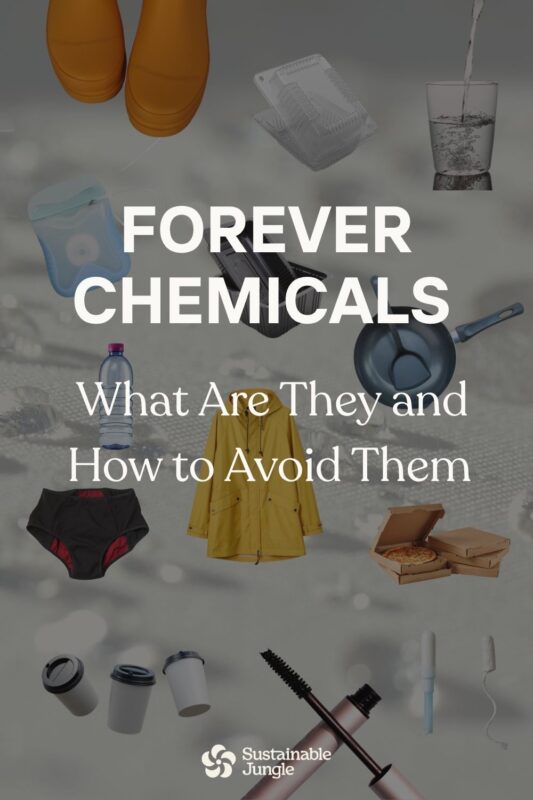
With over 200 million Americans estimated to have PFAS in their tap water, filtration is the most critical step. Standard carbon pitchers are often insufficient for total removal. Experts recommend high-quality activated carbon block filters or Reverse Osmosis (RO) systems, which are significantly more effective at capturing small-chain PFAS molecules.
2. Cookware and Kitchenware
Traditional nonstick pans (PTFE) are a primary source of indoor PFAS exposure. Consumers are increasingly pivoting to cast iron, stainless steel, or 100% ceramic cookware. It is important to note that "PFOA-free" labels are often a marketing tactic; a product can be PFOA-free but still use PTFE or other harmful PFAS processing aids.
3. Food Packaging
Grease-proof paper is almost always treated with PFAS. This includes microwave popcorn bags, fast food wrappers, and pizza boxes. Even "compostable" bowls used by health-food chains have been found to contain high levels of PFAS to prevent wilting. Reducing reliance on takeout and opting for glass or stainless steel storage is advised.
4. Textiles and Outdoor Gear
Durable Water Repellent (DWR) treatments on raincoats, tents, and hiking boots are major contributors to environmental leaching. Several leading outdoor brands have begun transitioning to wax-based or silicon-based water repellents. Consumers should look for "PFAS-free" or "PFC-free" certifications on technical apparel.
5. Personal Care and Cosmetics
PFAS are often added to "long-wear" or "waterproof" cosmetics, such as mascara and foundation, to improve durability. They are also found in some brands of dental floss (to help it glide) and even certain types of toilet paper made from recycled materials.
Broader Economic and Societal Implications
The economic toll of PFAS is staggering. A study by the Nordic Council of Ministers estimated that the health-related costs associated with PFAS exposure in Europe alone range from €52 billion to €84 billion annually. In the U.S., the cost of upgrading water infrastructure to meet the 4 ppt standard is estimated in the tens of billions.

Furthermore, the "polluter pays" principle is being tested in courts worldwide. 3M recently reached a $10.3 billion settlement with U.S. public water providers, while DuPont and its spin-offs, Chemours and Corteva, reached a similar $1.18 billion deal. However, critics argue these settlements are a fraction of the actual cost of remediation and healthcare.
Conclusion: The Path Forward
PFAS represent a failure of the "precautionary principle," where chemicals were allowed into the market before their long-term effects were understood. The transition to a PFAS-free world will require a multi-faceted approach: rigorous federal oversight, state-level bans (as seen in Maine and California), and a fundamental shift in consumer demand.
While it is currently impossible to live a life entirely free of PFAS, the combination of individual vigilance and collective political action offers a pathway to reducing the load on our bodies and the planet. The goal is no longer just convenience, but the restoration of a world where our water, food, and air do not carry the legacy of "forever" toxins.
Related posts: