Redefining the Only Child Narrative: Alison Leiby’s Memoir Offers Fresh Perspectives

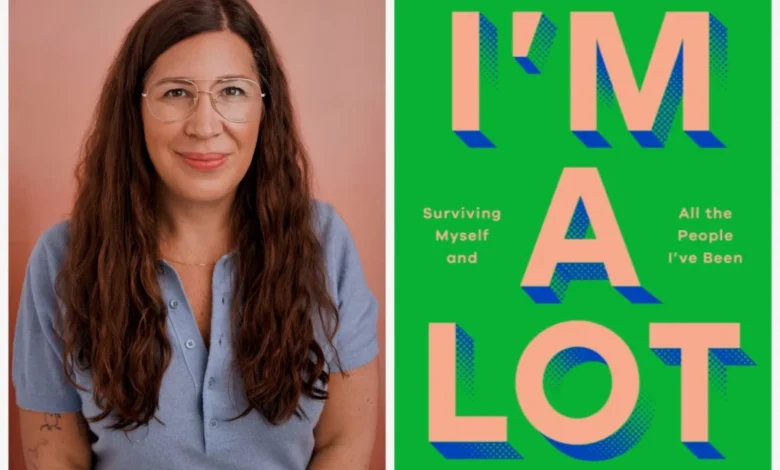
Alison Leiby’s recent collection of essays, "I’m a Lot," published earlier this month, is poised to reshape public discourse surrounding the experience of being an only child. Through deeply personal anecdotes and sharp observations, Leiby challenges long-held stereotypes, offering a nuanced portrayal of growing up without siblings and the unique family dynamics that often accompany it. Her work arrives at a crucial time when the demographic landscape is shifting, with more families globally opting for a single child, making her insights particularly pertinent for a broader understanding of contemporary family structures.
The Evolving Perception of the Only Child
For decades, the "only child" stereotype has persisted in popular culture, often painting individuals as spoiled, lonely, maladjusted, or socially awkward. This perception can be traced back to early 20th-century psychological theories, notably G. Stanley Hall’s assertion that being an only child was "a disease in itself." Such views profoundly influenced public opinion and contributed to a societal bias against single-child families. However, modern research and personal narratives like Leiby’s are actively dismantling these outdated notions, revealing a far more complex reality.
Leiby recounts her childhood, marked by an arrangement that often led people to mistakenly believe her parents were separated: separate vacations tailored to each parent’s distinct interests. Her father would take her skiing in Colorado during January, while her mother preferred beach holidays in Boca for spring break. This seemingly unusual setup, born from differing preferences rather than marital discord, allowed Leiby to experience both worlds. Far from feeling deprived, she highlights the unique advantage of an only child in such scenarios: "the beauty of being an only child is that I got to go on both." This anecdote immediately confronts the "spoiled" stereotype, reframing concentrated parental attention and resources as an opportunity for diverse experiences rather than mere indulgence.
The author further reflects on the pervasive lack of representation for only-child families in popular media, particularly during her youth. While family sitcoms like those on ABC’s TGIF block showcased a spectrum of family configurations, the constant thread was the presence of multiple children. Leiby humorously suggests that a show about an only child might not have made for "compelling television"—mostly depicting adults handling mail while the child quietly reads—but acknowledges it was "certainly a nice life." This observation underscores a broader societal narrative that often overlooks or misrepresents the single-child household, contributing to a sense of "otherness" for those who grew up in them.
Debunking Stereotypes with Personal Truths
One of the most enduring stereotypes Leiby tackles is the notion that only children are inherently bad at handling conflict. "When these memes occasionally included an only child, it was like, ‘Oh yeah, and these freaks have no idea how to fight,’" she quips. Her retort is both humorous and insightful: "Of course I am terrible at handling conflict, who would I have fought with? My stuffed animals? They’re all pacifists, even Walt the warthog." While this is a lighthearted take, it touches upon a genuine psychological discussion.
Psychological studies on birth order have indeed explored the development of social skills and conflict resolution. While children with siblings often learn negotiation and compromise through daily interactions, only children frequently develop these skills through other avenues. They might engage more with peers, requiring them to navigate social hierarchies and disagreements outside the home, or they might learn directly from parental modeling and guidance. Experts like Dr. Susan Newman, author of "The Case for the Only Child," argue that only children are often highly adaptable, resourceful, and develop strong relationships with non-family members, effectively counteracting any potential social deficits. Their experiences simply differ, not diminish.

Leiby also reflects on the perceived "normalcy" of her family, recognizing early on that her setup deviated from the multi-child norm depicted in media. She wisely notes, "Obviously, there is no such thing as a normal family," yet the societal emphasis on large families can make only children feel unique. This sentiment resonates with many only children who, while not necessarily yearning for siblings, often observe the distinct dynamics of multi-child households with a sense of detachment. Leiby admits to rarely being jealous of her friends with siblings, often preferring the quiet solitude of her own room after visiting chaotic multi-child homes. This underscores a common trait among only children: a comfort with independence and self-sufficiency.
The Unique Advantages and Challenges
Beyond debunking negative stereotypes, Leiby highlights several aspects that many only children identify as distinct advantages. The intense, focused attention from parents often fosters accelerated verbal development and comfort interacting with adults. Leiby recalls being "the kid who had no problem befriending teachers, talking to them a bit more like a peer," a direct result of being "the youngest person around by more than two decades" at home, where conversations and activities were geared toward adults. This environment can cultivate strong communication skills, intellectual curiosity, and a sense of maturity often observed in only children.
However, the absence of siblings also presents unique developmental paths. Leiby confesses to a preteen wish for an older sister, specifically as a "gatekeeper to becoming a woman." She articulates the yearning for guidance on everything from tampons and foundation to navigating high school social codes, which she had to glean from teen magazines rather than direct sibling mentorship. This highlights the informal education siblings often provide, a role that only children might seek from friends, cousins, or, as Leiby describes, "the metallic gunmetal-gray Lancôme eye shadow your mom gave you from a bonus gift at Nordstrom" applied alone in a poorly lit bathroom. This poignant detail illustrates a specific form of self-reliance, born from necessity, that shapes an only child’s journey.
The Looming Challenge: Sole Caregiving for Aging Parents
Perhaps the most profound and universally acknowledged challenge for adult only children, and one Leiby addresses with raw honesty, is the prospect of becoming the sole caregiver for aging parents. "There is one element of being an adult only child, however, that really scares me," Leiby writes. "As my parents get older, I’m more aware every day of the job of being their sole caregiver. I am so, so, so unbelievably scared of what that is going to look like."
This concern is not unique to Leiby but is a growing societal issue. Demographic trends indicate a global decline in birth rates, leading to an increasing proportion of only children in many societies. For instance, in countries like China, the legacy of the one-child policy has created an entire generation of only children, now facing the "4-2-1 problem" – one adult child potentially responsible for two parents and four grandparents. Even in Western countries, where birth rates have steadily declined below replacement levels, the number of families with a single child is on the rise.
Sociologists and demographers warn of the immense psychological, emotional, and financial burden that falls on these adult only children. Unlike those with siblings, there is no one to share responsibilities, discuss difficult decisions, or provide mutual emotional support during times of crisis or loss. This lack of a built-in support system can lead to increased stress, burnout, and isolation for caregivers. As populations age and life expectancies increase, the demand for elder care will surge, and societies will increasingly rely on these singular adult children, necessitating robust external support systems and policies. Leiby’s candid admission of her fear resonates deeply with many in her position, underscoring a critical social challenge that needs proactive solutions.
Despite this apprehension, Leiby reaffirms her appreciation for her life as an only child: "Would I trade my life as an only child with my parents to have that? No fucking chance." This declaration speaks to the profound and often intense bond that only children share with their parents. With no siblings to mediate or dilute attention, the parent-child relationship often develops into a uniquely close, intimate, and often egalitarian partnership.

The Enduring Bonds of the Only-Child Family
Leiby beautifully illustrates this bond through her family’s annual winter trip to Aruba. Years ago, they decided to forgo individual gifts and instead invest the money in a shared, meaningful vacation. This ritual exemplifies the concentrated quality time and tailored experiences that often characterize only-child families. They spend their days reading and relaxing near each other, followed by dinner at one of Aruba’s numerous Italian restaurants. Leiby cherishes these moments, describing them as "the tropical version of what every day felt like growing up in our house. We’re not forced to accommodate others. We do the things we want when we want to."
This ability to tailor experiences to the collective desires of a small unit is a distinct feature of only-child families. Resources, both financial and temporal, are often more concentrated, allowing for unique family rituals and deeper shared experiences. This focus can foster strong communication, mutual respect, and a deep understanding among family members. The absence of sibling dynamics means that family decisions can often be made with fewer compromises, leading to a sense of cohesion and shared purpose.
Implications for Future Generations and Societal Support
Alison Leiby’s "I’m a Lot" is more than just a memoir; it’s a vital contribution to an ongoing conversation about family structures in the 21st century. As global birth rates continue to decline and the only-child family becomes increasingly common, understanding its unique dynamics, advantages, and challenges is paramount. Her work implicitly calls for a re-evaluation of societal norms and a more inclusive portrayal of diverse family types.
The demographic shift towards smaller families has significant implications beyond individual experiences. It affects everything from educational systems (e.g., smaller class sizes in some areas, or shifts in social dynamics within schools) to the economy (e.g., changes in consumer markets, labor force projections). Most critically, the issue of elder care for an aging population with fewer potential caregivers demands urgent attention from policymakers and community organizations. Developing robust support networks, accessible elder care services, and community-based programs will be essential to alleviate the burden on adult only children and ensure dignified care for all seniors.
In conclusion, Leiby’s narrative provides a powerful counterpoint to outdated stereotypes, revealing the only child not as a deficit, but as a distinct and often enriching experience. Her honest exploration of both the joys and anxieties of her upbringing offers a valuable lens through which to view modern family life, prompting a necessary re-examination of our assumptions and encouraging greater empathy and understanding for the evolving tapestry of family structures in society.