
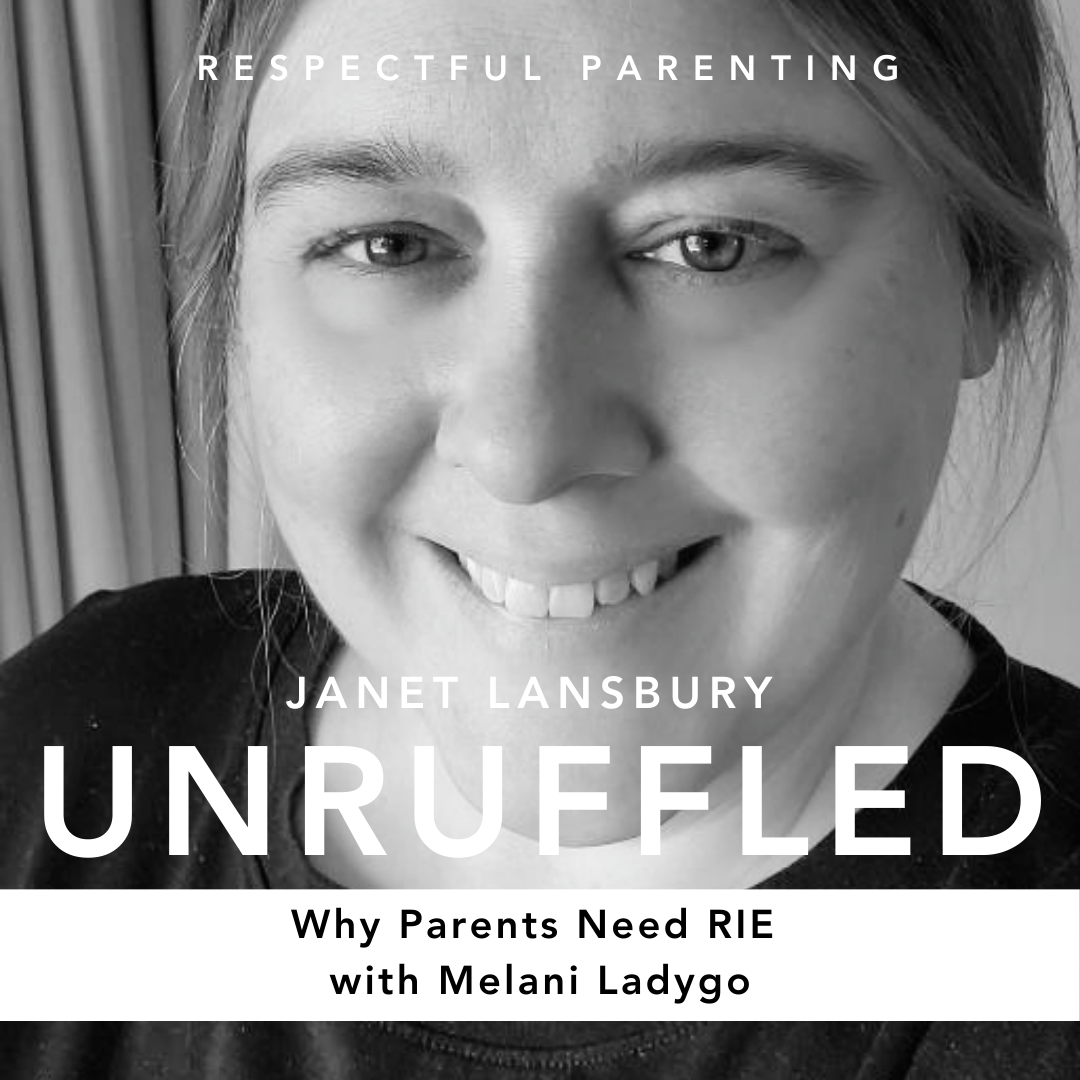
A recent dialogue between renowned parenting expert Janet Lansbury and Melani Ladygo, Executive Director of Resources for Infant Educarers (RIE), has brought into sharp focus the profound and often misunderstood philosophy of RIE. The discussion, featured on Lansbury’s popular Unruffled podcast, delved deeply into the core tenets of RIE, clarifying its mission to foster respectful, reciprocal relationships between adults and children from birth to age two, and highlighting its transformative benefits for both parents and infants.
Understanding the RIE Philosophy: A Foundation of Respect
RIE, pronounced "rye," stands for Resources for Infant Educarers, a nonprofit educational organization founded by infant expert Magda Gerber. The term "educarer" encapsulates the core belief that caregiving and education are intrinsically linked: adults care while they educate, and educate while they care. At its heart, RIE advocates for viewing infants as complete, competent individuals with their own unique perspectives and innate capacities for self-initiated activity and problem-solving. This contrasts sharply with traditional approaches that often see babies as passive recipients of stimulation or as beings primarily driven by basic needs without complex internal lives.
Melani Ladygo, a longtime RIE associate and teacher, emphasized the challenge of encapsulating such a nuanced philosophy into a brief explanation. She described RIE as an organization that teaches parents and professionals "how to have respectful, reciprocal relationships with babies and toddlers." This reciprocity, she explained, involves a genuine curiosity about the child’s inner world and a willingness to allow their unfolding, rather than imposing external expectations or constant intervention.
Historical Context and Magda Gerber’s Vision
The RIE approach emerged from the pioneering work of Magda Gerber, a Hungarian-born educator who developed her philosophy after studying with pediatrician Emmi Pikler in Budapest. Pikler’s groundbreaking research at the Lóczy Institute in Hungary in the mid-20th century demonstrated the profound benefits of fostering infants’ self-directed activity and movement development in a predictable, nurturing environment. Gerber brought these insights to the United States, establishing RIE in 1978 with the mission to educate parents and professionals about this respectful approach.
Janet Lansbury, whose own parenting approach is deeply inspired by Gerber’s teachings, shared her personal journey with RIE. Over 30 years ago, attending RIE classes with her firstborn fundamentally shifted her perceptions of babies, childcare, and life itself. She recounted the privilege of training one-on-one with Gerber, soaking up her wisdom as her daughter played freely on the floor. This firsthand experience revealed to Lansbury that her infant possessed "thoughts and ideas and all this stuff going on inside her that I had not realized could possibly exist in a baby," leading to a profound realization of her daughter as a "person." This epiphany, she noted, became her invitation to a life-changing learning journey.
Core Tenets in Practice: Trust, Authenticity, and Observation
The RIE approach translates its foundational respect into tangible practices. Key elements include:
- Trust in the Infant’s Competence: RIE encourages parents to trust infants to be initiators, explorers, and self-learners. This means providing a safe, predictable environment where babies can engage in uninterrupted, self-directed play and motor development. For instance, rather than "helping" a baby climb a slide by placing hands under their feet, an RIE-influenced approach would allow the child to discover their own capabilities and overcome challenges independently, while the adult maintains a watchful presence for safety. Ladygo recalled an early experience in a RIE-influenced childcare center where she was gently corrected for helping a baby climb, highlighting the principle of allowing children to experience and master challenges themselves, thereby building genuine confidence.
- Authentic Communication: Adults are encouraged to communicate genuinely with infants, narrating actions, explaining intentions, and acknowledging their feelings, even before they can speak. This fosters a sense of being "seen" and understood. Ladygo shared an anecdote about a grocery store checker who lamented, "I wish my parents had taken that class. They need it right now," underscoring the universal human desire to be seen and validated, which RIE aims to cultivate from infancy.
- The "Educarer" Role: This involves a balance of attentive presence and non-interference. Parents are not expected to be entertainers or constant stimulators but rather observers who are emotionally present and responsive when needed. This leads to a more peaceful environment, as observed by Ladygo in her initial experience at a RIE-influenced childcare center, where children were "climbing and sliding and throwing balls and actually moving a little furniture here and there… busy, but it wasn’t stressful."
- Boundaries and Emotional Support: While fostering independence, RIE also emphasizes clear, consistent boundaries. Parents are encouraged to accept and acknowledge a child’s emotions without attempting to "fix" or suppress them. Lansbury highlighted the importance of allowing oneself to be authentic, even when tired or frustrated, rather than performing a "perfect parent" role. This authenticity, Ladygo added, allows parents to "pause and choose" whether to react impulsively or respond thoughtfully, leading to more conscious and respectful interactions.
Benefits for Parents: Reduced Stress and Enhanced Connection
A significant aspect of the RIE philosophy, as discussed by Lansbury and Ladygo, is its benefit to parents. By trusting their children’s innate capabilities and adopting an observational role, parents can alleviate the immense pressure to constantly entertain, teach, or intervene. This shift reduces parental stress and burnout, allowing for a more comfortable and authentic engagement with their children.
"When we see the person in our baby, then we get to be seen by them as ourselves," Lansbury explained. "We don’t have to say the right things and do the right things and be this perfect parent… We get to be a whole person too." This liberation from performative parenting fosters a deeper, more genuine bond, as parents engage more frequently and easily when they are not burdened by perceived duties to "jack them up again to get excited" or "get them to calm down." Research consistently demonstrates that secure attachment, fostered by responsive and respectful interactions, forms the bedrock of a child’s emotional regulation and cognitive development, validating RIE’s focus on authentic connection.
Empowering Children: Fostering Confidence and Problem-Solving
For children, the RIE approach cultivates self-confidence, intrinsic motivation, and robust problem-solving skills. By being allowed to struggle and master tasks at their own pace, infants develop a strong sense of agency and competence. Ladygo shared the observation of colleagues who noted the "gift to parents to be able to just sit back and have confidence in their children’s abilities," a confidence built through a gradual process of observing children’s struggles and triumphs.
This foundation extends into social development. RIE classes, designed to be supportive communities, allow children to navigate social interactions and conflicts with minimal adult interference, guided by a watchful, neutral adult presence. Lansbury described her "buddyguard" approach, where she would be physically present to ensure safety while verbally translating the children’s intentions and emotions, allowing them to find their own solutions. This method teaches children empathy and negotiation, preparing them for complex social dynamics in later life. Studies on child development underscore the critical role of early self-regulation and social-emotional skills in academic success and overall well-being.
Addressing Challenges and Misconceptions
Despite its profound benefits, RIE can sometimes be misunderstood or perceived as "odd or controversial." Some might misinterpret the non-interventionist aspect as a "hands-off" or detached parenting style. However, as Ladygo clarified, "It’s so not a hands-off approach. It’s such an approach where you are really present and keeping boundaries, but also not solving." This active, watchful presence, combined with clear communication and emotional availability, forms the bedrock of RIE’s respectful framework. The challenge lies in shifting ingrained societal expectations around parenting that often promote constant stimulation or immediate problem-solving for children.
The Annual RIE Conference: A Platform for Learning and Community
To further disseminate its principles and build a supportive community, RIE hosts an annual conference. The upcoming 36th annual RIE Conference, available online, is themed "Nature’s Path for Play: Creating Conditions for Authentic Playfulness." This year’s keynote speaker is Peter Gray, a research professor of psychology known for his work on the importance of play in child development. Ladygo highlighted that Gray’s work resonates deeply with RIE principles, demonstrating how the philosophy extends beyond infancy into older childhood.
The conference offers a "smorgasbord" of workshops, covering topics from integrating free play with early childhood education standards to conflict resolution through play. It serves as a vital resource for both parents and early childhood professionals, providing practical applications and fostering connections among like-minded individuals. Attendees can register at rie.org and receive a $50 discount using the code Unruffled.
Broader Implications for Early Childhood Education
The insights shared by Lansbury and Ladygo underscore RIE’s potential to significantly influence the broader landscape of early childhood education. By prioritizing respectful relationships, fostering intrinsic motivation, and empowering children to be active participants in their own development, RIE offers a powerful alternative to more directive or performance-oriented approaches. The positive feedback from diverse schools receiving children from RIE-influenced childcare centers—noting their strong social skills and ability to navigate relationships—speaks to the long-term benefits of this approach. In an increasingly complex world, cultivating resilience, empathy, and problem-solving abilities from the earliest years is more crucial than ever. RIE provides a framework for parents and educators to build these essential life skills, ensuring children not only survive but truly thrive.