The Evolution of Vegan Leather Navigating the Complexities of Sustainability Innovation and Greenwashing in Modern Textiles

The global fashion industry is currently undergoing a seismic shift as consumer demand for ethical and sustainable alternatives to traditional animal leather continues to surge. While the traditional leather industry—valued at hundreds of billions of dollars—remains a dominant force, it faces increasing scrutiny regarding its environmental footprint and ethical implications. From large-scale deforestation in the Amazon to support cattle ranching to the toxic chemical runoff from tanneries, the "cradle-to-gate" impact of animal hides has prompted a search for viable substitutes. However, as the market for "vegan leather" matures, a new set of challenges has emerged, primarily centered on the prevalence of synthetic plastics and the phenomenon of greenwashing.
The Environmental Context of Traditional Leather
To understand the rise of plant-based alternatives, one must first examine the ecological toll of the conventional leather industry. The production of animal leather is inextricably linked to the livestock sector, which is responsible for approximately 14.5% of global greenhouse gas emissions. Cattle ranching is a primary driver of deforestation, particularly in South American rainforests, where land is cleared for grazing or soy production for feed.
Beyond the agricultural stage, the tanning process presents significant health and environmental hazards. Traditional tanning often utilizes chromium, a heavy metal that can transform into carcinogenic hexavalent chromium if not managed properly. In many regions with lax environmental regulations, untreated tannery effluent is discharged into local waterways, destroying aquatic ecosystems and poisoning water supplies for local communities. These factors have fueled the narrative that leather is inherently unsustainable, creating a massive opening for "vegan" alternatives.
The Rise of Synthetic Substitutes and the Greenwashing Challenge
For decades, the primary alternatives to leather were synthetic plastics, colloquially known as "pleather." These materials, primarily Polyvinyl Chloride (PVC) and Polyurethane (PU), allowed brands to market products as animal-friendly. However, the environmental community has increasingly pointed out that "vegan" does not automatically equate to "sustainable."
In 2023, reports from major climate solutions outlets highlighted that the term "vegan leather" has become one of the most greenwashed claims in fashion. The reality is that many "vegan" products are derived from fossil fuels. PVC, in particular, has been labeled by organizations like Greenpeace as the most toxic of all plastics. Throughout its lifecycle—from production to disposal—PVC releases dioxins and other persistent organic pollutants. It is a known human carcinogen and has been linked to immune system damage and endocrine disruption.
Polyurethane (PU) is often marketed as a "greener" alternative to PVC because it requires fewer toxic additives. While PU is indeed less harmful than PVC and some manufacturers are now incorporating plant-based raw materials into its production, it remains a synthetic polymer that does not biodegrade. This creates a "plastic paradox" where consumers, in an effort to avoid animal cruelty, inadvertently contribute to the global plastic pollution crisis.
A Chronology of Material Innovation
The evolution of leather alternatives can be categorized into three distinct eras:
- The Plastic Era (1960s–1990s): The emergence of Naugahyde and basic PVC-based fabrics. These were cheap and durable but lacked the breathability and aesthetic depth of real leather.
- The Performance Era (2000s–2010s): The refinement of PU leathers and the introduction of recycled polyester backings. Brands began to focus on the "vegan" label as a marketing tool for ethical consumers.
- The Bio-Innovation Era (2015–Present): The current landscape, where scientists and entrepreneurs are utilizing agricultural waste and biotechnology to create "bio-based" leathers. This era is defined by the attempt to remove plastics entirely from the equation.
A Comprehensive Guide to Modern Plant-Based Leather Alternatives
The current market offers a diverse array of materials derived from fruits, vegetables, and fungi. Understanding the composition of these materials is crucial for the discerning consumer, as many still rely on a plastic "binder" or coating for durability.

Fruit-Derived Alternatives
AppleSkin: Developed by the company Vegatex, this material utilizes the skins, stalks, and seeds left over from the industrial production of apple juice. The waste is dried and ground into a fine powder, which is then mixed with PU and coated onto a canvas backing. While it reduces waste, it typically remains a 50:50 blend of organic matter and synthetic plastic.
Grape Leather (Vegea): Emerging from the Italian winemaking industry, Vegea uses "marck"—the grape skins, stalks, and seeds discarded during wine production. This biomass is processed into a pulp and combined with bio-based plastics. It has gained significant traction in the luxury automotive and fashion sectors.
Mango Leather: The Dutch company Fruitleather focuses on the millions of mangoes that are discarded annually due to cosmetic imperfections. The fruit is pulped, mixed with natural additives, and dehydrated. Like AppleSkin, it often requires a PU coating to ensure the flexibility and durability required for footwear and upholstery.
Pineapple Leather (Piñatex): Perhaps the most famous bio-material, Piñatex is made from the long fibers of pineapple leaves. This provides a secondary income for farmers in the Philippines. While the base material is natural, the finished product is often coated with a petroleum-based resin to prevent fraying and water damage.
Crop and Leaf-Based Innovations
Cactus and Agave Leather: Developed by Adriano Di Marti under the brand Desserto, these materials utilize the prickly pear cactus and waste from the tequila industry. Cacti are carbon sinks and require minimal water, making the raw material highly sustainable. However, these products are not plastic-free; they utilize a complex blend of bio-polymers and synthetics.
Banana Leather (Banofi): This material targets the waste generated by banana farming. After the fruit is harvested, the stems are usually left to rot or are burned. Banofi extracts fibers from these stems and combines them with additives to create a leather-like texture.
Corn Leather: This is essentially a bioplastic. Dextrose is extracted from corn and fermented to create a polymer. While it reduces the reliance on crude oil, it is still a form of plastic that requires specific industrial conditions to break down.
Teak Leaf Leather: Artisans in Southeast Asia have long used large teak leaves for various purposes. Modern manufacturers bond these leaves to a fabric backing and finish them with a thin PU laminate. Each piece is unique due to the natural leaf patterns.
The Frontier of Plastic-Free Options
While the majority of vegan leathers still incorporate synthetic binders, a few pioneers are achieving a 100% plastic-free status.
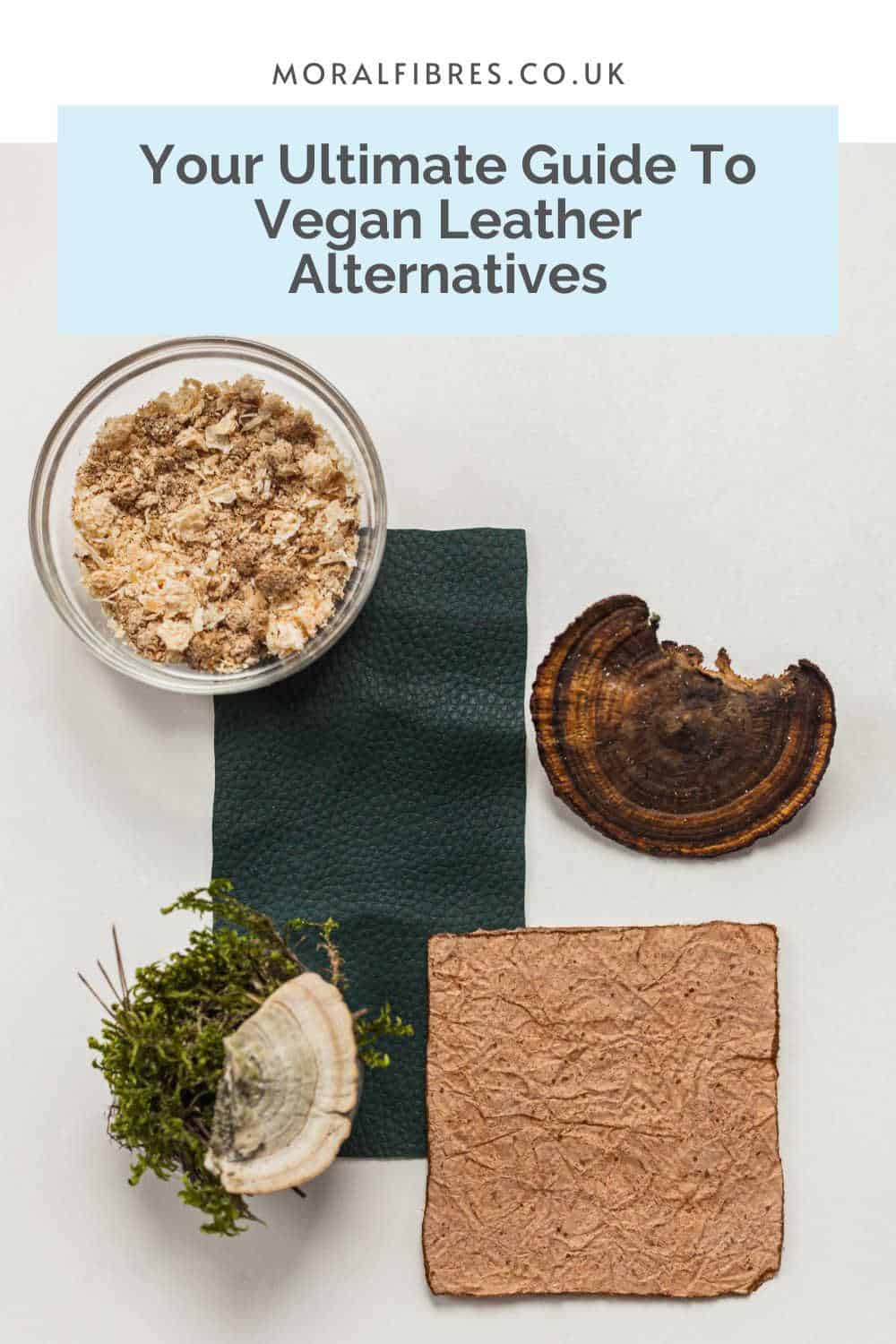
Mushroom Leather (Mycelium): Companies like Grado Zero Espace (with MuSkin) utilize the root structure of mushrooms. Mycelium can be grown in labs on agricultural waste in a matter of days. In its purest form, MuSkin is treated with natural tannins and is fully biodegradable, offering a truly circular alternative to animal hides.
Coconut Leather (Malai): Malai is a biocomposite material made from bacterial cellulose grown on agricultural waste from the coconut industry (specifically fermented coconut water). The resulting material is reinforced with natural fibers like hemp or sisal. It is flexible, water-resistant, and contains no plastics.
Tomato Leather: An Indian-based company, Bioleather, has developed a process to extract cellulose fibers from tomato plant waste. By layering these fibers, they have managed to eliminate the need for a PU coating. This innovation was recognized by PETA in 2021 for its potential to disrupt the synthetic market.
Cork Leather: Harvested from the bark of cork oak trees, this material is naturally sustainable as the trees are not cut down. While some cork products use a polyester or PU backing, high-quality "pure" cork leather uses cotton or natural adhesives, making it one of the most accessible plastic-free options on the market.
Economic and Industry Implications
The shift toward these materials is not merely an ethical choice but an economic necessity for brands looking to future-proof their supply chains. The global vegan leather market is projected to reach $97 billion by 2027. Luxury conglomerates like LVMH and Hermès have begun investing in lab-grown leather and mycelium startups, signaling that the high-end market is ready to move beyond traditional skins.
However, the "plastic-free" goal remains the industry’s biggest hurdle. For many manufacturers, PU is a necessary evil to ensure that a bag or pair of shoes lasts longer than a few months. If a bio-based bag falls apart quickly, its total environmental impact—considering the energy used in production and shipping—could be higher than a more durable synthetic or even a long-lasting animal leather product.
Analysis of Future Trends
As the industry moves forward, we can expect a "Great Bifurcation" in the vegan leather market. On one side will be the mass-market products that continue to rely on "bio-PU" (plastics with a percentage of plant content). On the other will be the ultra-sustainable, high-tech materials like pure mycelium and lab-grown collagen, which will likely remain at a luxury price point until production scales.
Regulators are also beginning to take notice. The European Union’s proposed "Green Claims Directive" aims to crack down on vague environmental assertions. This will likely force brands to be more transparent about the exact percentage of plastic in their "apple" or "cactus" leather products.
For the consumer, the path forward involves a more nuanced approach to shopping. The "vegan" label is no longer enough to guarantee an eco-friendly purchase. True sustainability in the leather-alternative space requires looking past the marketing and examining the material composition, the presence of plastic coatings, and the brand’s commitment to circularity and end-of-life disposal. As innovation continues to outpace regulation, transparency will remain the most valuable currency in the world of sustainable fashion.