The Context of Modern Family Meal Planning
The challenge of feeding a family in the 21st century is defined by a complex intersection of economic pressures, time scarcity, and an overwhelming volume of nutritional information. According to data from the U.S. Department of Agriculture (USDA), the average American household spends a significant portion of its monthly budget on groceries, yet the frequency of home-cooked meals has faced a steady decline over the last two decades. The shift toward convenience foods is often cited as a primary response to the demands of dual-income households and the increased time-poverty experienced by working parents.
The "Week of Real Life Family Dinners" project positions itself as a counter-narrative to the "perfect parenting" trope common on platforms like Instagram and TikTok. By emphasizing that not every meal is a success—and that such outcomes are normal—the project aligns with current pediatric nutritional advice, which suggests that the "division of responsibility" model is the most effective approach to feeding children. This model, popularized by experts such as Ellyn Satter, dictates that parents are responsible for the "what, when, and where" of feeding, while children are responsible for "how much" and "whether" they eat.
Chronological Overview of Daily Meal Service
To understand the practical application of these strategies, one must examine the daily cadence of meal preparation during the observed week. The following timeline illustrates the flow of a typical week of family dining:
Monday: The Transition Period
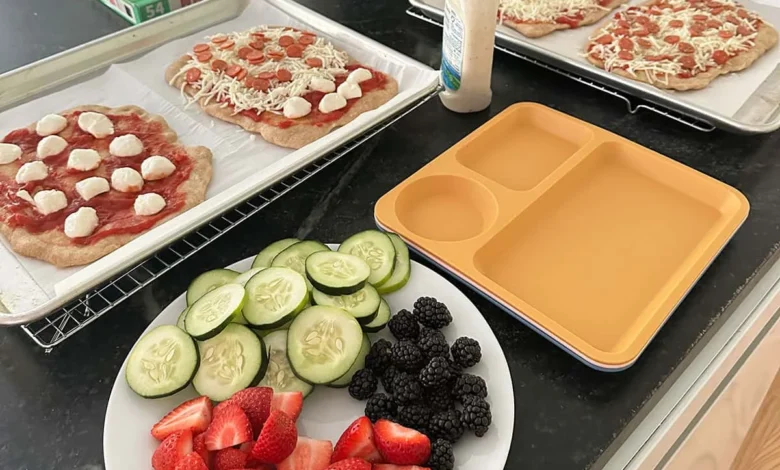
The week began with a focus on high-efficiency preparation. Recognizing the "Monday fatigue" that often affects household management, the focus was placed on utilizing pre-prepped ingredients. The dinner served—a variation of sheet-pan pizza—highlighted the integration of produce-heavy sides to balance the meal’s nutritional profile.
Tuesday: Mid-Week Efficiency
By Tuesday, the focus shifted toward "low-resentment" cooking. This is a culinary strategy that minimizes post-meal cleanup and active cooking time. The objective was to provide a familiar protein source paired with starch, ensuring that even if a child refused one component, the meal remained calorically sufficient.
Wednesday: The Variable Acceptance Phase
Wednesday marked a typical mid-week challenge where children exhibited varying levels of food intake. Data from behavioral nutrition studies suggests that children’s caloric needs fluctuate based on activity levels and growth spurts; therefore, a single night of low intake is statistically insignificant in the broader context of weekly nutrition.
Thursday and Friday: Leveraging Leftovers
The latter part of the week emphasized the utilization of leftovers and pantry staples. This is a critical component of food waste reduction, a growing concern in the sustainability sector. By repurposing ingredients from the earlier part of the week, the household achieved a balance between variety and resource management.
Supporting Data and Nutritional Implications
The importance of these efforts is supported by longitudinal research into child development. The American Academy of Pediatrics (AAP) notes that consistent, predictable meal routines are linked to better emotional regulation in children and a decreased likelihood of developing disordered eating habits later in life. Furthermore, studies on "family meal frequency" consistently correlate regular family dinners with higher intake of fruits, vegetables, and fiber, as well as a lower consumption of fried foods and soda.
However, the reality of "real-life" dinners often falls short of the ideal "every child loves every meal" scenario. Behavioral analysis suggests that food rejection is a standard developmental milestone, particularly in the toddler years. Neophobia—the fear of new foods—is a common evolutionary trait. Consequently, the project’s emphasis on the parent’s role in avoiding resentment is a crucial psychological component for long-term meal success. When parents view the meal as a success regardless of the child’s specific intake, they reduce the risk of power struggles, which are the primary driver of feeding anxiety.
Industry Response and Digital Community Growth
The rise of community-driven platforms like YTF Community reflects a broader trend in the digital economy: the move toward subscription-based, curated support systems. As users grow wary of algorithmically driven content that prioritizes aesthetics over utility, they are increasingly turning to specialized, member-supported communities.
Industry analysts observe that this shift is part of the "Creator Economy 2.0," where the value proposition is not just content consumption, but the provision of tools, templates, and actionable resources. By offering downloadable meal plans, customizable shopping lists, and peer-to-peer discussion forums, the initiative provides a structured environment that alleviates the cognitive load associated with daily meal planning.
Broader Impact and Societal Implications
The implications of this project extend beyond the kitchen. By destigmatizing the reality of "imperfect" dinners, the project contributes to a cultural shift regarding parenting expectations. The pressure on parents to provide home-cooked, gourmet-level meals every night is not only unrealistic but also detrimental to parental mental health.
When families move away from the expectation of perfection, they often find greater consistency in their actual eating habits. This suggests that the solution to improved family nutrition may not lie in more complex recipes or expensive ingredients, but in the simplification of the process and the adoption of more sustainable, realistic habits.
Furthermore, the economic implications of organized meal planning are substantial. Families that engage in intentional meal planning report reduced grocery expenditure, as they are less likely to succumb to impulse purchases or the high cost of last-minute takeout orders. In a period of high inflation, where food costs continue to impact household budgets, these organizational strategies offer a practical financial buffer.
Conclusion: The Sustainability of Realism
The project’s core message remains clear: the goal of family dinner is not to achieve culinary perfection or to force children to eat a specific quantity of vegetables, but to create a sustainable, low-stress environment that fosters positive relationships with food. By prioritizing the "how" of feeding over the "what," families can navigate the complexities of modern life with greater ease.
As digital communities continue to evolve, the success of initiatives like this will likely depend on their ability to provide tangible, evidence-based support while maintaining the empathy required to address the daily challenges of parenting. For the average family, the most successful dinner is one that is actually served, consumed, and enjoyed—or at least tolerated—without the burden of resentment or the weight of impossible expectations. The "Week of Real Life Family Dinners" is not just a documentation of meals, but a necessary reminder of the value of consistency, patience, and the recognition that domestic labor is, at its heart, a series of small, meaningful choices made in the pursuit of long-term family well-being.
Related posts: