Engaging Young Minds Through Wildlife Education: How Preschool Bear Activities Shape Early Childhood Development

Early childhood educators across the nation are increasingly turning to thematic units to seamlessly integrate multi-disciplinary learning into preschool classrooms. Among the most enduring and pedagogically effective themes is the study of bears. Ranging from cuddly teddy bears to majestic polar bears in icy Arctic expanses, bear-themed curricula offer a natural bridge to science, mathematics, literacy, and social-emotional development. By leveraging children’s inherent curiosity about animals, educators can transform traditional circle time into a dynamic, cross-curricular learning environment that aligns with national early childhood education standards.
The implementation of animal-themed units in early learning environments carries substantial academic and developmental backing. According to developmental psychologists, thematic learning units help young children build schema—mental frameworks that help organize and interpret new information. By focusing on a single, compelling subject like bears, students can anchor complex concepts such as seasonal adaptation, habitat preservation, and basic mathematics into a cohesive context. Furthermore, these activities directly support cognitive milestones outlined by the National Association for the Education of Young Children (NAEYC), emphasizing hands-on exploration, sensory engagement, and collaborative play.
Introducing Bear Species and Anatomical Diversity
The foundation of any comprehensive wildlife unit begins with taxonomic exploration. Educators typically introduce students to the diverse family of ursids, which includes eight distinct bear species found across the globe: the American black bear, brown bear, polar bear, giant panda, sun bear, sloth bear, spectacled bear, and Asiatic black bear.

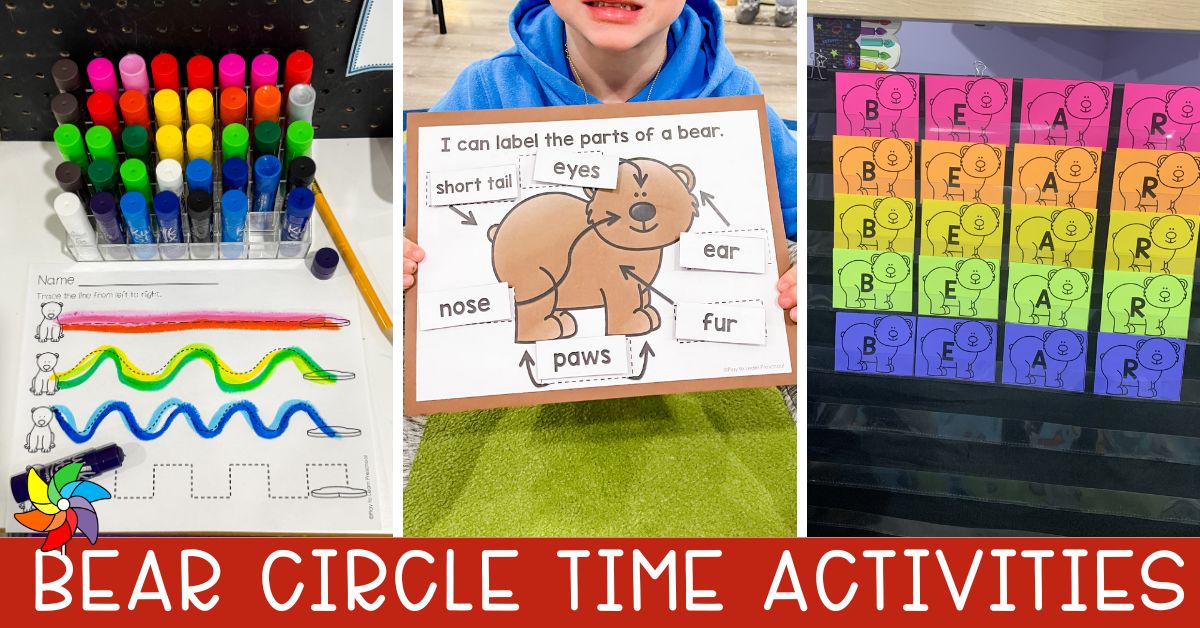
To help children conceptualize these animals, teachers utilize visual aids, high-resolution photographs, and sorting activities on the classroom carpet. Early childhood specialists note that young children often struggle to differentiate bears from other quadrupedal mammals. To address this, educators introduce "bear or not a bear" classification games. These exercises prompt students to identify key anatomical features common to all ursids, such as rounded ears, short tails, strong paws, thick fur, and non-retractile claws. Labeled diagrams are frequently incorporated to expand scientific vocabulary, introducing terms like "anatomy," "mammal," and "habitat" to children as young as three and four years old.
Technological Integration: Virtual Wildlife Observation
While visiting live bears in their natural habitats or zoological facilities remains impractical for most preschool programs, modern technology has bridged the gap. Educators are increasingly utilizing live-streaming webcams to bring wildlife directly into the classroom.

Prominent institutions have made their animal enclosures accessible to educational facilities worldwide. The Smithsonian National Zoological Park offers a popular Giant Panda Cam, while the Wolong Zoo in China provides live feeds of eleven different panda enclosures. For North American wildlife, the North American Bear Center features multiple webcams showcasing black bears in simulated natural environments. Additionally, the Katmai National Park and Preserve in Alaska streams brown bears catching salmon at Brooks Falls, and the San Diego Zoo provides live tracking of polar bears.
To capitalize on these virtual field trips, classrooms are establishing dedicated "bear observation stations." Equipped with clipboards, pencils, and structured recording charts, students act as field researchers. Children document observed behaviors—such as playing, eating, sleeping, or climbing—and older preschoolers often transition these observations into early data collection by tallying their findings to determine the most frequent bear activities.

Hibernation Science and Seasonal Adaptation
A core component of the bear science curriculum centers on the physiological phenomenon of hibernation. As autumn transitions into winter, educators introduce the concept of seasonal adaptation, explaining how certain animals conserve energy during periods of food scarcity.
Incorporating hibernation stations into science centers allows students to interact with tactile materials that simulate a bear’s den. By utilizing elements such as pinecones, artificial foliage, and hollow containers representing caves, children engage in dramatic play that reinforces scientific inquiry. Educational researchers point out that introducing biological concepts like dormancy and ecosystem interdependence at an early age fosters environmental stewardship and critical thinking skills. Teachers report that vocabulary words like "hibernation," "torpor," and "shelter" become firmly embedded in student dialogue following these hands-on science modules.

Mathematical Integration and Sensory Exploration
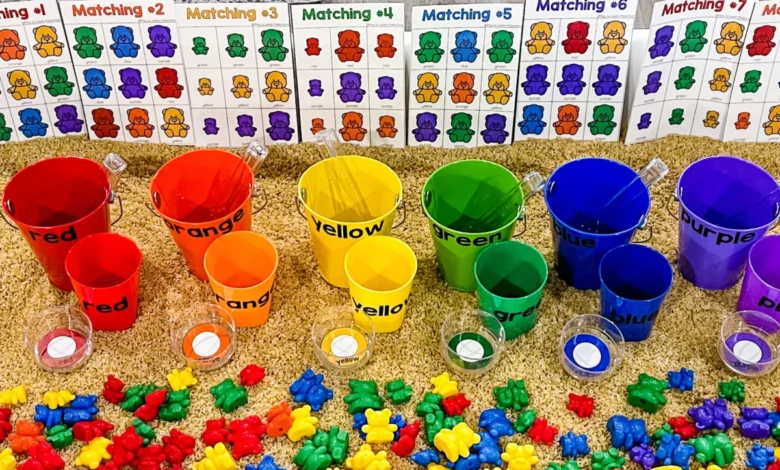
Mathematical concepts are naturally woven into bear-themed units through the use of manipulatives and sensory bins. Plastic and translucent teddy bear counters are standard fixtures in preschool math centers, utilized for counting, sorting by color and size, and patterning.
During small-group instruction, students compare groups of counters using comparative vocabulary such as "more," "fewer," and "equal." Placing these counters into cup-made "caves" introduces early addition and subtraction scenarios in a tangible format. When utilized on classroom light tables, translucent counters provide visual stimulation that enhances spatial reasoning and fine motor coordination.

Simultaneously, sensory tables are frequently converted into simulated forest habitats. Filled with materials such as shredded paper, smooth stones, and wood chips, these tactile bins invite students to practice measuring capacities, matching numerical quantities to labeled logs, and excavating hidden bear counters. This multisensory approach supports fine motor development and reinforces mathematical principles through play-based discovery.
Literacy Development and Story Retelling
Literacy forms a critical pillar of the preschool bear curriculum, anchored by classic children’s literature and interactive storytelling tools. While traditional tales such as Goldilocks and the Three Bears remain classroom staples, contemporary additions like Bear Snores On by Karma Wilson and Jean Chapman have gained widespread popularity for their rhythmic text and engaging plots.

To enhance comprehension and narrative skills, educators implement story retelling activities utilizing felt boards and character pieces. When commercial felt sets are unavailable, teachers often adapt by attaching loop-and-hook fasteners (commonly known by the brand name Velcro) to laminated character illustrations. This hands-on retelling allows students to sequence events, predict narrative outcomes, and build expressive language skills. Additionally, creating cozy reading corners stocked with soft, plush teddy bears encourages children to engage in independent literacy practices, allowing them to "read" to their stuffed companions.
Programmatic Implications and Classroom Conclusions
As educational institutions continually seek balanced curricula that address cognitive, social, and emotional growth, thematic units centered on wildlife continue to prove their enduring value. The culmination of a bear study—frequently celebrated through community events such as a "Teddy Bear Picnic," where students bring stuffed animals from home, categorize them by physical traits, and share themed snacks like teddy bear toast—solidifies the classroom community.

Industry experts and early childhood specialists emphasize that these comprehensive units achieve more than simple entertainment. By merging scientific observation, mathematical reasoning, literacy enhancement, and social play into a unified theme, educators provide a holistic foundation that prepares young learners for formal academic transitions. Through joyful, connected, and memorable experiences, preschool bear activities demonstrate the profound impact of experiential learning in early childhood education.
Related posts: