Building Arizona’s Future Workforce through Strategic Investments in Early Childhood Education and Kindergarten Readiness

The traditional definition of workforce development has long been anchored in the realms of higher education, vocational training, and corporate reskilling programs. However, a growing body of economic research and developmental science suggests that the foundation of a robust state economy is established far earlier than the first day of college or an apprenticeship. In Arizona, policymakers and education advocates are increasingly aligning on a "cradle-to-career" philosophy, asserting that the trajectory of the state’s future workforce is determined before a child even enters a kindergarten classroom. This shift in perspective recognizes that the initial years of a child’s life—starting even before birth—are the most critical period for developing the cognitive and social-emotional architecture required for long-term professional success.
The Neurobiological Foundation of Economic Prosperity
The urgency surrounding early childhood investment is driven by a stark biological reality: approximately 90% of a child’s brain development occurs before the age of five. During these formative years, the brain forms more than one million new neural connections every second. This period of rapid growth is unparalleled at any other point in a human being’s lifespan. These neural pathways form the basis for "soft skills" that are increasingly in demand in the modern economy, including problem-solving, emotional regulation, communication, and executive function.
Melinda Morrison Gulick, CEO of First Things First, Arizona’s state agency for early childhood, emphasizes that these early years are the bedrock of all subsequent learning. According to Gulick, the quality of early learning environments and the reliability of child care are not merely family issues but are essential components of a functional educational pipeline. When children have access to high-quality early childhood experiences, they develop the requisite confidence and foundational skills needed to thrive in a formal school setting. This preparation ensures that when they do enter kindergarten, they are not starting from behind, but are instead positioned to hit critical literacy and numeracy milestones on schedule.
First Things First and the Strategic Investment in Arizona’s Children
Created by Arizona voters in 2006 through the passage of Proposition 203, First Things First (FTF) was established to provide a dedicated funding stream for early childhood programs. The agency utilizes revenue from a tobacco tax to invest in evidence-based strategies that support children from birth to age five. The FTF model focuses on a holistic approach to child development, recognizing that a child’s success is inextricably linked to the stability and capability of their family unit.
The agency’s investments are categorized into several key pillars: strengthening families as a child’s first and most influential teacher, improving the quality of early learning environments, and expanding access to health and developmental screenings. By providing parents with the tools and resources to foster a language-rich environment at home, FTF aims to close the "word gap" that often persists between children of different socioeconomic backgrounds. Furthermore, the agency’s Quality First program works with thousands of child care providers across the state to improve the caliber of their instruction and care, ensuring that "daycare" evolves into "early learning."
Aligning Early Learning with the Achieve60AZ Goal
The push for early childhood excellence is not an isolated effort; it is a critical component of the state’s broader economic objectives. Education Forward Arizona, a leading nonprofit advocacy group, has spearheaded the "Achieve60AZ" goal. This initiative sets a target for 60% of Arizona’s working-age adults (ages 25 to 64) to hold a high-value certificate, license, or degree by the year 2030. Currently, Arizona sits below this threshold, and reaching it is viewed as a prerequisite for maintaining the state’s competitiveness in a globalized economy.
Rich Nickel, President and CEO of Education Forward Arizona, notes that the state has seen significant progress in recent years. Two years ago, only 21% of Arizona’s youngest learners were enrolled in high-quality early learning settings. Today, that number has climbed to 33%. This 11-point increase is a promising indicator that state-wide efforts to prioritize early childhood are yielding results. Nickel argues that this improvement is already manifesting in better kindergarten readiness scores and increased family stability, both of which are leading indicators for future academic and professional attainment.
The logic of the Achieve60AZ goal is rooted in the "milestone" theory of education. If a child is ready for kindergarten, they are significantly more likely to read proficiently by the end of third grade. Third-grade literacy is a watershed moment; before this point, students are "learning to read," but after this point, they must "read to learn." Students who fail to meet this milestone are four times more likely to drop out of high school. By contrast, those who graduate high school on time are much better positioned to pursue the postsecondary credentials required for Arizona’s high-growth industries.
Addressing the Looming Skilled Labor Shortage
Arizona’s economy is currently undergoing a massive transformation. The state has become a national hub for advanced manufacturing, semiconductor production, aerospace, and bioscience. However, this industrial boom requires a highly specialized workforce that the state is currently struggling to supply. Projections from the Arizona State University Decision Center for Educational Excellence suggest that by 2034, Arizona will need more than 180,000 additional skilled workers to fill high-wage, high-growth positions.
If the state cannot produce these workers locally, it risks losing out on future investments and seeing its economic momentum stall. The connection between a toddler’s access to quality child care today and a semiconductor technician’s availability in 2034 is direct. Investing in early childhood is effectively a long-term economic strategy to ensure a "homegrown" talent pipeline. Without a strong start, many of Arizona’s children will remain ineligible for the high-tech jobs being created in their own backyards.
The Business Case: Retention, Absenteeism, and Economic Stability
While the long-term benefits of early childhood education focus on the future workforce, there is a compelling immediate benefit for the current workforce. Reliable, affordable, and high-quality child care is a major factor in labor force participation, particularly for parents. When child care systems are fragile, businesses suffer through increased employee absenteeism and higher turnover rates.
Rich Nickel points out that for many families, the lack of child care is a barrier to employment. When businesses and the state invest in early childhood infrastructure, they are essentially supporting the current economy while building the future one. A stable child care sector allows parents to remain in the workforce, increases household income, and reduces the reliance on state social safety nets. In this sense, early childhood education is a dual-purpose economic engine: it provides an immediate boost to productivity and a long-term guarantee of human capital development.
A Longitudinal Analysis of Social Impact
The implications of Arizona’s focus on early childhood extend beyond the balance sheets of corporations. Longitudinal studies, such as the famous Perry Preschool Project and the Abecedarian Project, have shown that children who participate in high-quality early childhood programs have better life outcomes across the board. They are less likely to be involved in the criminal justice system, less likely to require special education services, and more likely to maintain stable employment and higher earnings in adulthood.
For Arizona, these findings suggest that the ROI (Return on Investment) for early childhood spending is among the highest of any public expenditure. Nobel Prize-winning economist James Heckman has estimated that high-quality birth-to-five programs for disadvantaged children can yield a 13% return on investment per child, per year, through improved outcomes in education, health, and social behavior.
Future Outlook and the Path Forward
As Arizona looks toward 2034, the integration of early childhood data into workforce planning will become increasingly vital. The state faces the challenge of scaling the success seen in the recent 11-point jump in quality care to reach the remaining 67% of children who do not yet have access to high-quality settings. This will require continued bipartisan support, public-private partnerships, and a sustained commitment to the Achieve60AZ goal.
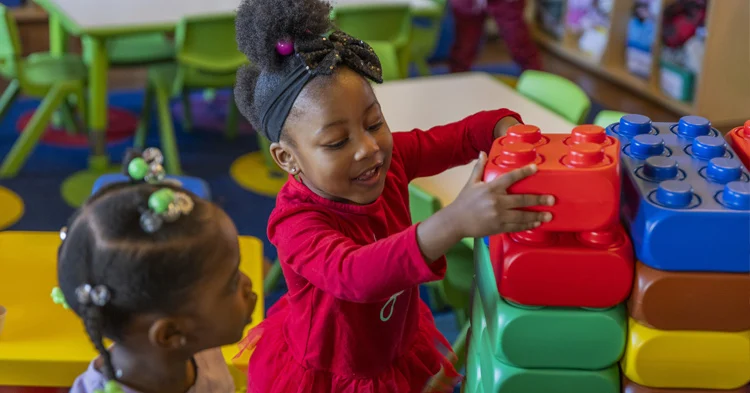
The narrative of workforce development in Arizona has successfully evolved. It is no longer a conversation that begins at graduation; it is a conversation that begins at the ultrasound. By recognizing that the "building blocks" of a prosperous economy are quite literally the building blocks found in a high-quality preschool classroom, Arizona is attempting to secure a future of shared prosperity and individual success for its next generation of citizens. The success of the state’s economy in the mid-21st century will likely be traced back to the investments made today in the lives of its youngest residents.
Related posts: