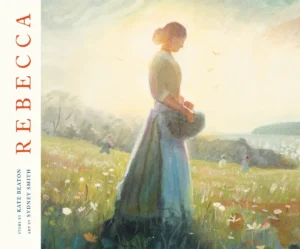
Acclaimed Author and Cartoonist Kate Beaton Explores Generational Grief and Resilience in New Children’s Picture Book Rebecca

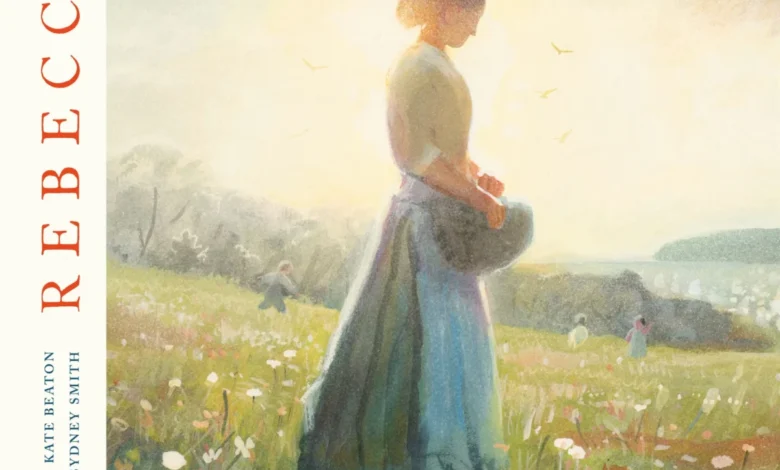
The intersection of familial legacy, profound personal loss, and historical genealogy forms the bedrock of acclaimed Canadian author and cartoonist Kate Beaton’s latest literary endeavor. Released by Roaring Brook Press, the children’s picture book, titled Rebecca, ventures into unconventional territory for the genre by addressing adult themes of mortality, grief, and survival. Beaton, widely recognized for her New York Times bestselling graphic memoirs and webcomics, draws directly from both contemporary family tragedies and 18th-century Nova Scotian history to construct a narrative centered on her late sister and an ancestral namesake.
Main Facts of the Release
Rebecca breaks traditional publishing conventions by centering on an adult protagonist, depicting irreversible loss, and incorporating the historical deaths of two central figures. Connie Hsu, publishing director at Roaring Brook Press, noted the unique nature of the manuscript during its acquisition phase, highlighting its departure from standard industry norms regarding children’s literature. Despite initial questions regarding how young audiences would process themes of bereavement, the publishing house elected to move forward with the title, recognizing its emotional resonance and literary value.
The core of the book traces back to Beaton’s family lineage in Cape Breton, Nova Scotia, anchoring itself in the true story of Rebecca Lombard Smith. Born in Truro, New England, the historical Rebecca faced profound hardship in March 1789 when her husband, whaling captain David Smith, fell through the ice near Port Hood Island and drowned. Left behind while pregnant with her last child, the historical Rebecca successfully raised a family of six sons and one daughter on the remote island. Centuries later, this legacy of maternal resilience directly mirrored the experiences of the author’s own family.
Chronology of Events and Personal Loss
The timeline of events underpinning the creation of Rebecca spans more than two centuries, bridging an 18th-century maritime tragedy with contemporary personal milestones.
- March 1789: Whaling captain David Smith dies after breaking through the ice near Port Hood Island, leaving his pregnant wife, Rebecca Lombard Smith, to raise their children independently in Cape Breton.
- November 30, 1821: Rebecca Lombard Smith passes away at the age of 76, leaving behind a legacy memorialized by a uniquely inscribed headstone erected by her sons in the Old Protestant Graveyard.
- May 14, 2018: Beaton’s older sister, Rebecca—affectionately known as Becky—passes away at the age of 36 following a grueling three-year battle with aggressive cervical cancer. This loss divides the author’s life into distinct periods before and after the illness.
- May 13, 2019: Exactly one day before the one-year anniversary of her sister’s death, Beaton goes into premature labor on Mother’s Day and gives birth to her daughter.
- 2020–2025: During routine evening sleep routines with her young children, the author mentally drafts Rebecca, processing years of cumulative grief by channeling the historical narrative of her ancestor.
- September 2026: Roaring Brook Press officially publishes Rebecca, bringing the picture book to the commercial market.
Contextual Background and Literary Evolution
Kate Beaton established her reputation in the literary and comic arts through deeply personal and historically grounded works. Raised in Cape Breton, Nova Scotia, she initially gained widespread internet acclaim with her historical and literary webcomic series, Hark! A Vagrant. Her subsequent graphic novel collections, Hark! A Vagrant and Step Aside, Pops, both achieved New York Times bestseller status, cementing her voice as a sharp, historically informed humorist and illustrator.
However, her trajectory shifted significantly with the release of Ducks: Two Years in the Oil Sands, a graphic memoir detailing her experiences working in the industrial work camps of Alberta. Ducks received international critical acclaim, earning a spot on former President Barack Obama’s 2022 list of favorite books and securing designation as a New York Times Notable Book.

Transitioning from graphic memoirs for adults to a picture book intended for younger readers represented a distinct challenge. While standard children’s literature frequently steers clear of adult themes such as terminal illness and historical fatalities, Beaton’s work bridges the gap by offering an honest exploration of how families weather enduring sorrow.
Statements and Official Perspectives
Publishing professionals and literary critics have noted the distinctiveness of Rebecca within the contemporary children’s publishing landscape. Connie Hsu reflected on the decision to greenlight the project despite its departure from standard editorial guidelines.
"My initial reaction to Rebecca was awe," Hsu stated regarding the manuscript’s acquisition. "My brain began to think about all the usual ‘rules’ about picture book publishing. Here, the main protagonist is an adult, the book is about loss, and two people die in the book! But I just had to publish it."
The book’s narrative structure deliberately avoids the overly sanitized depictions of grief often found in youth-oriented media. Instead, it posits that children are capable of understanding emotional endurance when presented with sincerity and historical context. Beaton’s approach suggests that acknowledging the reality of sorrow does not diminish hope, but rather provides a realistic framework for emotional survival.
Broader Impact and Implications on Grief Literature
The publication of Rebecca contributes to a growing body of contemporary literature that seeks to destigmatize discussions surrounding sibling loss, maternal resilience, and chronic grief. Sociological and psychological studies on bereavement frequently emphasize the importance of narrative integration—the process by which individuals incorporate significant losses into their ongoing life stories rather than attempting to reach a final resolution.
By linking her sister’s prolonged illness and untimely death to the historical endurance of Rebecca Lombard Smith, Beaton models a generational framework for resilience. The historical marker at the Old Protestant Graveyard in Port Hood—unusual for the specific inclusion of the surviving sons’ names honoring their mother—serves as a physical testament to communal and familial remembrance.
As Rebecca reaches bookshelves, literary analysts anticipate it will resonate not only with young readers introduced to historical themes, but also with adults navigating complex grief. The book underscores a central thesis shared by its author and her ancestral namesake: while sorrow is an inevitable facet of human attachment, the capacity to endure, raise the next generation, and honor those who came before remains an equally enduring human trait.