Accelerating the Path to a Cure: How Breakthrough T1D and the NIDDK Are Revolutionizing Islet Cell Therapies for Type 1 Diabetes

The landscape of type 1 diabetes (T1D) treatment is undergoing a monumental shift, propelled by recent breakthroughs in regenerative medicine and cell biology. For decades, the standard management of T1D has relied heavily on lifelong external insulin administration—via multiple daily injections or automated pump systems—coupled with constant, rigorous monitoring of blood glucose levels. While these technologies have vastly improved the quality of life and safety for millions, they remain a demanding workaround rather than a biological cure. Today, however, clinical trials involving islet cell therapies are demonstrating extraordinary potential, with patients successfully reducing or even completely eliminating their dependence on external insulin while maintaining healthy, stable blood sugar levels.
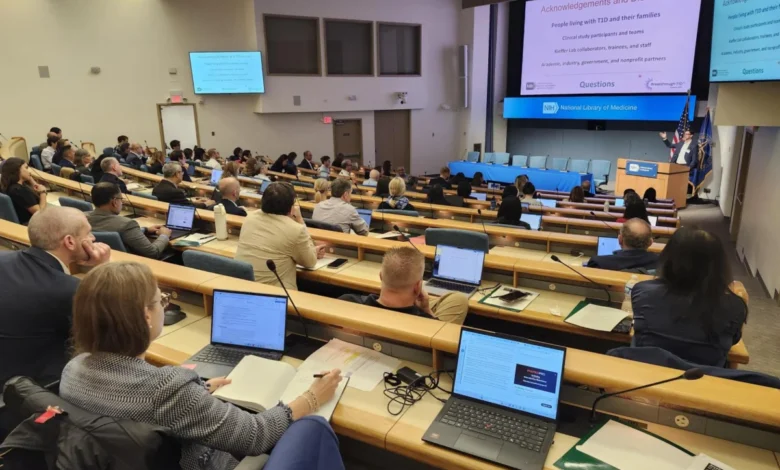
To capitalize on this profound scientific momentum, key stakeholders across the medical, academic, and regulatory spheres are accelerating collaborative efforts. Recently, Breakthrough T1D joined forces with the National Institute of Diabetes and Digestive and Kidney Diseases (NIDDK), a division of the U.S. National Institutes of Health (NIH), to co-host a pivotal public workshop titled “Accelerating the Translation of Cell Therapy for Type 1 Diabetes.” This landmark event convened a diverse coalition of leading researchers, clinical trial investigators, biotechnology and pharmaceutical industry executives, representatives from the U.S. Food and Drug Administration (FDA), and individuals directly impacted by T1D. The collective objective was clear: to establish best practices, address regulatory hurdles, optimize large-scale manufacturing processes, and streamline the pathway from laboratory discovery to widespread clinical availability for next-generation islet cell therapies.
Understanding the Evolution: First- Versus Next-Generation Islet Cell Therapies
To fully grasp the significance of current research initiatives, it is essential to examine the evolution of islet cell transplantation. First-generation islet cell therapies, many of which are actively being evaluated in clinical trials today, have yielded remarkable results. Patients who undergo these procedures frequently experience normalization of their blood sugar and freedom from exogenous insulin. However, access to these first-generation interventions has historically been severely restricted. Due to limitations in donor tissue availability and the rigorous safety protocols required, current treatments are largely confined to individuals experiencing severe, life-threatening hypoglycemic events and profound hypoglycemia unawareness—a dangerous condition where patients lose the physical warning signs of plummeting blood sugar.
The horizon of next-generation islet cell therapies, conversely, promises a dramatically expanded scope. By leveraging stem cell biology and advanced bioengineering, scientists are working toward manufactured versions of islet cells that can be produced at an industrial scale, entirely independent of human cadaveric donors. The ultimate vision driving the T1D research community is an inclusive future where any individual diagnosed with type 1 diabetes who desires an islet cell therapy can safely and effectively receive one. Achieving this goal requires dismantling existing bottlenecks in nonclinical research, manufacturing scalability, and clinical trial design.
The Workshop Blueprint: Fostering Cross-Disciplinary Collaboration
The workshop co-hosted by Breakthrough T1D and the NIDDK served as a vital forum for addressing the multifaceted challenges inherent in translating regenerative medicine into standard clinical practice. Structured around comprehensive panel discussions and collaborative working sessions, the event tackled the entire lifecycle of cellular therapy development, dividing its focus into core operational pillars: nonclinical research, large-scale manufacturing, clinical trial architecture, artificial intelligence integration, and patient-centric perspectives.
In the realm of nonclinical studies—the foundational research required to gather robust safety and efficacy data before a therapy ever enters a human trial—experts emphasized the necessity of rigorous experimental design. Choosing appropriate animal models and standardized data collection methodologies is paramount to generating reproducible, reliable data that regulatory bodies like the FDA can trust. Presenters during this session shared critical new data regarding various islet cell sources, cellular survival rates within hostile environments, and emerging strategies for local or systemic immune protection. Because the human immune system naturally targets and destroys insulin-producing beta cells—the root cause of T1D—protecting transplanted cells from immune rejection without subjecting patients to overly toxic systemic immunosuppression remains one of the field’s most formidable challenges.
Overcoming the Manufacturing Bottleneck
Perhaps the most formidable logistical hurdle facing the field is large-scale manufacturing. To transition from treating a select cohort of high-risk patients to providing scalable cures for millions, the global healthcare infrastructure must be capable of producing billions of healthy, functional insulin-producing cells under stringent quality control standards.
Presenters at the workshop dove deep into the complexities of meeting FDA manufacturing requirements as therapies progress from preclinical experiments to first-in-human clinical trials. A significant portion of the discussion contrasted manufacturing strategies within academic research laboratories against those in commercial industry settings. While academic labs excel at innovation and early-stage protocol development, industrial partners provide the infrastructure necessary for high-throughput, standardized production. Speakers analyzed how insights from both sectors are coalescing to define optimal methodologies for producing large, consistent, and reliable batches of manufactured islets—a notoriously difficult scientific feat given the fragile nature of beta cells and the precision required in cellular maturation.
Redefining Clinical Trial Architecture for the Future
As manufacturing capabilities expand, clinical trial design must simultaneously evolve. Historical trials for islet cell transplantation have maintained strict inclusion criteria, primarily due to the risks associated with long-term immunosuppressive drugs required to prevent graft rejection. However, consensus data from ongoing studies indicates that for many individuals living with T1D, the profound health benefits of achieving insulin independence vastly outweigh the manageable risks of modern immunosuppression regimens.
Workshop participants evaluated what future clinical trials must look like to support broad regulatory approval. Key recommendations included broadening inclusion criteria to encompass a more diverse patient demographic, defining clinically meaningful endpoints that reflect daily quality of life improvements, and proactively educating both the broader T1D community and frontline healthcare providers. Enhanced education is vital to driving timely patient referrals and boosting clinical trial participation, ensuring that studies are adequately powered and reflective of the broader patient population. Furthermore, researchers must intricately coordinate manufacturing parameters, safety profiles, and efficacy endpoints to satisfy the rigorous criteria established by regulatory agencies, thereby clearing an unambiguous, expedited path toward market approval for next-generation products.
The Integration of Artificial Intelligence in Cellular Engineering
One of the most forward-looking themes of the workshop centered on the integration of artificial intelligence (AI) and machine learning into the islet cell therapy workflow. Researchers are increasingly harnessing AI algorithms to optimize multiple stages of development and patient care.
In the clinical sphere, AI is being applied to forecast individual blood sugar responses up to one year post-transplant, providing clinicians and patients with predictive analytics that guide informed, personalized medical decision-making. Simultaneously, bioprocess engineers are utilizing machine learning to optimize islet manufacturing environments. By predicting how cells will behave under fluctuating physical and chemical conditions, AI tools help researchers analyze complex datasets and dynamically modify production processes to maximize yield and viability.
Looking even further ahead, AI-driven computational biology is aiding in the design of novel, engineered therapies at the cellular level. This includes the conceptualization of "smart" islet cells—genetically or structurally modified cellular units capable of autonomously sensing an active immune system attack and deploying targeted, localized immune-protective measures without suppressing the patient’s entire immune system. Such innovations represent the pinnacle of modern bioengineering and hold the promise of transforming transplantation medicine.
Amplifying the Lived Experience: Patient-Centric Research
A defining characteristic of the workshop was its unwavering commitment to centering the voices of individuals living with type 1 diabetes. Several members of the T1D community took the stage to share powerful narratives regarding their daily lived experiences. The panel featured participants who have managed T1D for decades, parents navigating the condition alongside their children, and individuals who have undergone successful or complicated islet cell transplants.
These candid discussions covered the relentless psychological and physical burdens of daily diabetes management, the realities of utilizing advanced diabetes technologies, experiences with immunosuppressive therapies, and the transformative impact that successful islet transplantation has had on their lives. Notably, one participant underscored that even if an islet transplant still requires a patient to take a single daily insulin injection, the reduction from dozens of daily interventions to one represents a dramatically positive, life-altering medical outcome.
Organizers emphasized that incorporating the lived experiences and preferences of the T1D community is not merely optional, but foundational to ethical and effective research. Through initiatives like Breakthrough T1D’s Participant Advisory Council, patient advocates actively guide clinical trial design, ensuring that scientific advancements align directly with the needs, values, and expectations of the people they are intended to serve.
Broader Implications and Future Outlook
The convergence of nonclinical innovation, advanced biomanufacturing, regulatory collaboration, artificial intelligence, and patient advocacy marks a watershed moment in the history of type 1 diabetes research. Islet cell therapy is no longer a distant theoretical concept; it is an active, rapidly progressing reality that is reshaping the boundaries of modern endocrinology and regenerative medicine.
By fostering open dialogue, dismantling scientific and logistical barriers, and maintaining robust partnerships with regulatory agencies like the NIDDK and the FDA, the global research community is laying the essential groundwork for widespread cures. While significant challenges remain—particularly concerning immune protection and industrial scalability—the momentum generated by recent clinical successes and collaborative workshops ensures that next-generation islet cell therapies are moving closer to clinical reality than ever before. Through sustained dedication and cross-disciplinary synergy, the vision of a world without the burden of type 1 diabetes edges steadily closer to fulfillment.