Transforming the Classroom into a Wilderness of Discovery: Educators Embrace Cross-Curricular Bear Themes for Early Childhood Development

Early childhood education continues to evolve, moving away from rigid, single-subject instruction toward holistic, thematic units that simultaneously address multiple developmental domains. Among the most enduringly popular curriculum units in preschool and kindergarten classrooms is the bear theme. Spanning fuzzy teddy bears to majestic polar bears navigating arctic ice, educators have found that incorporating ursine-focused topics into daily lesson plans provides a natural gateway for rich classroom conversations, scientific inquiry, mathematical reasoning, literacy enhancement, and dramatic play.
Recent pedagogical trends emphasize experiential and play-based learning, positioning thematic units like the bear study at the forefront of modern early childhood methodology. Rather than treating math, science, and literacy as isolated subjects, teachers are utilizing multi-faceted themes to connect disparate concepts into a cohesive learning journey. As schools nationwide seek innovative ways to engage young learners following years of shifting educational landscapes, structured nature and animal themes have emerged as powerful tools for fostering cognitive growth, social-emotional development, and fine motor proficiency.
The Evolution and Structural Framework of Early Childhood Thematic Units
The implementation of an animal-based thematic unit typically follows a structured trajectory designed to maximize student engagement and comprehension over a one-to-two-week period. Historically, early childhood classrooms relied heavily on rote memorization and basic craft activities. However, contemporary early education standards mandate a more rigorous, inquiry-based approach.
The modern preschool bear curriculum generally begins with an introductory phase focused on biological classification and anatomical awareness. Educators have noted that young children often possess a generalized, media-driven perception of bears, often conflating fictional characters with actual wildlife. To bridge this gap, modern lesson plans initiate the unit by presenting photographic evidence of diverse bear species, including brown bears, black bears, pandas, and polar bears.

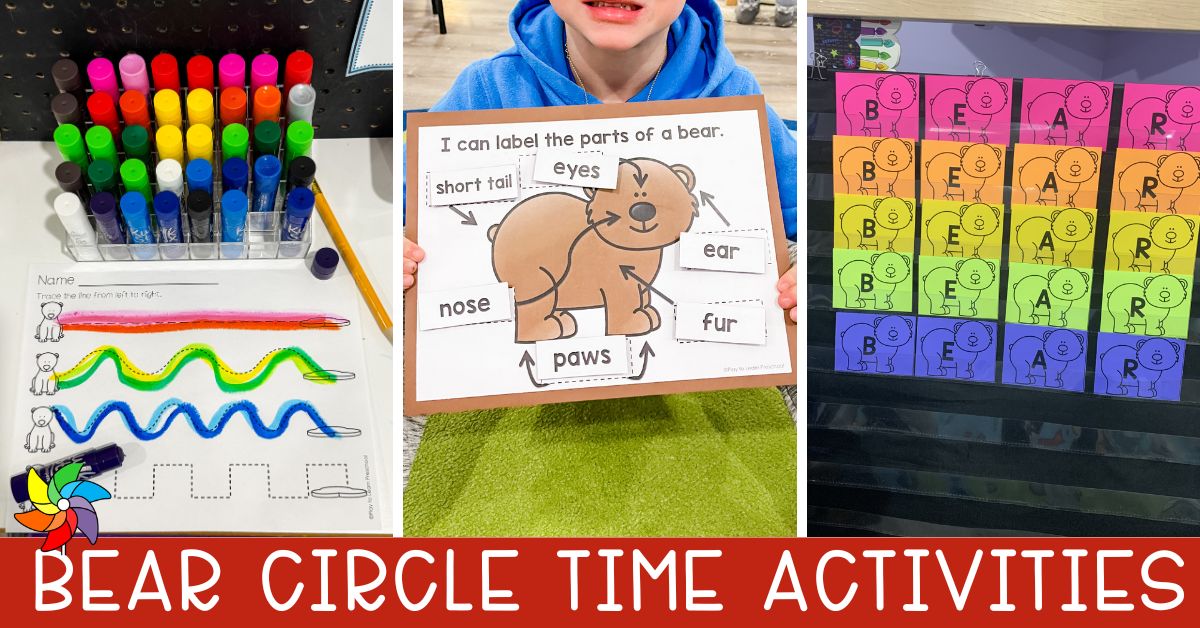
To solidify foundational knowledge, teachers frequently employ comparative sorting games on classroom carpets. Children are challenged to differentiate between bears and non-bear animals by analyzing physical traits such as rounded ears, short tails, strong paws, thick fur, and long claws. This foundational anatomy work supports early scientific observation skills and dramatically expands vocabulary acquisition. Educators utilize labeled anatomical diagrams to introduce terms like "mammal," "habitat," and "claws," laying the groundwork for complex biological concepts taught in later grade levels.
Leveraging Digital Technology for Wildlife Observation in the Classroom
One of the persistent challenges in early childhood education is providing authentic, real-world observational experiences when physical access to wildlife is limited. While traditional field trips to zoological parks offer immersive experiences, logistical constraints, budgetary limitations, and safety regulations often restrict their frequency. In response, modern classrooms are increasingly turning to digital technology to bridge the gap between the classroom and the wild.

In recent years, institutional conservation organizations and major zoological facilities have expanded public access to high-definition live webcams. Educators have successfully integrated these digital feeds into daily classroom routines, creating dedicated observation corners equipped with clipboards, pencils, and structured recording charts.
Prominent digital observation resources utilized in modern curricula include the Smithsonian National Zoological Park’s Giant Panda Cam, which allows students to observe giant pandas in real time without leaving the school building. Similarly, international conservation efforts are highlighted through live feeds of eleven panda yards at the Wolong Zoo in China, providing children with a global perspective on wildlife preservation. For North American fauna, students frequently observe black bears through the North American Bear Center’s multi-habitat webcams, while the Katmai National Park brown bear salmon cam offers dramatic, real-time footage of brown bears hunting in the wild. Additionally, polar bear habitats can be monitored via the San Diego Zoo’s specialized polar cam feeds.
Within the classroom observation station, students transition from passive viewers to active researchers. Preschoolers document observed behaviors—such as playing, eating, fishing, sleeping, climbing, or running—on structured data sheets. Older cohorts frequently employ early mathematical concepts by tallying their observations to determine predominant behavioral patterns, thereby merging scientific observation with statistical data collection.

Scientific Inquiry: Exploring Hibernation and Ecological Adaptation
A cornerstone of any comprehensive bear unit is the exploration of hibernation and seasonal adaptation. As early childhood science standards increasingly incorporate ecological concepts, educators utilize the bear’s winter dormancy to introduce complex environmental science principles in developmentally appropriate ways.
By establishing dedicated "hibernation science centers" within the classroom, teachers introduce children to the biological necessity of energy conservation during harsh winter months. Through hands-on exploration of mock forest habitats—constructed using shredded paper, pinecones, rocks, and miniature plastic bears—students investigate how animals adapt to environmental changes. This tactile engagement introduces critical scientific vocabulary, including "hibernation," "adaptation," and "ecosystem."

Educational specialists note that studying hibernation encourages children to draw parallels between natural phenomena and their own human experiences with seasonal shifts, thereby fostering a deeper appreciation for environmental stewardship and wildlife preservation from an early age.
Cross-Curricular Integration: Mathematics, Sensory Exploration, and Literacy
The true efficacy of a well-designed thematic unit lies in its cross-curricular reach. Beyond science and observation, bear themes offer extensive opportunities for mathematical skill development and sensory-motor integration.

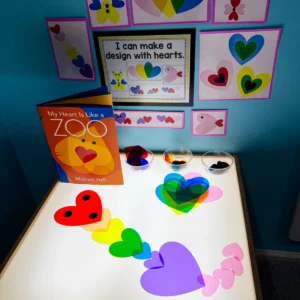
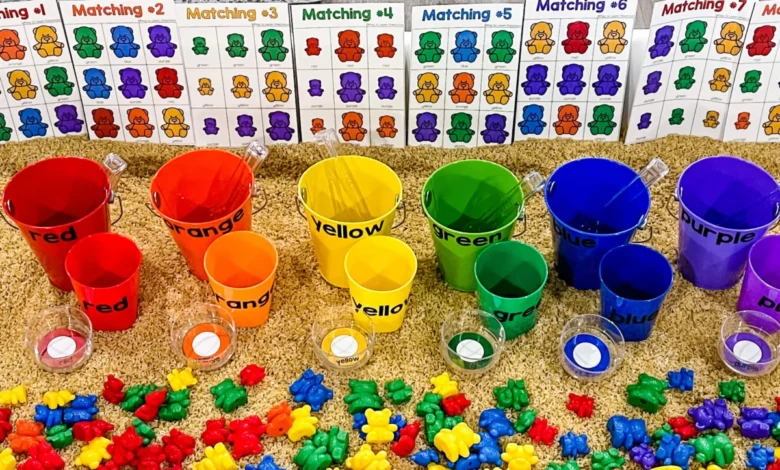
In mathematics centers, educators frequently employ plastic teddy bear counters. These manipulatives serve as versatile tools for teaching fundamental arithmetic concepts, including counting, color sorting, size comparison, pattern creation, and basic addition. Children regularly engage in small-group activities where they compare groups of bears using comparative terminology such as "more," "fewer," and "equal," housing the counters in improvised "caves" made from cups or small containers. Furthermore, the integration of translucent bear counters at light-table stations provides a visually stimulating environment that reinforces geometric and spatial reasoning.
Sensory tables are similarly transformed during the unit. By filling sensory bins with organic materials such as wood chips, dried beans, or shredded paper, educators create tactile environments where children can practice fine motor control through scooping, burying, and rescuing hidden toy bears. Incorporating numbered logs and hidden objects encourages problem-solving and exact quantity matching, seamlessly blending sensory play with structured numeracy tasks.
Literacy development is similarly amplified through targeted thematic reading and storytelling exercises. While classic fairy tales such as Goldilocks and the Three Bears remain staples of early childhood literature, contemporary classrooms have broadened their reading lists to include acclaimed titles like Karma Wilson and Jean Chapman’s Bear Snores On. To foster independent literacy skills, teachers often establish cozy reading corners accompanied by soft, stuffed toy bears, encouraging children to engage in pretend reading and narrative rehearsal.

Story retelling activities further solidify comprehension and narrative structure. Classrooms frequently utilize felt boards stocked with character elements from familiar stories, allowing children to physically manipulate characters as they retell plots. In settings where traditional felt pieces are unavailable, educators utilize innovative, cost-effective alternatives, such as laminating character illustrations and attaching hook-and-loop fasteners to create functional, reusable storytelling boards.
Culminating Events and Community Engagement
To synthesize the diverse learning strands explored throughout the unit, many preschools and early learning centers conclude the curriculum with a specialized culminating event: the traditional teddy bear picnic.

This community-building exercise invites students to bring a personal teddy bear from home to school. The event serves multiple pedagogical functions: it provides an exercise in public speaking and social confidence as children take turns introducing their bears to the group, and it offers practical math application through group sorting exercises. On a large communal blanket spread across the classroom floor or playground, children categorize their bears based on distinct physical attributes, including size, coloration, and whether the bears wear clothing.
The event typically culminates in a shared snack—frequently featuring thematic creations such as teddy bear toast—reinforcing social bonding, peer communication, and positive associations with the learning process.
Analysis of Broader Educational Implications

Educational analysts and early childhood development experts consistently advocate for thematic, play-based units due to their profound impact on neural connectivity and foundational skill acquisition in young children. By embedding academic concepts—such as data collection, comparative mathematics, biological classification, and narrative sequencing—into an engaging, overarching narrative about bears, educators reduce cognitive fatigue while maximizing retention.
Furthermore, integrating live digital technology into early childhood settings democratizes access to wildlife education, ensuring that children from diverse socioeconomic backgrounds can observe zoological phenomena in real time. As schools continue to prioritize comprehensive, inquiry-based learning models, the integration of multi-disciplinary themes like the preschool bear unit demonstrates a sustainable, highly effective approach to early childhood education, bridging joyful play with rigorous academic preparation.