Five Seasonal Developmental Activities to Enhance Early Childhood Growth Through Autumn Exploration

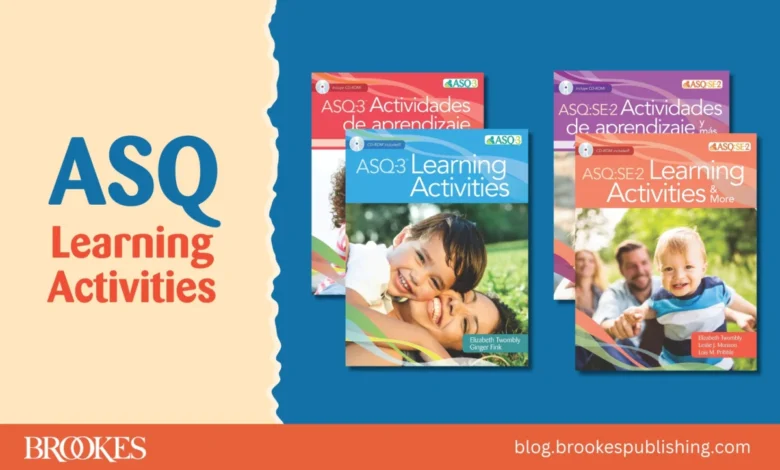
The arrival of the autumn season provides a unique, resource-rich environment for early childhood development professionals and parents to engage children in structured, skill-building activities. As temperatures shift and the natural landscape transforms, early interventionists and educators increasingly leverage the seasonal transition to reinforce developmental milestones. By integrating elements from the ASQ-3 (Ages and Stages Questionnaires) and ASQ:SE-2 (Social-Emotional) learning frameworks, caregivers can convert routine seasonal play into evidence-based interventions that support fine motor, gross motor, communication, and social-emotional growth.
The Developmental Significance of Seasonal Engagement
Child development experts have long advocated for the use of "teachable moments" found in daily life to bridge the gap between home-based play and clinical developmental goals. According to the National Association for the Education of Young Children (NAEYC), play-based learning is the primary vehicle for cognitive and social development in children under the age of five. Seasonal activities, specifically those occurring during the fall, offer a sensory-rich curriculum that is inherently engaging.
The following activities, adapted from standardized developmental learning modules, are designed to address specific areas of growth: fine motor coordination, literacy acquisition, social-emotional awareness, and gross motor refinement.
Autumn-Themed Creative Sculpting for Fine Motor Development
The construction of an autumn-themed sculpture serves as more than a decorative craft; it acts as a complex fine-motor exercise. By utilizing a diverse array of materials—ranging from organic items like acorns, pine cones, and twigs to household supplies like masking tape and ribbon—children are challenged to solve spatial and structural problems.
Developmental pediatricians note that the process of manipulating small objects to create a cohesive structure requires bilateral coordination and pincer grasp strength. When children use tape or glue to join disparate materials, they are engaging in "executive function" exercises, planning the assembly, and adjusting their strategy if the structure becomes unstable. This activity, when allowed to persist over several days, encourages sustained attention and the development of self-regulation as the child returns to refine their work.
Gratitude Books: Strengthening Social-Emotional Intelligence
In the context of the ASQ:SE-2, fostering social-emotional intelligence is paramount. The creation of a gratitude book—a collection of photographs of family and friends adorned with decorative elements—serves as an exercise in identifying and articulating emotions.
The act of arranging photos and applying adhesive requires tactile engagement, but the primary benefit lies in the communication dialogue that follows. Research in early childhood psychology suggests that discussing personal relationships and expressing gratitude helps children build a narrative sense of self and their social ecosystem. When an adult facilitates this process by asking open-ended questions about the individuals in the book, it stimulates linguistic development and reinforces emotional bonds, which are critical predictors of long-term social health.
Culinary Literacy: Integrating Math and Language in the Kitchen
The preparation of "alphabet pretzels" serves as a practical application of multisensory learning. Early literacy development relies heavily on the ability to recognize letter shapes and phonemic sounds. By forming these shapes with dough, children connect the physical experience of "building" a letter to the abstract concept of written language.
Furthermore, the inclusion of mathematical concepts—such as measuring ingredients, counting the number of pretzels, or forming numeric shapes—introduces children to quantitative reasoning. Nutritionists and educators emphasize that cooking with young children also encourages a positive relationship with food, provided that all safety protocols, such as strict adult supervision during oven use and proper hand hygiene, are maintained.

Gross Motor Activation Through Outdoor Leaf Play
As the landscape changes, the accumulation of leaves provides a cost-free, natural gymnasium for gross motor development. Engaging in activities such as raking, leaping into piles, or chasing falling leaves requires children to calibrate their movements, balance, and spatial awareness.
Gross motor skills are essential for physical confidence and safety. The exertion involved in active outdoor play during the autumn months contributes to the recommended daily physical activity levels for young children. Furthermore, the task of sorting leaves by size, shape, or color introduces early scientific classification skills, providing a cognitive layer to what is essentially a physical exercise.
The Cognitive Impact of Shared Reading
Perhaps the most documented activity for cognitive growth is shared reading. Integrating autumn-themed literature into a daily routine during the fall creates a consistent environment for language acquisition.
Data from the American Academy of Pediatrics consistently shows that reading aloud to young children is the single most important activity for building the knowledge required for eventual success in reading. By engaging the child through interactive techniques—such as prompting them to recall the sequence of the story or role-playing characters—caregivers transition the child from a passive listener to an active participant. This shift is vital for developing reading comprehension skills and critical thinking capabilities.
Chronology of Developmental Milestones
The period between ages zero and five is characterized by rapid neuroplasticity. During this time, the brain forms millions of connections per second. Integrating these structured activities into the fall schedule aligns with key developmental milestones:
- Ages 0–18 Months: Emphasis on sensory exploration (e.g., feeling the texture of leaves).
- Ages 18–36 Months: Focus on simple motor tasks (e.g., stacking small objects for a sculpture).
- Ages 3–5 Years: Concentration on complex tasks like letter formation, categorization, and narrative storytelling.
Supporting Data and Theoretical Context
The frameworks provided by the ASQ-3 and ASQ:SE-2 are utilized globally by early childhood programs to monitor developmental progress. The reliance on these activities stems from a shift in educational philosophy toward "whole-child" development. According to a report by the Center on the Developing Child at Harvard University, the environment in which a child plays directly influences the architecture of the developing brain. Providing a mix of low-structure outdoor play and high-structure creative tasks ensures that the child is challenged across multiple domains simultaneously.
Official Perspectives on Home-Based Learning
Early childhood experts from the Brookes Publishing community emphasize that the role of the caregiver is not to act as a formal teacher, but as a "scaffolder" of experiences. By providing the tools and the safe space for these activities, the caregiver empowers the child to explore their capabilities.
In recent discussions regarding early childhood curricula, policymakers have underscored that parent-child interaction is the most significant variable in determining school readiness. The transition of these activities into the home environment is therefore viewed as a vital strategy for closing achievement gaps before children enter the formal school system.
Broader Implications and Safety Guidelines
While these activities are highly beneficial, safety remains the primary consideration. All materials utilized—particularly in sculpture and baking—must be age-appropriate to prevent choking hazards or ingestion risks. Adult supervision is not merely recommended; it is a critical component of the developmental process.
The implication of incorporating these seasonal practices is a more robust, engaged, and developmentally stimulated child. As the seasons cycle, the ability to adapt play-based interventions ensures that development is not a static process, but one that evolves alongside the child’s growing capabilities. By capitalizing on the unique characteristics of autumn, caregivers can provide a foundation for learning that is both joyful and academically rigorous, ensuring that children are well-prepared for the cognitive and social demands of the years to come.
Related posts: