Dialogic Reading: Transforming Early Childhood Literacy Through Intentional Conversation

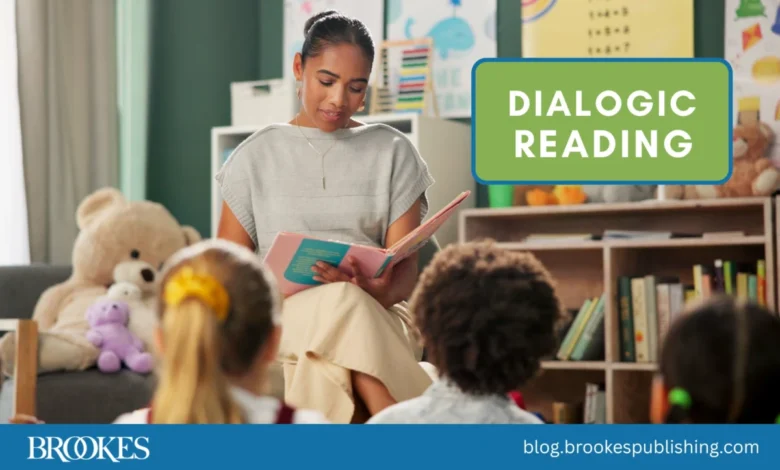
The practice of dialogic reading has emerged as a cornerstone of modern pedagogical strategy, fundamentally altering how educators and caregivers approach early childhood literacy. Unlike traditional passive storytelling, where a child listens to an adult read aloud, dialogic reading positions the child as an active participant in a collaborative, back-and-forth exchange. By utilizing open-ended questioning and strategic prompts, this method transforms the act of reading into a dynamic dialogue that significantly bolsters vocabulary, comprehension, and critical thinking skills in children aged two through eight.
Historical Context and Research Foundations
The academic interest in the relationship between interactive book reading and language acquisition dates back several decades. A pivotal moment in this field occurred with the seminal 1994 study conducted by David K. Dickinson and M.W. Smith. Their research, published in Reading Research Quarterly, provided empirical evidence that the nature of classroom interactions during storytime directly correlates with long-term cognitive development. Dickinson and Smith identified that when teachers move beyond simple narration—opting instead for analytic, reflective discussions—children from diverse socioeconomic backgrounds demonstrate significantly higher gains in vocabulary and story comprehension.
Since that time, the pedagogical community has moved toward a model of "intentionality." Rebecca Rolland, an Ed.D. and speech-language pathologist, explores this in her recent work, Rich Talk With Young Children. Rolland argues that the "how" of reading is just as important as the "what." By shifting the focus from the reader as an orator to the reader as a facilitator, educators can bridge the gap between simple word recognition and the complex cognitive processing required for lifelong literacy.
The Mechanics of the Dialogic Approach
At its core, dialogic reading relies on the "PEER" and "CROWD" sequences—acronyms developed by researchers to help adults structure their interactions. The PEER sequence involves the adult prompting the child to say something about the book, evaluating the child’s response, expanding upon it, and then repeating the expansion to verify the child has learned from the interaction.
The CROWD prompt system provides the tactical framework for these conversations:
- Completion prompts: Leaving a blank at the end of a sentence for the child to fill in.
- Recall prompts: Asking the child to remember details about what has already occurred in the story.
- Open-ended prompts: Encouraging the child to describe what is happening in a picture or a scene in their own words.
- Wh- prompts: Utilizing "who," "what," "where," "when," and "why" questions to elicit descriptive information.
- Distancing prompts: Helping the child connect the events in the book to their own life experiences.
This structured approach ensures that the child is not merely a recipient of information but a co-constructor of the narrative. By avoiding "yes or no" questions, the facilitator forces the child to utilize complex linguistic structures to express ideas, identify motivations, and predict outcomes.
The Role of Cultural Responsivity
While the efficacy of dialogic reading is supported by robust data, current pedagogical standards emphasize the necessity of cultural responsiveness. Educators are increasingly cautioned against viewing any single teaching method as a universal panacea. Cultural norms regarding conversation, questioning, and the role of the child in adult-led discussions vary significantly across global populations.
For instance, in some cultures, children are taught to listen quietly to elders, and aggressive questioning may be perceived as intrusive or disrespectful. Therefore, successful implementation requires that the facilitator adapt the "dialogic" nature of the session to align with the comfort levels and cultural background of the child. The primary objective is to maintain a warm, inviting environment where the child feels safe to express thoughts. If a child feels pressured or judged by the questioning style, the developmental benefits are often negated by the emotional discomfort.
Fact-Based Analysis of Educational Implications
The implications for early childhood education are profound. With the rise of digital media and screen-based learning, the "human element" of literacy has taken on new importance. Research consistently indicates that children who engage in high-quality, rich, and intentional talk with adults show higher levels of executive function.
Furthermore, the economic and social implications are significant. Literacy rates by the third grade are often cited as the single strongest predictor of high school graduation rates and future earning potential. By integrating dialogic reading techniques in preschool and early elementary settings, educators provide a foundational buffer against the "word gap"—the phenomenon where children from different linguistic environments enter school with vastly different vocabulary sizes.
However, the transition from passive reading to dialogic reading requires intensive professional development. Teachers must be trained not just in literacy standards, but in the art of conversation. This involves learning how to listen as much as, or more than, they speak. It requires the ability to read a child’s non-verbal cues—a look of confusion, a spark of excitement, or a moment of boredom—and adjust the conversation accordingly.
Chronology of Strategic Implementation
- Preparation Phase: Educators select books that are age-appropriate but offer enough thematic depth to invite analysis. The focus is on quality over quantity; reading one book three times with different conversation prompts is often more effective than reading three books once.
- Initial Engagement: The reader establishes a comfortable, low-pressure environment. The first pass through a book may focus on literal comprehension (Recall prompts).
- Deepening the Dialogue: Subsequent readings focus on "Distancing" and "Open-ended" prompts, where the child is encouraged to relate the story to their own life or to speculate on character motivations.
- Reflection and Evaluation: The adult assesses the child’s ability to articulate concepts and adjust future reading selections based on the child’s demonstrated interests and linguistic progress.
What to Avoid: Common Pitfalls
Experts emphasize that for dialogic reading to be successful, adults must avoid certain behaviors that can stifle engagement. These include:
- Over-correcting: Constant interruption to fix grammar or pronunciation can discourage a child from speaking freely.
- The "Testing" Trap: Turning a story into a quiz. If the adult asks too many questions in rapid succession, the session becomes an interrogation rather than a shared experience.
- Ignoring Student Interests: Forcing a book on a child that does not match their interests or developmental level will inevitably lead to disengagement.
- Lack of Flexibility: Failing to pivot when a child shows interest in a specific illustration or sub-plot is a missed opportunity for "rich talk."
Broader Impact and Future Directions
The integration of dialogic reading into standard curricula represents a shift toward a more holistic view of education. By recognizing that literacy is inherently social, schools are beginning to prioritize the quality of interpersonal communication as a core academic metric.
As we look toward the future, the integration of technology into this process—such as digital platforms that provide prompts to parents and teachers—remains a subject of ongoing study. However, the consensus among experts remains that the technology is secondary to the human connection. The "rich talk" described by practitioners like Rebecca Rolland is not a script to be followed, but a philosophy of engagement.
In conclusion, the practice of dialogic reading is more than a technique; it is a commitment to valuing a child’s perspective. By fostering an environment where young children are encouraged to ask "how" and "why," and where their answers are treated with genuine curiosity and respect, we lay the groundwork for a more literate, analytical, and articulate generation. The data is clear: when we talk with children, rather than just at them, the cognitive rewards are measurable, significant, and lasting.
Related posts: