Nurturing Inclusion: The Essential Role of Black History Month Literature in Early Childhood Education

Early childhood educators across the country are increasingly recognizing that the foundation of an inclusive society begins in the preschool classroom. As classrooms serve diverse populations ranging from densely populated metropolitan areas to homogenous rural towns, the intentional selection of literature has emerged as a primary pedagogical tool for expanding children’s worldviews. By integrating books that highlight the historical contributions, everyday experiences, and diverse voices of Black Americans, educators are fostering early empathy, cultural awareness, and a profound sense of belonging among young learners.

The significance of representation in early childhood education extends far beyond seasonal programming. Developmental psychologists and educational researchers emphasize that children form foundational self-concepts and social attitudes during their preschool years. When children encounter characters who share their physical traits, cultural backgrounds, and family structures, it validates their lived experiences and reinforces their inherent value. Conversely, the absence of diverse representation in classroom libraries can inadvertently signal to minority students that their stories lack significance. At the same time, exposing children to lives and backgrounds different from their own builds cognitive flexibility, reduces implicit bias, and cultivates cross-cultural respect from an early age.

Historical Context and the Evolution of Diverse Children’s Literature
The intentional inclusion of Black history and culture in preschool curricula represents a significant evolution in American education. Historically, instructional materials frequently sanitized or omitted the contributions of marginalized groups, confining discussions of Black history to brief acknowledgments of slavery or the mid-20th-century Civil Rights Movement. The formal establishment of Black History Month in 1976 provided a designated period to spotlight Black achievements, but early childhood educators soon realized that older historical narratives often proved too abstract or complex for preschool-aged children.

Over the past two decades, authors, illustrators, and publishers have transformed the landscape of children’s literature by introducing biographical and fictional picture books tailored to the cognitive and emotional developmental stages of young children. Rather than focusing on graphic historical trauma, contemporary children’s literature frames historical milestones through accessible themes such as courage, fairness, perseverance, and community action. This shift allows children ages three to five to engage meaningfully with complex historical concepts through relatable human emotions.

Nonfiction and Biographical Picture Books: Translating History for Young Minds
Introducing historical figures and true stories to preschoolers requires bridging the gap between grand historical events and a child’s immediate frame of reference. Educational experts recommend focusing on foundational human values when reading nonfiction picture books during Black History Month.

Works such as Brittney Cooper’s Stand Up! introduce young readers to monumental figures like Ruby Bridges and Rosa Parks alongside contemporary advocates like Bree Newsome. By focusing on the concept of using one’s voice to champion fairness, the book translates abstract notions of civic duty into tangible actions that preschoolers can comprehend.

Similarly, Roda Ahmed’s Mae Among the Stars chronicles the childhood of Mae Jemison, the first African American woman in space. The narrative emphasizes parental support, resilience, and the pursuit of ambitious goals, encouraging young children to dream without limitations. In the realm of community activism, Monica Clark-Robinson’s Letthe Children March addresses the 1963 Children’s Crusade in Birmingham, Alabama. By framing the historic protests through the courageous actions of ordinary children facing adversity, the book helps preschoolers understand the collective power of standing together for justice.

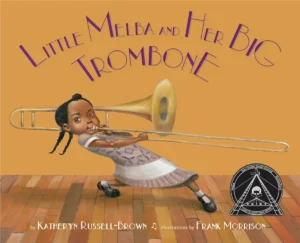
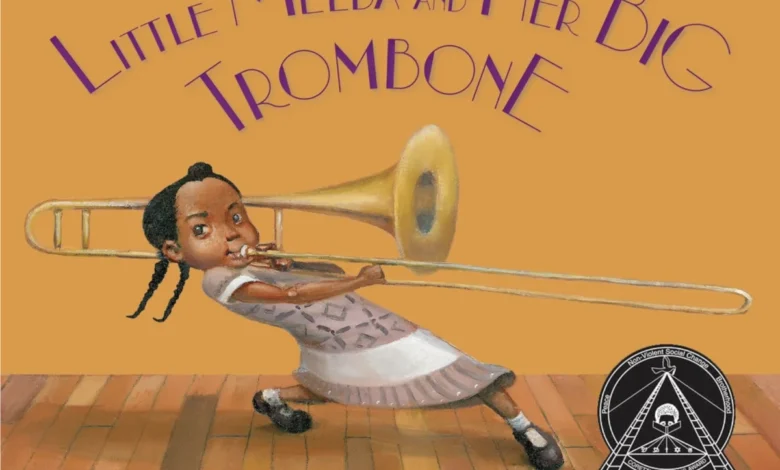
Other notable nonfiction works connect historical perseverance with personal growth. Katheryn Russell-Brown’s Little Melba and Her Big Trombone details the musical journey of jazz pioneer Melba Liston, introducing children to the rich traditions of American jazz while addressing systemic barriers with age-appropriate nuance. Meanwhile, Rita Lorraine Hubbard and Oge Mora’s The Oldest Student, which tells the true story of Mary Walker learning to read at age 116, serves as a powerful testament to lifelong learning, endurance, and the bridging of American history from the Civil War to the Civil Rights Movement.

Celebrating Everyday Joy and Relatable Fiction
While historical narratives form a critical pillar of Black History Month curricula, educators and literacy advocates stress that representation must not be confined solely to struggle or historic achievement. Books depicting Black children and families navigating ordinary, joyful moments are equally vital to a balanced classroom library.

Fictional stories celebrating daily life—such as playing in the snow, visiting local libraries, riding public transit, or spending time with family—reinforce that joy, love, and creativity are universal experiences. Vashti Harrison’s award-winning book Big explores themes of self-acceptance and emotional space, while Kaija Langley’s When Langston Dances follows a young boy discovering a passion for ballet after viewing the Alvin Ailey American Dance Theater.

Poetry and lyrical storytelling also play a vital role in early literacy. Angela Joy’s Black is a Rainbow Color weaves cultural heritage and pride into an accessible exploration of colors for young learners. Matthew A. Cherry’s Hair Love celebrates family bonding and natural hair pride, while Nancy Johnson James and Constance Moore’s Brown: The Many Shades of Love offers an ode to familial connection and diverse skin tones.

Urban life and familial resilience are central to acclaimed works like Matt de la Peña’s Last Stop on Market Street and Milo Imagines the World, as well as Oge Mora’s Saturday. These narratives encourage children to look beyond superficial appearances, practice empathy, and find beauty in everyday routines. Furthermore, empowering titles such as Grace Byers’ I Am Enough, Ruth Forman’s Like So, Parker Curry’s Parker Looks Up, and Lupita Nyong’o’s Sulwe address complex concepts like self-worth and colorism, providing essential tools for emotional development.

Broader Implications and Expert Perspectives
Educational organizations, including the National Association for the Education of Young Children (NAEYC), have long advocated for proactive approaches to addressing diversity, equity, and inclusion in early learning environments. Experts note that young children notice physical differences, racial characteristics, and social dynamics at a very early age. When adults avoid conversations about race or fail to provide diverse literature, children may internalize biases or cultural misunderstandings.

By curating inclusive classroom libraries that feature both historical milestones and contemporary everyday narratives, educators lay the groundwork for a more empathetic generation. Literacy specialists emphasize that these literary resources are most effective when paired with guided discussions, open-ended questioning, and supportive environments where children feel safe expressing curiosity about the world around them. Ultimately, the integration of Black history and diverse literature in preschool settings is not merely a seasonal observance, but an essential component of comprehensive, high-quality early childhood education that honors the shared human experience.
Related posts: