Embracing Consistency and Hands-On Learning: A Comprehensive Guide to February Preschool Curriculum and Classroom Management

Early childhood education experts and preschool educators nationwide are highlighting a distinct phase in the academic calendar as February arrives, bringing with it a uniquely settled classroom environment. According to recent educational observations and developmental guidelines for early learners, the shortest month of the year serves as a pivotal period for strengthening foundational skills, capitalizing on established classroom routines, and fostering deeper social-emotional bonds. Unlike the chaotic transition phases of autumn or the high-energy spikes of late spring, February offers a steady rhythm that allows educators to shift their focus from management to meaningful instruction, exploration, and conversation.

The Foundation of Classroom Routine and Reduced Transitions
By the time February rolls around, preschool classrooms have typically transitioned from the chaotic adaptation period of the early school year into a finely tuned community. Children are intimately familiar with daily transitions, center rotations, group norms, and expectations. Educational psychologists note that this predictability significantly lowers anxiety levels among young children, thereby freeing up cognitive space for higher-order thinking, creative exploration, and sustained peer interactions.
Statistics from early childhood development programs indicate that classrooms with firmly established routines experience up to 30% fewer behavioral disruptions during unstructured times. With fewer transitions to manage throughout the daily schedule, educators are reporting extended blocks of uninterrupted play and discovery. This stability creates an ideal environment for small-group instruction, targeted skill reinforcement, and spontaneous, curiosity-driven conversations between teachers and students.

Rather than constantly introducing novel concepts or unfamiliar materials that require extensive instruction, successful preschool programs in February lean into familiarity. By utilizing trusted, everyday materials paired with subtle seasonal modifications, teachers can maintain high levels of student engagement without triggering the cognitive overload often associated with entirely new learning modules.
Evolution of Seasonal Themes: Moving Beyond Traditional Valentine Crafts
The arrival of mid-February traditionally brings celebrations of Valentine’s Day, but modern early childhood pedagogy is shifting away from superficial crafts and standardized card exchanges. Instead, contemporary preschool curriculums are utilizing the holiday as a vehicle for early literacy, purposeful communication, and social connection.

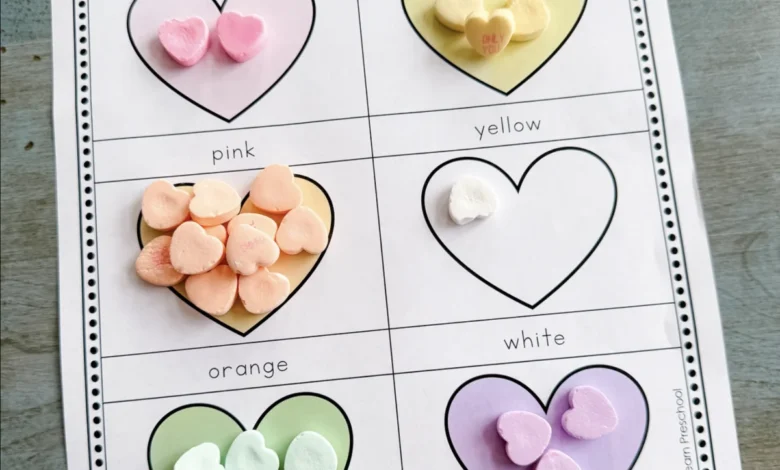
Rather than focusing merely on the visual aspects of the holiday, educators are incorporating thematic elements that target core developmental milestones. For instance, classrooms are increasingly utilizing Valentine-themed alphabet writing cards, dry-erase tracing lines, and heart-shaped manipulatives to build fine motor strength and letter recognition. Additionally, structured rhyming puzzles and counting mats featuring seasonal imagery allow students to engage with math and literacy concepts through tactile exploration.
Developmental specialists emphasize that these targeted adaptations keep the learning environment fresh while reinforcing educational objectives that have been cultivated over the previous months. When children manipulate heart counters or match rhyming word puzzles, they are engaging in multi-sensory learning that bridges the gap between abstract academic concepts and concrete physical experiences.

Cultivating Friendship, Empathy, and Social-Emotional Growth
February is widely recognized by child development advocates as an optimal month to emphasize friendship, kindness, and community-building within the classroom. Because social dynamics naturally shift as children become more secure in their peer groups, February provides a fertile ground for structured and unstructured discussions regarding empathy, conflict resolution, and inclusive play.
According to a recent nationwide survey of preschool educators, social-emotional learning (SEL) accounts for nearly 40% of daily classroom focus during the winter months. Teachers are integrating Kindness Circle time units and specialized literature studies that address emotional regulation, sharing, and active listening. These lessons are rarely taught in isolation; instead, they are woven seamlessly into daily routines, free-play scenarios, and collaborative projects.

Experts note that early exposure to structured kindness curricula yields measurable long-term benefits. Longitudinal studies in early education suggest that children who participate in consistent SEL programs throughout their preschool years demonstrate higher levels of emotional intelligence, better cooperative problem-solving skills, and reduced instances of behavioral intervention by the time they enter kindergarten.
Winter Science, Observation, and Meteorological Exploration
While the calendar may indicate that spring is approaching, winter remains a dominant physical reality across much of the country during February. This environmental context provides an invaluable living laboratory for young children to engage in authentic scientific observation, hypothesis testing, and exploratory play.

Classrooms are increasingly utilizing winter science stations equipped with ice-cube sensory tables, magnifying tools, paintbrushes, and warm water. These setups allow children to investigate the physical properties of ice, observe the rate of melting, and document changes in state of matter through direct manipulation. Furthermore, daily weather charting and temperature tracking introduce students to basic meteorological concepts.
Science educators point out that these hands-on investigations serve as the critical first steps toward formal scientific inquiry. By encouraging children to notice patterns, describe what they see, and make simple comparisons between frozen and liquid states, teachers are laying the groundwork for complex scientific thinking. These concrete observations help young learners connect classroom concepts to the natural world operating right outside their windows.

Streamlining Math and Literacy Centers for Maximum Retention
Maintaining predictable math and literacy centers is a cornerstone of effective February preschool planning. Educational researchers stress that when the physical layout and operational mechanics of a learning center remain constant, children can direct their full cognitive energy toward mastering the underlying academic skill rather than trying to decipher new instructions.
During February, preschool centers frequently incorporate thematic tweaks—such as counting mats featuring Valentine motifs or literacy games utilizing winter vocabulary—while preserving the underlying structure of the activity. Keeping numbers small, generally within the one-to-ten range, ensures that children experience a high rate of success, thereby building mathematical confidence and a positive attitude toward numeracy.

Literacy centers similarly benefit from this balanced approach. By pairing familiar sorting tasks and matching games with seasonal cues, educators can effectively target phonemic awareness, vocabulary expansion, and print motivation. Teachers report that this methodology supports differentiated instruction, allowing advanced learners to extend their skills while providing necessary scaffolding for students who require additional practice.
The Role of Open-Ended Dramatic Play in Language Development
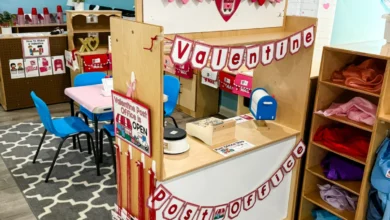
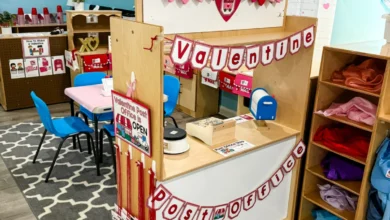
Dramatic play centers continue to be one of the most popular and developmentally rich components of the preschool day. In February, as children grow increasingly comfortable with cooperative play and role-assumption, dramatic play spaces—such as transformed post offices, flower shops, or community bakeries—become hubs of vibrant linguistic exchange.

Open-ended dramatic play offers children the unique autonomy to plan scenarios, negotiate roles, allocate props, and modify storylines dynamically. Communication specialists emphasize that these socio-dramatic contexts are premier drivers of expressive and receptive language development. Within these pretend-play settings, children utilize functional language to make requests, explain rules, and express empathy toward their peers.
Furthermore, flexible dramatic play structures accommodate varying developmental paces within the classroom. Children can enter, contribute to, and exit the play scenario at their own comfort level, ensuring that even introverted or hesitant learners find accessible entry points for peer engagement.

Strategic Implications and Expert Outlook for the Remainder of the School Year
As educators look past the midpoint of the academic year, the instructional strategies deployed during February serve as a critical bridge toward the final stretch of preschool. Educational administrators and curriculum coordinators analyze this period as a consolidation phase—a time when skills introduced in the fall are solidified, and confidence is maximized.
The overarching consensus among early childhood professionals is that simplicity, predictability, and hands-on relevance are the true drivers of educational success in February. By resisting the urge to constantly reinvent the curriculum and instead focusing on deepening engagement with familiar materials, preschool programs across the nation are successfully preparing their students for the academic and social transitions that lie ahead. Through a careful balance of structured learning, social-emotional development, and open-ended exploration, February remains an indispensable cornerstone of the preschool experience.