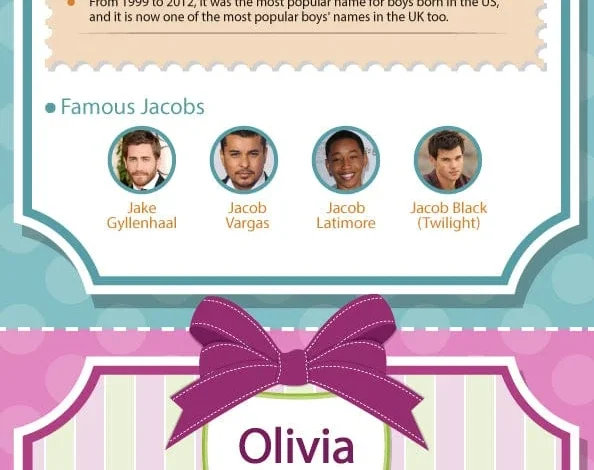
The selection of Jacob and Olivia as the featured names for November 2026 highlights a persistent trend in nomenclature that has defined the early 21st century. While naming fashions are often cyclical, these two names have demonstrated a remarkable ability to remain at the forefront of parental preference across North America and Europe. By examining the historical etymology, cultural footprint, and statistical dominance of these names, one gains insight into the broader sociological factors that influence how society chooses to identify its newest members.
Etymological Origins and Historical Significance
The name Jacob possesses deep historical and linguistic roots, tracing back to the Hebrew name Yaakov, which is traditionally associated with the verb "aqev," meaning "to follow" or "supplant." In biblical narrative, Jacob was the son of Isaac and Rebekah, a figure whose life trajectory—marked by struggle, transformation, and divine blessing—has cemented the name as a staple in Western tradition for millennia. Throughout the Middle Ages, the name evolved into various forms, including the Latin Jacobus, which eventually bifurcated into the English variations of Jacob and James. Its endurance is largely attributed to its inclusion in religious texts, ensuring its status as a foundational name in Judeo-Christian culture.

Conversely, the name Olivia is of Latin origin, derived from "oliva," meaning "olive tree." Symbolically, the olive branch has served as a universal emblem of peace and wisdom since antiquity. Unlike Jacob, which has been consistently popular for centuries, the name Olivia saw a significant surge in literary prominence due to William Shakespeare’s Twelfth Night. In the play, the Countess Olivia serves as a central character, lending the name an aura of sophistication and classical elegance. Since the late 20th century, the name has transitioned from a period-specific moniker to a modern classic, frequently topping baby name charts due to its melodic phonetic qualities and its associations with grace and resilience.
Statistical Dominance and Demographic Trends
Data from national social security administrations consistently place both Jacob and Olivia within the upper echelons of popularity rankings. For over two decades, Jacob maintained a position as one of the most frequently bestowed names for boys, peaking in the early 2000s and remaining a perennial favorite. Sociologists suggest that Jacob’s appeal lies in its "Goldilocks" quality: it is traditional enough to be respectable in professional settings, yet informal enough to feel approachable.
Olivia’s trajectory has been equally impressive. Since roughly 2010, it has consistently occupied the top five slots in birth registration data. Market researchers and demographers often point to the "vowel-heavy" trend in naming, where parents gravitate toward names that are soft-sounding and lyrical. Olivia fits this aesthetic profile perfectly, matching a broader preference for names that end in vowels, such as Sophia, Amelia, and Isabella. The intersection of these trends suggests that while parents seek uniqueness in their daily lives, they often prefer a sense of established stability when selecting a name for their children.

Cultural Impact and Celebrity Influence
The influence of popular culture on naming conventions cannot be overstated. Celebrities often act as trendsetters, and the visibility of public figures bearing these names reinforces their societal acceptance. For Jacob, the name has been carried by numerous high-profile figures, from the actor Jacob Elordi to the historical impact of Jacob Grimm, one half of the Brothers Grimm. These associations provide a diverse range of archetypes—from the modern heartthrob to the intellectual storyteller—allowing parents to project different aspirations onto the name.
Olivia has similarly benefited from high-profile exposure. From musicians like Olivia Rodrigo to the fictional Olivia Pope, the name is frequently associated with ambition, creativity, and strength. Media analysts note that when a character or celebrity achieves massive cultural success, there is often a subsequent, measurable spike in the registration of that name within the following twelve months. This phenomenon, known as the "celebrity halo effect," ensures that names like Olivia remain top-of-mind for expecting parents who are subconsciously influenced by the narratives surrounding these high-achieving individuals.
The Evolution of Naming Conventions
The methodology behind choosing a name has undergone a radical transformation in the last thirty years. In the mid-20th century, naming patterns were largely dictated by familial tradition—naming a child after a grandparent or a parent. However, the current landscape is defined by "personalized curation." Parents now utilize vast digital databases, social media platforms, and online parenting forums to research the frequency, meaning, and popularity of names before making a final decision.

The rise of digital tools has created a paradox: while parents want to be "different," they are often funneled into the same popular choices due to algorithmic suggestions and social proof. Jacob and Olivia represent the pinnacle of this "popular-yet-classic" phenomenon. They occupy a safe space in the linguistic market, avoiding the risks of overly experimental naming while providing a sense of identity that is perceived as both timeless and modern.
Sociological Implications for the Future
As we move toward the latter half of the 2020s, the implications of these naming trends remain a subject of interest for linguists. Some argue that as the global population becomes more interconnected, names like Jacob and Olivia are being favored for their cross-cultural phonetic ease. They are easily pronounced in a variety of languages, including English, Spanish, French, and German, making them pragmatic choices for a globalized workforce.
Furthermore, the longevity of these names suggests that they have achieved "permanent status." Unlike fad names—which experience rapid spikes in popularity followed by sharp declines—Jacob and Olivia have proven themselves resistant to the standard cycle of obsolescence. Their endurance indicates that they have become part of the foundational vocabulary of names in the English-speaking world, joining ranks with names like Elizabeth, William, and Thomas.

Conclusion
The enduring popularity of Jacob and Olivia is not a coincidence, but rather a reflection of broader cultural, historical, and linguistic forces. Through their deep etymological roots, their adaptability to modern trends, and their consistent presence in the public consciousness, these names have solidified their places as the gold standards for nomenclature. As parents continue to navigate the vast possibilities of the modern naming landscape, the stability offered by such names provides a sense of continuity. Whether viewed through the lens of statistics, history, or cultural influence, Jacob and Olivia remain significant markers of contemporary identity, perfectly balancing the weight of the past with the promise of the future. The data surrounding these names confirms that while society evolves at a rapid pace, the desire for names that embody both history and harmony remains a constant factor in the human experience.