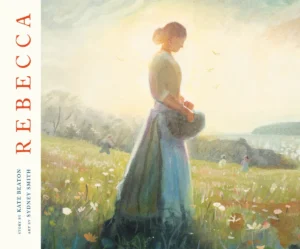
Acclaimed Author Kate Beaton Explores Generational Loss and Resilience in New Children’s Picture Book Rebecca

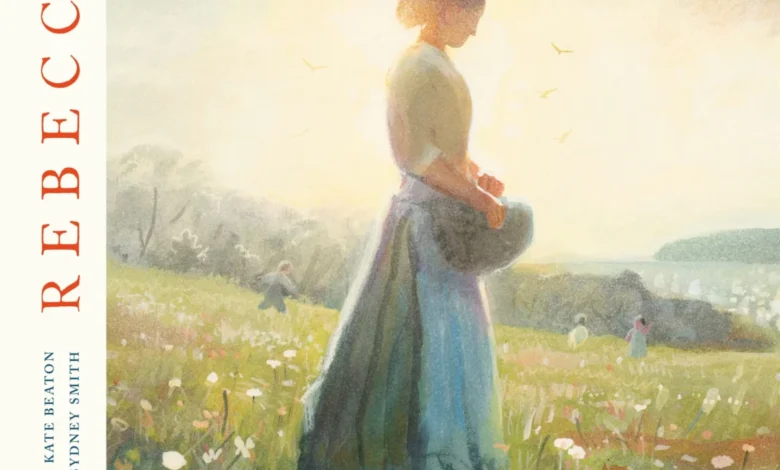
The intersection of familial grief, historical legacy, and maternal resilience forms the core of celebrated Canadian author and illustrator Kate Beaton’s latest literary release, the children’s picture book titled Rebecca. Known internationally for her New York Times bestselling graphic novels Hark! A Vagrant and Step Aside, Pops, as well as her deeply personal memoir Ducks: Two Years in the Oil Sands, Beaton steps into new creative territory with a work that addresses adult themes of bereavement and ancestral memory for younger audiences. The publication brings to light a centuries-old family tragedy from Cape Breton, Nova Scotia, serving as a meditation on how families endure profound loss across generations.
Main Facts and Literary Premise
Rebecca centers on the historical figure of Rebecca Lombard Smith, an ancestor of Beaton who lived in the late 18th and early 19th centuries in Port Hood, Nova Scotia. In March 1789, Rebecca’s husband, whaling captain David Smith, tragically died after falling through the ice near Port Hood Island while Rebecca was pregnant with their final child. Rather than focusing solely on the maritime disaster—as historical accounts frequently did—Beaton’s narrative highlights Rebecca’s endurance, detailing how she successfully raised her six sons and one daughter entirely on her own in an isolated coastal environment.
The picture book breaks conventional publishing norms for children’s literature. Connie Hsu, publishing director at Roaring Brook Press, acknowledged the unconventional nature of the project. Hsu noted that the manuscript challenges standard industry parameters, featuring an adult protagonist, themes centered around mortality, and multiple deaths within the plot. Despite these departures from traditional children’s publishing guidelines, the editorial team proceeded with publication, recognizing its profound emotional resonance.
Chronology of Grief and Inspiration
The genesis of Rebecca is rooted in a deeply personal timeline of loss and subsequent new life for the author.

- May 14, 2018: Beaton’s older sister, Rebecca—affectionately known as Becky—passed away at the age of 38 following a rigorous three-year battle with aggressive cervical cancer. The loss profoundly altered Beaton’s life, creating a distinct division between her experiences before and after her sister’s illness.
- May 13, 2019: Exactly one year after navigating the initial grief of her sister’s passing, Beaton went into early labor on Mother’s Day. Wishing to separate her future child’s birthday from the anniversary of her sister’s death, she delivered a healthy baby girl just before midnight.
- 2020–2022: As Beaton raised her young children in Cape Breton, the quiet evening routines of putting her children to sleep provided space for reflection. Gazing out toward Port Hood Island from the region where she lived during her sister’s illness, Beaton began mentally composing the lines that would form the text of Rebecca.
- September 2026: Roaring Brook Press officially released Rebecca to international audiences, expanding Beaton’s literary footprint into picture books.
Historical Context and Background
The narrative of Rebecca is anchored in the rugged geography of Cape Breton, Nova Scotia. During the late 1700s, European settlements along the Canadian Atlantic coast faced severe environmental isolation, harsh winters, and perilous maritime industries. Whaling and fishing formed the backbone of the local economy, carrying immense occupational hazards that frequently left families destituted by sudden accidents.
Captain David Smith’s death in the icy waters of Port Hood in 1789 was representative of the widespread maritime perils of the era. However, historical documentation from the period often marginalized the domestic labor and psychological endurance of the surviving spouses. Rebecca Lombard Smith’s longevity—she lived to be approximately 76 years old, passing away on November 30, 1821—and the survival of all her children marked a statistical anomaly for single-parent households in 18th-century rural North America.
Today, Rebecca Smith rests in the Old Protestant Graveyard in Port Hood. Notably, her gravestone bears a rare personal inscription erected by her surviving sons—Lewis, Parker, and David—distinguishing it from standard contemporaneous markers by explicitly naming the descendants who honored her memory.
Broader Impact and Implications
The release of Rebecca arrives at a time when cultural discussions surrounding mental health, generational trauma, and the destigmatization of grief in literature are expanding. Educational and pediatric psychology experts increasingly advocate for introducing children to complex emotional concepts, including mortality and loss, within controlled and supportive literary frameworks.
By translating her sister Becky’s fatal illness and her own experiences with postpartum motherhood into a historical allegory, Beaton offers a dual perspective on survival. The book posits that grief is not an obstacle to be permanently overcome, but an enduring companion that reshapes an individual’s capacity for empathy and strength. Through this historical lens, Rebecca bridges the gap between 18th-century pioneer endurance and contemporary conversations regarding family support systems, establishing a timeless record of maternal tenacity.
Related posts: