Addressing the Crisis of Maternal Mental Health in Los Angeles County and the Vital Need for Expanded Care Definitions

In the sprawling landscape of Los Angeles County, where approximately 120,000 infants are born every year, a silent crisis is unfolding within the homes of new parents. According to the 2018 Los Angeles Mommies & Babies (LAMB) study, the transition into parenthood is frequently marked by significant psychological distress rather than the idealized joy often depicted in popular media. Data indicates that 23.1% of the county’s new parents grapple with postpartum depression (PPD), while an even higher percentage—27.6%—experience postpartum anxiety (PPA). These figures represent tens of thousands of families struggling in isolation, yet experts warn that even these alarming statistics may only scratch the surface of a much deeper public health emergency.
The discrepancy between reported data and lived experience is driven by a combination of social stigma, systemic barriers to healthcare, and a lack of culturally competent screening. Maternal Mental Health NOW (MMHN), a leading advocacy organization in the region, suggests that upwards of 50% of individuals suffering from perinatal mood and anxiety disorders (PMADs) are never identified by the medical establishment. This "invisible" population remains untreated, navigating the complexities of early parenthood without the professional or community support necessary to ensure the well-being of both parent and child.
Racial Disparities and the Heightened Risk for Black Birthing People
While perinatal mental health challenges affect individuals across all demographics, the burden is not distributed equally. The LAMB study highlights a stark racial divide: among Black birthing individuals in Los Angeles County, the rates of postpartum depression and anxiety soar to 33% and 30.5%, respectively. These elevated figures are symptomatic of broader inequities in the healthcare system, including the cumulative effects of weathering—a term used to describe the premature aging of the body due to chronic exposure to racial discrimination and socioeconomic stress.
For Black families, the barriers to care are multifaceted. Historical medical racism has fostered a justified mistrust of clinical institutions, while a lack of representative providers often leads to "cultural incongruence" during treatment. When a birthing person does not feel seen, heard, or understood by their provider, they are significantly less likely to disclose symptoms of depression or anxiety. Consequently, the vision of MMHN is centered on ensuring that every family in Los Angeles County has access to comprehensive, specialized support from providers trained in culturally responsive care.
The Controversy Over Provider "Dark Zones"
The urgency of this issue was recently brought to the forefront by a report from the national nonprofit 2020 Mom (now the Policy Center for Maternal Mental Health), which identified several "dark zones" across the United States where maternal mental health resources are critically scarce. The report made headlines by identifying only 111 maternal mental health providers in all of Los Angeles County. Based on the county’s birth rate, the report estimated that at least 495 specialized professionals are required to provide even a baseline level of adequate coverage.
However, the methodology of this report has sparked a necessary debate within the local advocacy community. Maternal Mental Health NOW agrees that Los Angeles County is severely under-resourced in terms of conventional clinical care, but they contend that the "111" figure is misleadingly low due to an overly narrow definition of what constitutes a "provider." The report focused exclusively on clinicians holding a specific Perinatal Mental Health Certification (PMH-C) from Postpartum Support International (PSI).
By relying solely on this credential, the report excluded thousands of mental health clinicians, social workers, and affiliated professionals who have years of experience in perinatal care but have not pursued the formal PMH-C designation. For many providers, especially those working in community-based or non-profit settings, the high costs of the certification training and the subsequent examination act as a significant financial barrier. Furthermore, the clinical-only focus overlooks the holistic interventions that are often more accessible and effective for marginalized populations.
Redefining Perinatal Care: Beyond the Therapy Couch
The traditional model of one-on-one talk therapy, while effective for many, is often inaccessible to the communities most impacted by postpartum distress. Economic factors play a decisive role; research suggests that nearly half of the 111 PMH-C certified providers in Los Angeles operate on a "private pay" basis, meaning they do not accept insurance. For a family already struggling with the financial demands of a newborn, paying $150 to $250 per session out-of-pocket is an impossibility.

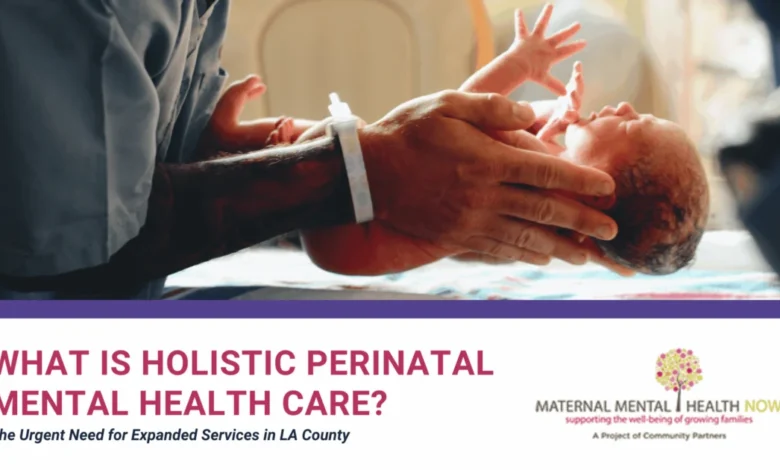
To bridge this gap, advocates are calling for an expanded definition of perinatal mental health care—one that integrates physical health, nutrition, exercise, financial stability, and peer support. This holistic approach recognizes that a parent’s mental state is inextricably linked to their environment and support system.
Several Los Angeles-based organizations are currently leading this charge, providing essential services that do not always fit within a narrow clinical box. Frontline Doulas, for instance, utilizes a Black-led model to provide doula support that addresses the emotional and physical needs of birthing people. Similarly, the "Black Mamas Glowing" support group and the Therapeutic Play Foundation offer community-informed care that prioritizes cultural safety. These organizations fill the gaps left by the traditional healthcare system, providing timely and appropriate support to families who might otherwise fall through the cracks.
A Timeline of Advocacy and Policy Evolution
The effort to address maternal mental health in Los Angeles has evolved significantly over the last decade.
- 2010-2015: Initial grassroots efforts in Los Angeles began to coalesce around the need for universal screening. During this period, organizations like MMHN worked to educate OB-GYNs and pediatricians on the importance of the Edinburgh Postnatal Depression Scale (EPDS).
- 2018: The publication of the LAMB study provided the first comprehensive data set specifically tailored to the diverse population of Los Angeles County, highlighting the 23-27% prevalence rates.
- 2019-2021: California state legislation, such as AB 2193, began requiring private insurers and specialized health care service plans to develop maternal mental health programs.
- 2023-2024: The focus has shifted from mere screening to the "adequacy of the network." The recent "dark zones" report served as a catalyst for local leaders to examine not just how many providers exist, but how accessible they truly are to the average resident.
Training the Next Generation of Providers
Recognizing that the shortage of trained professionals is both a quantitative and qualitative issue, Los Angeles County has invested in free training initiatives. Individuals who work with expecting and postpartum persons—including nurses, community health workers, and social workers—can now access specialized training on perinatal mental health through platforms like wellbeing4la.org.
These training modules are designed to equip a broader range of "front-line" workers with the skills to identify early warning signs and provide immediate, culturally sensitive interventions. By decentralizing mental health care from the psychiatrist’s office to the community center and the home visit, the county aims to build a more resilient safety net for new parents.
Implications for Public Health and Future Policy
The implications of untreated maternal mental health conditions extend far beyond the individual parent. Extensive research has shown that untreated PPD and PPA can interfere with parent-child bonding, leading to long-term developmental, behavioral, and cognitive challenges for the child. On a societal level, the economic cost of untreated maternal mental health conditions in the United States is estimated to be billions of dollars annually, factoring in lost productivity and increased emergency room visits.
For Los Angeles to move forward, policy experts suggest a two-pronged approach. First, there must be a continued push for insurance companies to increase reimbursement rates for perinatal mental health services, encouraging more specialized providers to join insurance panels. Second, there must be formal recognition and funding for "community-identified" resources. Integrating doulas, peer mentors, and holistic practitioners into the formal healthcare ecosystem would ensure that the 50% of parents currently "missing" from the data are finally reached.
The goal is a future where the definition of maternal mental health care is as diverse as Los Angeles itself. By addressing the physical, emotional, spiritual, and financial health of the birthing person, the county can transform the postpartum period from a time of vulnerability into one of supported transition. As the data from 2018 and the recent provider reports suggest, the need for action is not just urgent—it is essential for the health of the next generation of Angelenos.
Related posts: