The Crucial Role of Executive Function in Adolescent Literacy and Academic Achievement

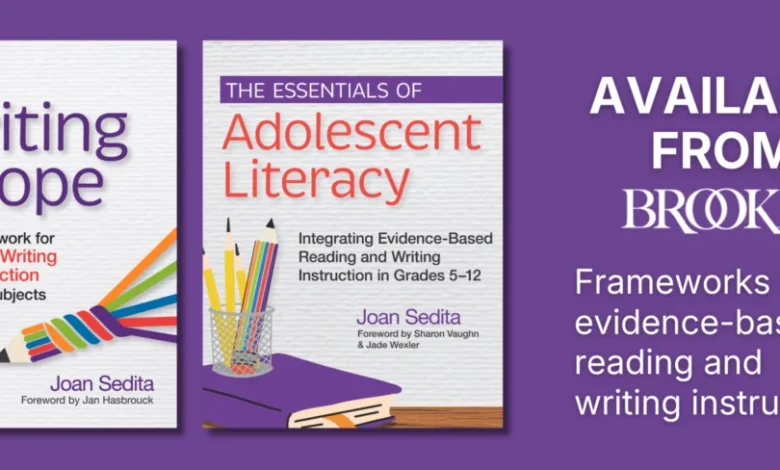
The development of literacy skills in middle and high school students is often viewed through the narrow lens of phonics, vocabulary, and reading fluency. However, recent pedagogical research suggests that the cognitive mechanisms known as executive functions are the hidden architects of academic success. Joan Sedita, a prominent expert in adolescent literacy and the author of The Writing Rope and The Essentials of Adolescent Literacy, argues that as students progress beyond the fifth grade, their proficiency in reading and writing becomes increasingly tethered to their capacity for self-regulation, cognitive flexibility, and information management.
The Evolution of Executive Function in the Classroom
Executive functions (EF) represent a complex suite of mental processes that allow individuals to manage tasks, set objectives, and navigate multifaceted challenges. These processes include goal setting, organizational skills, working memory, self-monitoring, and the ability to inhibit impulsive reactions. While these skills are foundational to general development, their integration into the literacy curriculum has gained significant traction over the last two decades.
Historically, academic research in the early 2000s primarily focused on the decoding and linguistic aspects of literacy. By 2010, researchers like Lynn Meltzer began to shift the discourse toward "executive function in the classroom," positing that the cognitive load required for complex reading comprehension—such as synthesizing multiple texts or writing long-form essays—exceeds the capacity of students who lack robust EF strategies. The consensus among literacy experts today is that by the time a student reaches the middle grades, the "learning to read" phase has largely concluded, replaced by a "reading to learn" requirement that relies heavily on cognitive control.
Breaking Down the Cognitive Architecture of Literacy
To understand how executive function influences student outcomes, one must analyze its individual components and their specific applications in language arts.
Goal Setting and Organization
Goal setting serves as the blueprint for academic work. When a student approaches a complex reading assignment, the ability to define the purpose of the reading—whether it be for research, enjoyment, or analytical critique—dictates the outcome. Without clear objectives, students often struggle with "passive reading," where information is processed but not retained. Similarly, organization acts as the bridge between input and output. In writing, organization is the structural integrity of an argument; for a student with poor organizational executive function, the act of transitioning from brainstorming to drafting often leads to "writer’s block" or incoherent narrative arcs.
Cognitive Flexibility and Working Memory
Cognitive flexibility is the ability to shift perspectives, which is essential for literary analysis. When a student must reconcile conflicting points of view in a historical text or a debate, they are employing cognitive flexibility. If a student is rigid in their thinking, they may fail to capture the nuance of the text. Simultaneously, working memory—the brain’s "scratchpad"—is the most critical bottleneck in literacy. Readers must hold earlier sentences in their mind to understand the current sentence. When working memory is overloaded, the meaning of a complex paragraph is lost, resulting in superficial comprehension.
Self-Monitoring and Inhibition
Self-monitoring is the metacognitive process of asking, "Does this make sense?" while reading or writing. A student who lacks this skill may read an entire chapter without realizing they have failed to comprehend the content. Inhibition, or the ability to suppress irrelevant information, is equally vital. In an era of digital distraction, the capacity to stay focused on a text while ignoring external stimuli is a hallmark of high-performing students.
Chronology of Educational Research on EF
The integration of these concepts into standard practice has been a gradual, data-driven evolution:
- 2005–2010: Emergence of the "Executive Function" framework in general education. Researchers began linking neurological maturation in the prefrontal cortex to academic performance in the middle grades.
- 2010–2015: Publication of seminal works by Lynn Meltzer and K.B. Cartwright, which provided empirical evidence that EF deficits are a primary contributor to reading comprehension failures that cannot be explained by word-level reading problems alone.
- 2015–2020: The rise of explicit strategy instruction. Educators began moving away from purely content-based teaching toward "strategic classrooms," where students are taught how to monitor their own learning processes.
- 2020–Present: The post-pandemic shift. With widespread reports of declining attention spans and increased reliance on digital tools, educators are placing renewed emphasis on cognitive regulation as a core component of literacy intervention.
Supporting Evidence and Data
Data from various literacy studies indicate that students with high levels of executive control outperform their peers in standardized reading assessments by a significant margin. A study cited by Cartwright (2015) suggests that students who are explicitly taught to monitor their reading comprehension show a 20% to 30% improvement in standardized testing outcomes compared to control groups who received only traditional instruction.
Furthermore, the impact is most visible in writing assessments. When students utilize structured planning techniques—a core component of organizational EF—they consistently produce drafts with more cohesive arguments and better-organized evidence. This suggests that the struggle in writing is often not a lack of content knowledge, but a failure of executive management.
Instructional Interventions: A Strategic Approach
Expert consensus emphasizes that executive function skills are not innate, static traits but are "coachable" behaviors that can be improved through systematic intervention.

Interventions for Reading Comprehension
- Metacognitive Modeling: Teachers should verbalize their own thought processes while reading, demonstrating how they set goals, monitor their understanding, and make adjustments when the text becomes difficult.
- Graphic Organizers: These tools externalize the cognitive work, allowing students to visualize relationships between ideas, which reduces the load on working memory.
- Self-Questioning Prompts: Providing students with a "checklist" of questions to ask themselves before, during, and after reading helps build the habit of self-monitoring.
Interventions for Writing
- Structured Drafting: Encouraging the use of outlines or concept maps helps students manage the organization of their ideas before they become bogged down by syntax or grammar.
- Explicit Revision Strategies: Rather than asking students to "check their work," teachers provide specific, rubric-based criteria that guide the student through the revision process, preventing the cognitive exhaustion that occurs when trying to edit for both content and mechanics simultaneously.
- Peer-Led Self-Regulation: Pairing students for "think-aloud" sessions allows them to observe how their peers manage their cognitive resources, fostering a collaborative environment for strategy development.
Broader Impact and Policy Implications
The broader implication for school districts is a shift in the definition of "literacy instruction." If executive function is a foundational pillar of academic achievement, then literacy training must move beyond the library and into the realm of cognitive science. This requires professional development for teachers to identify EF deficits early—often manifesting as "disorganization" or "lack of focus"—and treating them as skill gaps rather than behavioral issues.
As schools continue to grapple with the complexities of digital-age learning, the integration of executive function training into the standard curriculum offers a pathway to leveling the playing field. By equipping students with the tools to manage their own cognitive processes, educators are not just teaching them how to read and write; they are teaching them how to learn.
Joan Sedita’s contributions to this field serve as a vital resource for educators looking to transition from traditional pedagogical models to those that account for the full spectrum of the student’s cognitive experience. As research continues to solidify the link between the prefrontal cortex and the page, the focus of 21st-century education will likely remain on the intersection of brain science and literacy success.