Allie Teilz says becoming a mom made her bigger not smaller and her debut album Come to Mommy is a testament to that philosophy.

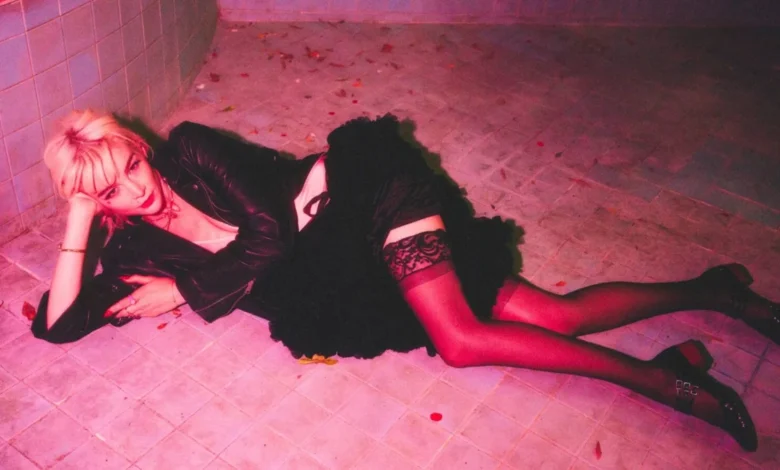
The landscape of modern motherhood is often depicted through a narrow lens of sacrifice, where professional ambition and artistic identity are expected to retreat in the face of the all-consuming responsibilities of child-rearing. However, Los Angeles-based DJ and producer Allie Teilz is challenging this cultural narrative with the release of her debut album, Come to Mommy. The project serves as both a musical milestone and a manifesto for parents who refuse to choose between their domestic realities and their creative impulses.

Teilz, whose career in the music industry began in the high-octane environment of Los Angeles nightlife, has spent years navigating the intersection of underground culture and mainstream success. Having shared DJ booths with global icons like Grace Jones and Daft Punk, her transition into motherhood—now as a mother of four—has not resulted in a departure from her craft, but rather a profound recalibration of it. In a recent interview, Teilz described her domestic life as a "90s-electronics household," a space where analog technology like record players and VHS tapes are prioritized over the pervasive digital distractions of the modern era.

The Intersection of Art and Domesticity
For many working parents, the "mental load" of household management frequently eclipses personal creative time. Studies consistently show that mothers, in particular, face a "motherhood penalty" in the workforce, where their perceived productivity and commitment are unfairly questioned following childbirth. According to data from the Institute for Women’s Policy Research, the wage gap between mothers and non-mothers remains a significant structural issue, often exacerbated by the lack of institutional support for childcare and creative flexibility.

Teilz, however, views the integration of her children into her creative world as a symbiotic process. By involving her children in the selection of music for dinner and surrounding them with the artifacts of her own artistic interests—film scores, disco, and visual media—she is fostering an environment of curiosity rather than isolation. She posits that motherhood does not narrow one’s focus, but rather provides a "deeper well" from which to draw inspiration.

The album title, Come to Mommy, is a deliberate subversion of the patriarchal phrase "come to daddy," which has historically dominated linguistic and cultural norms. By reclaiming this space, Teilz is asking what a mother wants: joy, pleasure, and the freedom to dance. This perspective challenges the societal expectation that maternal love must be synonymous with self-abnegation.

Chronology and Context: The Making of an Album
The path to Come to Mommy was not linear. The creative process for the album was interrupted by significant personal adversity, including a traumatic birth experience that nearly resulted in the loss of her life and the life of one of her children. This period of intense physical and emotional recovery became the crucible for her latest work.

The final track on the album, titled "Back From the Dead," was composed specifically for the child she nearly lost. In the context of her broader career, this track marks a pivot from the ephemeral nature of DJ sets to the lasting, permanent legacy of a studio album. The creation of the record served as a cathartic mechanism, allowing Teilz to process trauma through sound. It stands as a testament to the idea that art can emerge from the ashes of personal catastrophe, providing a narrative of resilience for her children to witness.

The Philosophy of Boundaries and Health
A central pillar of Teilz’s approach to parenting is the establishment of firm, non-negotiable boundaries. In an era of constant connectivity, she utilizes tools like flip phones to limit accessibility during family time, acknowledging that parental burnout is a clinical reality. Experts in family psychology often cite the "have boundaries or get an autoimmune disorder" philosophy as a necessary survival strategy for modern parents.

Teilz’s rejection of the "martyrdom" trope—famously illustrated in children’s literature like The Giving Tree, where self-erasure is equated with love—is a sentiment echoed by a growing number of modern parenting experts. The argument is that children do not benefit from a parent who has ceased to exist as an individual; rather, they thrive when they see their parents modeling healthy self-care and professional fulfillment.

Broader Impact and Implications
The release of Come to Mommy arrives at a time when the music industry is grappling with the influx of artificial intelligence and the homogenization of art. Teilz explicitly critiques what she terms "AI art and lobotomy chic," or the proliferation of soulless, machine-generated content. Her work seeks to counter this by infusing her music with the messy, human, and deeply personal experiences of being a mother.

Her perspective on the "highest form of art" being motherhood itself provides a significant contribution to the ongoing cultural conversation about the value of caregiving. By framing motherhood as an intellectual and creative pursuit, she encourages other women to reject the binary choice between their children and their passions.

The societal implications of this are significant. As the cost of living increases and the availability of affordable childcare remains limited in many regions, parents are increasingly looking for ways to integrate their children into their work lives. While not every profession allows for the flexibility of a DJ or producer, the cultural shift toward normalizing the presence and needs of parents in the workforce is gaining momentum.

Future Outlook
As Teilz continues to promote the album, her message remains consistent: the self does not have to shrink to make room for mothering. This philosophy is not just a personal choice but a structural demand for a society that values the humanity of its caregivers. Whether through her curated VHS collection, her intentional dinner rituals, or her atmospheric electronic compositions, Teilz is building a legacy that prioritizes curiosity and joy.

For other mothers who find themselves sitting in their cars, music playing, trying to find a moment of peace before entering the home, Teilz offers a simple directive: "steal the fire" of your own passion. Her album is an invitation to dance, to reclaim one’s identity, and to remember that the most important lessons we teach our children are those we learn while remaining true to ourselves.

The release of Come to Mommy represents a shift in the landscape of the music industry—a move toward more transparent, reality-based storytelling that includes the complexities of domestic life. As the album gains traction, it is likely to serve as a touchstone for a generation of parents seeking to bridge the gap between their identities as caregivers and their identities as individuals.

Ultimately, the impact of Teilz’s work is found in its honesty. By documenting her journey through trauma, recovery, and the daily joys of raising four children, she has created a body of work that is both universally relatable and deeply personal. It is a reminder that while the path of motherhood is demanding, it is also a landscape of profound creative possibility, provided one is willing to set the boundaries necessary to explore it fully. As she continues to perform and produce, Teilz stands as a figurehead for those who argue that the role of a mother is not to be a fixed, static entity, but an evolving, creative, and fully realized human being.