Navigating Type 1 Diabetes in the Classroom: How One North Carolina Family and Their Community Mastered the Back-to-School Transition


The back-to-school season is traditionally characterized by the rustling of fresh notebook pages, the sharpening of pencils, and the fitting of new backpacks. However, for families managing chronic medical conditions like Type 1 Diabetes (T1D), the academic calendar brings a complex layer of medical planning, legal advocacy, and logistical vigilance. For nine-year-old Vale Long of Wilmington, North Carolina, and her mother, Chelsea Long, mastering this transition has become a testament to the power of meticulous preparation, community support, and systemic advocacy within the public school system.
Diagnosed in December 2025 during her fourth-grade year, Vale entered a reality familiar to thousands of American families. According to recent health data from the Centers for Disease Control and Prevention (CDC) and organizations like Breakthrough T1D (formerly JDRF), more than 300,000 children and adolescents under the age of 20 live with Type 1 Diabetes in the United States. Managing an autoimmune condition where the pancreas produces little to no insulin requires round-the-clock monitoring of blood glucose levels, precise carbohydrate counting, and the administration of insulin via multiple daily injections or automated insulin delivery systems.
For Vale, whose daily routine involves coordinating an automated insulin pump, continuous glucose monitors (CGMs), and emergency supplies, preparation begins long before she steps out the front door. "Every time before I leave the house, I always make sure my pump’s good, I have my glucagon, I have some sugar snacks, and I have my phone," Vale explains.
The Chronology of a T1D Diagnosis and Educational Integration
Vale’s journey with T1D spans a relatively brief timeline—diagnosed just over half a year ago—yet her family has had to compress years of specialized health education into a matter of months. When the diagnosis occurred in the middle of the 2025–2026 school year, the Long family faced an immediate learning curve regarding how to safely integrate medical management into an elementary school environment.
In the immediate aftermath of December 2025, Chelsea Long found herself navigating the unfamiliar waters of medical device integration, school nurse protocols, and emergency action plans. As the family adapted to the new routine, they realized that succeeding in the classroom required a structural framework that shifted some of the logistical burden off the child while ensuring her absolute safety.
By the time the subsequent school planning cycle arrived, Chelsea had refined her approach. Rather than relying on ad-hoc communication with educators, the family implemented a multi-layered strategy involving legal accommodations, localized emergency supply caches, and specialized informational documents for school staff.
Legal Protections: Maximizing the Power of 504 Plans

Under federal civil rights legislation, specifically Section 504 of the Rehabilitation Act of 1973, public schools are legally mandated to provide "reasonable accommodations" to students with disabilities, which explicitly includes Type 1 Diabetes. These legal, written documents—commonly known as 504 Plans—ensure that students receive the support they need to safely access their education without discrimination.
For the Long family, drafting an effective 504 Plan was aided significantly by a local network of experienced T1D mothers and families in Wilmington. Rather than drafting the document in isolation, Chelsea leaned on the collective wisdom of her peer group. "They have been just an essential and integral part of our diagnosis and our path, honestly," Chelsea notes. "A lot of the moms shared their 504 Plans, even down to the wording and the verbiage that they used, and little tips and tricks."
These plans extend far beyond the standard classroom environment. Chelsea emphasizes that robust 504 language must cover extracurricular activities, school fundraisers, and athletic events held on school property outside of normal instructional hours. Furthermore, field trips require strict protocols, ensuring that trained personnel or teachers capable of managing medical emergencies accompany students on buses and at off-site locations.
Innovations in Classroom Safety: The T1D "Resume" and Distributed Stashes
To bridge the gap between educational staff and medical requirements, Chelsea developed an innovative administrative tool: a biographical and medical summary sheet designed specifically for teachers and substitute instructors.
Described by Chelsea as "essentially like a resume or CV" for Vale, this document serves as a quick-reference guide that introduces Vale as an individual first, while providing essential medical guidance. It outlines specific behavioral and physical indicators of glycemic fluctuations, detailing what symptoms to look for if Vale is experiencing hyperglycemia (high blood sugar) or hypoglycemia (low blood sugar) and is unable to articulate her condition independently.
Logistically, the family also re-engineered how emergency supplies are stored across the school campus. Recognizing that children can occasionally misplace or fail to replenish personal supply kits, the Longs established dedicated emergency sugar snack bags in every classroom Vale visits for her academic and elective subjects.
"We decided it’s nice to have a bag for each classroom—sometimes she forgets to replenish her bag that she carries on her body—so instead, we’re keeping one bag in each classroom that she goes into," Chelsea explains. This redundancy ensures that fast-acting carbohydrates—such as applesauce, fruit gummies, juice boxes, and packaged fruit—are always within arm’s reach during a hypoglycemic event.
Managing Skin Sensitivity and Device Personalization

Modern T1D management heavily relies on advanced medical technology, including continuous glucose monitors like the Dexcom sensor and automated insulin delivery systems like the Tandem Mobi pump. However, pediatric patients frequently encounter mechanical and dermatological hurdles, such as sensor dislodgement and skin irritation from adhesive products.
To mitigate skin sensitivity issues while adding an element of personal expression, Vale utilizes device clips as an alternative to continuous overpatches. When overpatches are used, however, the family embraces the opportunity for personalization. "They have all different ones, you know, so even like for the 4th of July, she found some that were red, white, and blue," Chelsea says. "She kind of likes to color coordinate—they’re her accessories, honestly, which she enjoys."
Broader Family Implications and Genetic Screening
The challenges of managing Type 1 Diabetes expanded for the Long family following Vale’s diagnosis. Understanding the genetic components of autoimmune conditions, Chelsea opted to have her four other children screened for T1D autoantibodies.
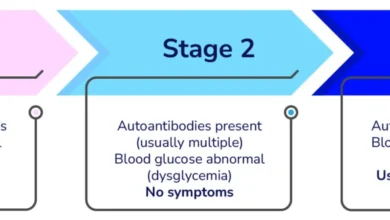
The screening revealed that her four-year-old daughter tested positive for three specific autoantibodies, placing her in Stage 1 Type 1 Diabetes. While Stage 1 is characterized by the presence of multiple T1D-related autoantibodies with normal blood sugar levels and no clinical symptoms, it indicates a high lifetime probability of progression to clinical onset.
Currently enrolled in Pre-K within the same school district as Vale, the youngest daughter’s teachers are already monitoring for early indicators, such as increased frequency of bathroom breaks. Chelsea acknowledges that while managing a potential second diagnosis presents challenges, the institutional knowledge gained through Vale’s care will streamline the process. "I think it would definitely be smoother than what we have experienced," Chelsea reflects. "Not that it’s been a bad experience—it’s just been a lot of a learning curve."
Building Community Infrastructure: The T1D Wilmington Warriors App
Faced with the isolation that often accompanies rare or chronic pediatric diagnoses, Chelsea’s involvement with the Wilmington T1D community catalyzed a broader digital infrastructure project. Traditional parent communication methods, such as group text messaging threads, often suffer from historical limitations where newly added members cannot access archived advice, local specialist recommendations, or historical troubleshooting data.
Collaborating with a neighbor, Chelsea developed an iPhone application named T1D Wilmington Warriors (accessible via t1dwilmingtonwarriors.com) and integrated it as a resource for local endocrinology offices to distribute to newly diagnosed families. The application functions similarly to a curated community forum, housing localized resources, event calendars, and a searchable archive of practical advice regarding everything from regional medical providers to summer camp accommodations.

"With this app, you can see everything," Chelsea notes. "It’s kind of like a Facebook group, so to speak, but we post resources and events in the community." Her overarching philosophy on community building remains straightforward: "If something doesn’t exist, you can create it."
Implications and Guidance for Newly Diagnosed Families
Public health analysts and pediatric endocrinologists frequently stress that successful pediatric chronic disease management relies heavily on psychosocial support alongside clinical interventions. For parents entering the world of T1D, the intersection of academic responsibilities and medical oversight can induce significant parental burnout.
Chelsea’s primary advice to newly diagnosed families centers on self-compassion. Despite rigorous planning, technological failures, sensor dislodgements, and unpredictable glycemic variations remain an inevitable part of daily life—particularly for active children who swim and participate in high-energy sports.
"We do so much to try and prepare and then inevitably technology fails or, you know, a sensor falls out," Chelsea advises. "Kids are kids and especially Vale, she’s very rough—she plays hard, loves swimming, and is very active. We have rarely had a week at school without some device malfunction—it’s going to happen, but it’s going to be okay."
Ultimately, the Long family’s experience highlights a vital balance: protecting the medical safety of a child while preserving their fundamental right to a normal childhood. Through collaborative partnerships with educational institutions, robust legal protections under 504 Plans, and the establishment of interconnected local support networks, families navigating T1D can establish a sustainable framework that empowers children to learn, grow, and thrive inside and outside the classroom.