Fostering Autonomy: How Early Childhood Education Programs are Cultivating Independence in Preschool Classrooms

In contemporary early childhood education, the simple refrain of a young child declaring "I can do it" marks a critical developmental milestone. Far beyond the immediate satisfaction of completing a task, these micro-moments of self-reliance form the foundational architecture for long-term confidence, cognitive resilience, and essential self-help skills. Across preschool classrooms nationwide, educators are increasingly shifting their focus toward cultivating structured independence. Rather than rushing to assist, modern pedagogy emphasizes a balanced approach: establishing predictable routines, designing accessible physical environments, and knowing precisely when an educator should step back to allow a child to problem-solve independently.

The evolution of early childhood education over the past several decades highlights a profound paradigm shift. Historically, preschool environments often mirrored traditional top-down classrooms where adult intervention was constant and directives were absolute. However, longitudinal developmental research—including landmark studies by organizations such as the National Association for the Education of Young Children (NAEYC) and the Child Mind Institute—demonstrates that self-directed learning during the formative ages of three to five yields exponential cognitive and social-emotional benefits. As educational frameworks modernize, building autonomy is no longer viewed as a secondary objective, but rather as a core competency that directly influences future academic success, peer socialization, and emotional regulation.
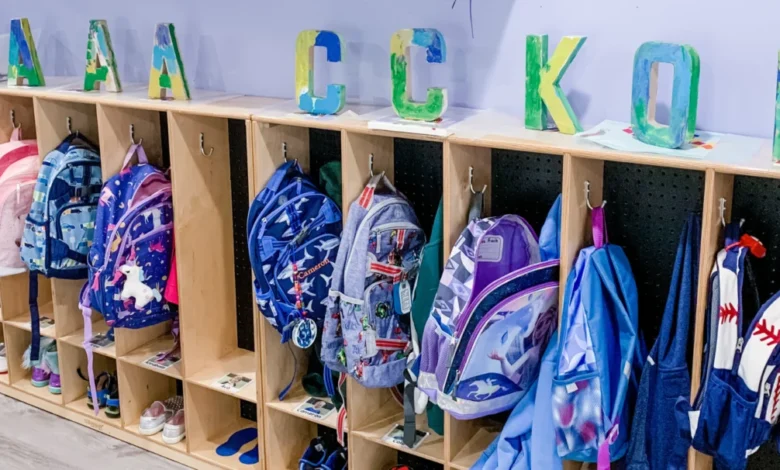
To understand how independence manifests in a modern preschool setting, educators categorize these behaviors into specific daily routines and classroom centers. The development of autonomy does not happen instantaneously; rather, it is a gradual progression supported by environmental scaffolding. Arrival routines, for instance, serve as the initial daily litmus test for self-sufficiency. When children are encouraged to independently manage their personal belongings—hanging up heavy winter coats, storing backpacks in designated cubbies, and utilizing visual sign-in sheets—they transition from passive participants to active managers of their immediate physical space.

Similarly, meal times and transitions represent critical daily junctions for building self-reliance. During snack and lunch periods, children are given the agency to pour liquids from child-sized containers, open stubborn food packages, and navigate minor spills utilizing accessible classroom "spill stations." When an accident occurs, instead of an adult instantly intervening with paper towels, children are guided through the physical process of remediation. Furthermore, classroom transitions are increasingly facilitated through visual schedules and picture-card timelines. These tools demystify the daily sequence of events, allowing preschoolers to anticipate upcoming shifts in the curriculum without constantly relying on verbal prompts from teachers.
Beyond routine maintenance, specialized learning centers within the classroom act as dynamic laboratories for independent decision-making. Educational theory emphasizes that open-ended environments invite children to formulate hypotheses, test boundaries, and negotiate social dynamics with minimal adult oversight. In dramatic play areas stocked with accessible, everyday props, children spontaneously assign roles, manage social friction, and clean up shared spaces collaboratively. In block and construction zones, unrestricted access to varied building materials encourages spatial reasoning and peer-to-peer learning as complex structures take shape through trial and error.

Art and sensory centers further reinforce this philosophy of independent exploration. By storing open-ended art supplies—such as textured paper, varied utensils, and recycled materials—in clearly labeled, low-shelf bins, educators eliminate the need for step-by-step instructional commands. Children determine their own artistic direction, experimenting with medium and color based on intrinsic motivation rather than compliance with a teacher’s sample. Sensory bins filled with sand, water, or dry beans invite tactile investigation, allowing children to observe how their peers approach the same materials differently, thereby fostering observational learning and cognitive flexibility.
Implementing this philosophy requires a deliberate recalibration of educator behavior. Professional development workshops for early childhood professionals increasingly emphasize the psychological concept of "productive struggle." When teachers intentionally resist the urge to immediately solve a child’s dilemma—whether untying a knot, retrieving a dropped marker, or resolving a minor dispute over a toy—they communicate a powerful message of capability.

Child development specialists note that optimal adult support in a preschool environment follows a gradient model. Teachers act primarily as careful observers and active listeners, intervening only when physical safety is compromised or when emotional frustration exceeds a child’s current threshold of resilience. By asking open-ended questions ("What could we try next?" or "How might we solve this?") rather than providing direct answers, educators cultivate critical thinking and executive function skills that neuroscientists link to long-term academic achievement.
Despite the proven benefits of early autonomy, early childhood educators frequently encounter friction when communicating these philosophies to families. Parents, operating under high-stress daily schedules or viewing efficiency as a primary metric of success, often misinterpret a child’s slow, self-directed efforts as inefficiency or a lack of supervision. When a four-year-old insists on buttoning their own coat—a process that might take five agonizing minutes—an adult’s natural inclination is to take over to expedite departure.

To bridge this home-school divide, modern preschool programs have integrated structured family communication protocols. Educators utilize concise parent-friendly handouts, digital newsletters, and parent-teacher conferences to reframe how families perceive these everyday struggles. By explaining that the seemingly inefficient process of self-dressing or independent cleanup is actually neural wiring in action, schools help parents value the long-term emotional payoff over short-term convenience. Recommendations often include practical strategies for the home environment, such as setting up low clothing hooks, allowing extra time for morning routines, and involving children in simple household chores like matching socks or setting unbreakable dinnerware.
Ultimately, the intentional cultivation of independence in preschool serves as a vital bridge between infancy and formal schooling. Through a meticulously engineered balance of predictable daily routines, open-ended learning centers, and restrained adult intervention, children internalize a deep-seated belief in their own capabilities. As developmental milestones continue to evolve in modern education, the simple act of a child mastering a daily task reinforces a universal truth: confidence is not bestowed overnight, but rather built through small, supported moments repeated day after day.
Related posts: