The foundation of a child’s long-term success is built not only on cognitive milestones but on the development of social and emotional intelligence. Whether within the home environment or in structured early learning settings, educators and caregivers are increasingly prioritizing the cultivation of empathy, cooperation, and emotional regulation. Recent research indicates that these soft skills are critical predictors of academic achievement and mental health outcomes later in life. As early childhood professionals and families collaborate, a range of evidence-based activities has emerged to help toddlers and preschoolers navigate the complexities of interpersonal relationships and self-awareness.
The Developmental Landscape of Social-Emotional Learning
Early childhood, defined generally as the period from birth to age eight, is a window of rapid brain development. During this time, the prefrontal cortex—the area of the brain responsible for impulse control, complex planning, and emotional regulation—begins to form vital neural pathways. According to the National Association for the Education of Young Children (NAEYC), children who are taught to identify their feelings and navigate peer interactions demonstrate higher levels of classroom engagement and lower rates of behavioral challenges.
The integration of social-emotional learning (SEL) into daily routines is not merely an optional pedagogical add-on; it is a critical component of holistic development. By embedding these practices into playtime, mealtime, and transitions, caregivers can turn ordinary moments into educational opportunities.
Strategies for Promoting Cooperative Interaction
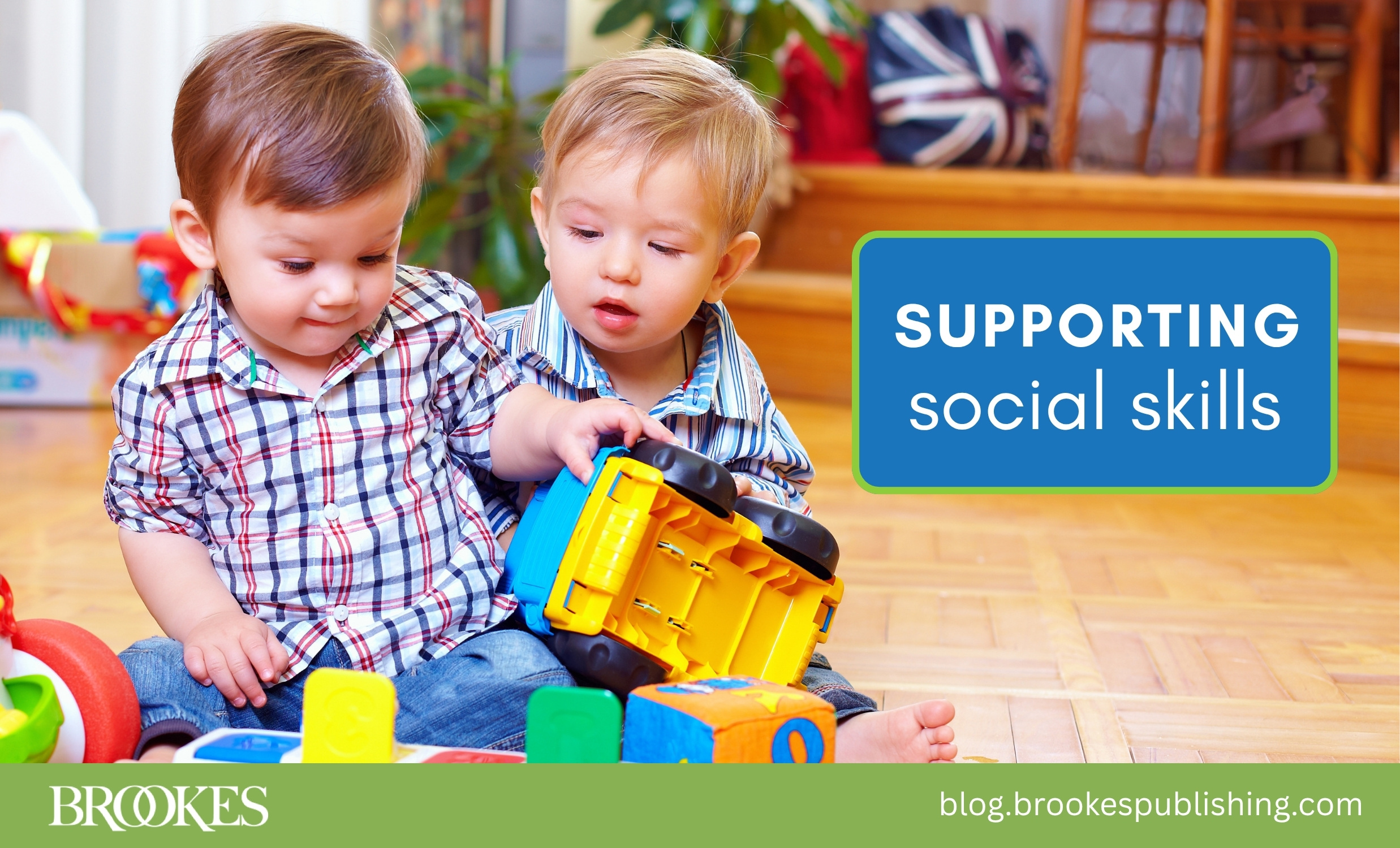
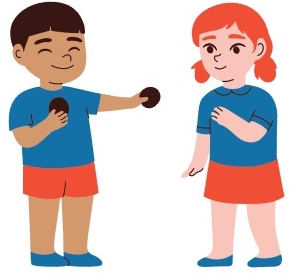
Sharing and turn-taking represent the first major hurdles in social development for toddlers. These skills require a degree of patience and cognitive maturity that is still developing. To facilitate this, educators are utilizing "scaffolded play," where the environment is intentionally structured to encourage exchange. For instance, providing a limited number of tools—such as a single rolling pin for a group of children using playdough—necessitates communication.
By utilizing specific verbal cues like "your turn," "next," or "wait," adults provide the vocabulary required for children to negotiate these interactions independently. Data from classroom studies suggests that when adults model these phrases, children are 40% more likely to resolve minor disputes without adult intervention within a six-month period.
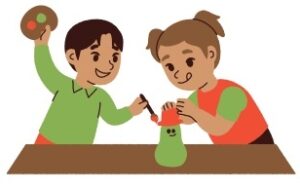
Peer play also serves as a laboratory for social negotiation. By moving children from parallel play—where they play side-by-side without interaction—to cooperative play, they learn to build common goals. Encouraging children to construct a block tower together, where each adds a piece in sequence, teaches the fundamentals of teamwork and shared responsibility. This practice aligns with the "Zone of Proximal Development," a theory pioneered by psychologist Lev Vygotsky, which posits that children learn most effectively when supported by an adult or a more capable peer.
Emotional Literacy and Regulation
A cornerstone of modern early childhood education is "naming emotions." Research published in the Journal of Child Psychology and Psychiatry underscores that the ability to label one’s own emotional state—such as anger, disappointment, or joy—is the primary precursor to emotional regulation.

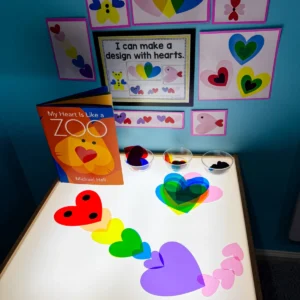
When a caregiver observes a child becoming frustrated, explicitly naming the emotion in a calm, validating tone helps the child move from a reactive state to a reflective state. This process, often referred to as "co-regulation," involves the adult acting as an external emotional stabilizer. As the child matures, this external guidance is internalized. Experts recommend that educators and parents use storybooks as a tool for this process, pausing during narratives to discuss how a character might be feeling, thereby building empathy through fictional scenarios.
Memory, Imagination, and Problem-Solving
Cognitive development is inextricably linked to the ability to recount events. By encouraging children to describe what happened earlier in the day or during a specific activity, caregivers help children organize their experiences into a coherent narrative. This "recounting" skill aids in the development of executive function and helps children process both positive and challenging social experiences.
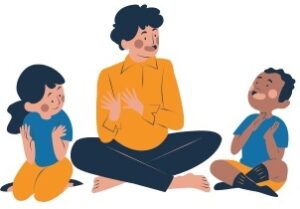
Similarly, pretend play is a sophisticated cognitive exercise. When children dress up or engage in roleplay—such as acting out a restaurant scenario or simulating a parent-child interaction—they are practicing theory of mind. This is the capacity to understand that other people have perspectives and feelings different from their own. In the context of trauma-informed care, pretend play is also used as a safe outlet for children to explore difficult emotions, such as the anxiety associated with a parent leaving for work. By acting out these scenarios with toys, children gain a sense of agency over their stressors.
Building Resilience Through Persistence
The concept of "grit" or persistence is fostered through the navigation of small, age-appropriate challenges. Whether it is learning to pedal a tricycle or drawing a shape, the role of the caregiver is to provide a safety net while allowing the child to struggle productively. Statements of encouragement, such as "You’re almost there" or "Keep trying," reinforce the value of effort over innate ability.

Psychological studies have shown that children who receive praise for their process (e.g., "You worked very hard on that drawing") rather than their inherent talent (e.g., "You are so smart") are significantly more likely to persist when faced with difficult tasks in later schooling.
Cultivating Community and Caring
Beyond individual development, social-emotional learning aims to create a sense of belonging within a community. Techniques such as having a "greeter" in the classroom or using visual aids to track who is present help children feel like an integral part of a collective. These activities foster a culture of inclusivity.

Nurturing activities, such as caring for dolls or stuffed animals, are equally vital for all children, regardless of gender. These activities provide a mechanism for children to practice empathy and caregiving, which are foundational to future social success. Educators emphasize that by providing a variety of "nurturing props"—such as play cribs, feeding bottles, and washing stations—children can explore themes of responsibility and affection in a controlled, supportive environment.
Implications and Future Directions
The systemic implementation of these social-emotional strategies has profound implications for educational policy. As school districts face increasing pressure to focus on standardized testing, child development advocates are pushing for a return to play-based learning as the primary vehicle for social-emotional growth.

According to a 2023 report by the Early Childhood Policy Council, investments in social-emotional programming yield significant long-term economic benefits, including higher graduation rates and reduced reliance on social services. The consensus among child development experts is that the "curriculum" of the early years must be viewed as a series of interpersonal experiences rather than just academic subjects.
By prioritizing these strategies, both in the home and in professional early learning settings, society invests in the development of well-adjusted, empathetic, and resilient individuals. The challenge for the coming decade remains the standardized training of all caregivers and educators to ensure that these practices reach every child, regardless of socioeconomic background. The goal is clear: to ensure that every day, in every setting, is treated as a foundational opportunity to strengthen the social fabric of the next generation.