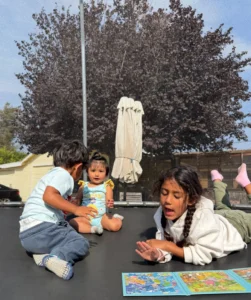
Gloria Steinem Our job is to discover who our daughters are and build a world that deserves them

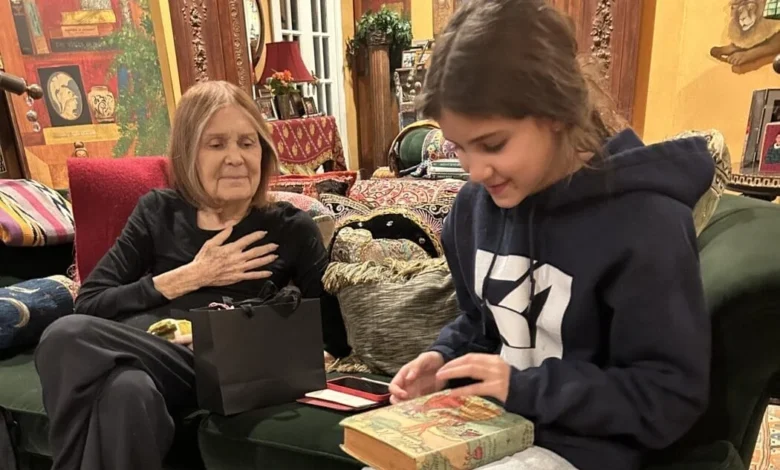
The enduring legacy of feminist icon Gloria Steinem continues to resonate in the cultural consciousness, particularly through her profound insights on the responsibilities of parenthood and societal evolution. Steinem, who passed away in September 2026, left behind a vast body of intellectual contributions, but perhaps some of her most intimate teachings were shared in the quiet, unscripted moments of her daily life—such as conversations held in the back of taxicabs traversing the streets of Manhattan.

Erin Grau, an inaugural fellow of the Gloria Steinem Foundation, recently offered a reflective account of these interactions, underscoring a core tenet of Steinem’s philosophy: that the primary duty of a parent is not to mold a child into a predetermined shape, but to actively discover their authentic identity and, simultaneously, labor to construct a world that is worthy of their existence.

A Philosophy Born of Curiosity and Connection
Steinem’s approach to human development was rooted in the same radical curiosity that defined her decades of activism. Her memoir, My Life on the Road, famously documented her penchant for engaging with taxi drivers, viewing them as local experts who held the keys to understanding the pulse of a city. This method was not merely a way to navigate geography; it was a way to navigate humanity. When applied to parenting, Steinem argued that the same level of intellectual humility and active listening is required.

In the context of the modern, often high-pressure landscape of parenting, Steinem’s advice—to "discover who they are"—stands as a challenge to the helicopter parenting trends that have dominated the 21st century. Her perspective suggested that empathy is a radical act. By prioritizing listening over directing, parents could help their children resist the societal pressures to conform to outdated norms. For Steinem, children were the ultimate philosophers; they are the demographic least likely to accept the status quo as destiny, frequently asking the most difficult questions about why the world is structured the way it is.

The Intersection of Activism and Motherhood
The relationship between Steinem’s activism and her observations on family dynamics is complex. Though she did not have children of her own, her influence on how women navigate the roles of mother and activist is immeasurable. During her final years, Steinem focused heavily on the future of the feminist movement, particularly through the stewardship of her Manhattan apartment, which has served as a central hub for social justice movements for nearly 60 years.

As an inaugural resident of the Gloria Steinem Foundation, Grau worked at the intersection of women, artificial intelligence, and power. This collaboration allowed for a unique intergenerational dialogue. Steinem often emphasized that the family unit is frequently the "birthplace of inequality," noting that traditional domestic structures often mirror the power imbalances found in the broader economy. Her response to this was not to abandon the concept of family, but to re-imagine it as a space of egalitarian practice.

Chronology of a Legacy and Final Tributes
Following Steinem’s death on September 15, 2026, the outpouring of grief and gratitude highlighted the multi-generational impact of her work. The days following the announcement saw a spontaneous memorial form outside her residence. Among the mourners were families, including parents and their daughters, who left tokens—ranging from copies of Louisa May Alcott’s Little Women to hand-drawn tributes—that spoke to the specific nature of her influence.

For many, the act of bringing children to this space was an intentional gesture of continuity. The chalk drawings on the sidewalk, featuring depictions of taxicabs and books, served as a symbolic passing of the torch. This public mourning demonstrated that Steinem’s "unfinished business"—the pursuit of full gender equality—is being carried forward by a new generation that, as she hoped, is being raised to view the world as a place that can and must be improved.

Supporting Data and Cultural Context
The relevance of Steinem’s message is bolstered by current sociological data regarding the "motherhood tax" and the persistent gender gap in domestic labor. According to research from the U.S. Bureau of Labor Statistics and independent economic analyses from 2025 and 2026, women continue to shoulder a disproportionate amount of unpaid labor, a factor that significantly contributes to the wage gap and limits career mobility.

Steinem’s critique of these structures remains statistically supported. Even as educational attainment for women has surpassed that of men in many sectors, the "motherhood penalty"—the loss of earnings and career progression following the birth of a child—remains a stubborn obstacle to true equity. By framing the creation of a "world that deserves them" as a necessity, Steinem was pointing toward the systemic policy changes required, such as universal childcare and equal pay, that are essential to relieving the burden on mothers and ensuring daughters grow up in a system that values their potential equally.

Analysis of Societal Implications
The implications of Steinem’s philosophy extend beyond the home and into the political arena. Her belief that we should be "mad at a world that falls short of equality, but hold on to hope anyway" serves as a blueprint for contemporary activism. In an era marked by significant political polarization and the erosion of some reproductive and social rights, Steinem’s insistence on "beautiful responsibility"—a term popularized by her collaborator Amy Richards—provides a framework for sustainable engagement.

If the goal of parenting is to build a world worthy of our children, then the task is not merely individual, but collective. This involves systemic advocacy that supports the autonomy of women and girls. Steinem’s legacy suggests that the most effective way to honor her is to continue the work of dismantling the barriers that prevent individuals from discovering and living out their true identities.

Reactions from the Activist Community
Colleagues and fellow activists have described Steinem’s final years as a period of intense focus on the long-term sustainability of the movement. Her emphasis on the importance of storytelling as a vehicle for empathy was a recurring theme in her late-life lectures. Facts, she argued, are easily forgotten, but stories create the emotional framework necessary to motivate action.

"Gloria was always looking forward," noted a longtime associate in the days following her passing. "She wasn’t interested in a eulogy that simply looked back at the 1970s. She was interested in what we were going to do with the data, the technology, and the political power we have right now."

Conclusion: Carrying the Torch
As the dust settles on the immediate mourning period, the focus within the movement has shifted toward the preservation of Steinem’s archives and the continuation of the foundation’s work. The "adventures of Matilda and Frankie," as Steinem once described them, serve as a microcosm for the larger movement. The goal is a future where the constraints of gender do not dictate the trajectory of a child’s life.

By encouraging parents to adopt a posture of curiosity rather than control, Steinem offered a path that is both compassionate and radical. It is a call to action that requires parents to be both present in their children’s lives and active in the political spheres that shape their children’s futures. As we continue to navigate the complexities of the mid-2020s, the words of the icon remain a guiding light: discover who they are, and build the world they deserve. This, ultimately, is the beautiful responsibility that remains, the unfinished business that requires every generation to take up the pen, the protest sign, and the conversation in the back of a taxi, ensuring that the progress made is not just preserved, but expanded.