Strategies for Reducing Household Grocery Expenses Amidst Rising Food Inflation Forecasts


The United States Department of Agriculture (USDA) recently released data indicating that the average American couple now spends approximately $800 per month on groceries, a figure that translates to a weekly expenditure of roughly $200. This baseline reflects a significant portion of household income dedicated to food, yet economic forecasts suggest the financial burden on consumers is set to intensify. According to the USDA’s Food Price Outlook, all food prices are predicted to increase by an additional 3.6 percent by 2026. This upward trajectory follows several years of volatile market conditions, prompting financial analysts and nutritionists to explore more sustainable, cost-effective methods for managing household food budgets.
The Economic Context of Food Inflation
To understand the necessity of grocery budgeting, one must look at the broader economic landscape of the last several years. Following the global supply chain disruptions of 2020 and 2021, food prices experienced a historic surge. While the rate of inflation has slowed in some sectors, the cumulative effect remains high. The 3.6 percent increase projected for 2026 is particularly notable as it sits above the historical annual average for food inflation, which typically hovers around 2 percent.
Several factors contribute to these rising costs, including increased labor costs in the manufacturing sector, higher transportation expenses driven by fluctuating fuel prices, and climate-related impacts on agricultural yields. For the average consumer, these macroeconomic shifts manifest as "sticker shock" at the checkout counter. Consequently, many households are seeking alternatives to the standard American diet, which often relies heavily on processed convenience foods and expensive animal proteins.
The $300 Monthly Blueprint: A Methodology for Savings
In response to these rising costs, financial experts and proponents of low-waste living have identified strategies to reduce monthly grocery bills to as low as $300 for a two-person household—a nearly 63 percent reduction from the national average. This approach is rooted in a nutrient-dense, plant-forward diet and a rigorous commitment to waste reduction.
The transition to a $300 monthly budget requires a shift in consumer behavior, moving away from impulsive purchasing toward a structured, plan-based model. By prioritizing "low-waste" principles, consumers not only save money but also reduce the environmental impact of their consumption. This methodology focuses on four primary pillars: strategic budgeting, optimized sourcing, homemade staples, and the prioritization of low-cost, high-yield ingredients.
Strategic Budgeting and the Psychology of Spending
The first step in any successful cost-reduction plan is the establishment of a physical or digital budget. Financial advisors often suggest that the psychological aspect of spending plays a major role in grocery inflation. When consumers use credit cards, the "pain" of the transaction is often delayed, leading to higher spending on non-essential items.
Transitioning to a cash-based system for groceries can provide a physical limit that prevents overspending. By designating a specific amount of cash for the week—for example, $75 for a couple—the consumer is forced to prioritize essential items and scrutinize the value of every product.
Furthermore, successful budgeting involves planning for specific culinary habits. If a household frequently consumes certain types of cuisine, such as Mexican or Italian-inspired dishes, the pantry should be stocked with the dry goods necessary for those meals in bulk. This prevents last-minute trips to the store for single, high-priced ingredients, which is a common driver of budget overruns.
Optimized Sourcing: Where and How to Shop
Where a consumer shops is often as important as what they buy. The "convenience tax" added to goods at premium or boutique grocery stores can inflate a bill by 20 to 30 percent. To reach a $300 monthly target, a diversified shopping strategy is required:
Bulk Purchasing and Warehouse Clubs
For non-perishable staples such as rice, flour, and spices, warehouse clubs like Costco offer significant per-unit savings. Buying in bulk reduces the frequency of shopping trips and provides a hedge against short-term price fluctuations. For example, purchasing a 25-pound bag of rice or flour offers a much lower price-per-pound than buying small, 2-pound bags at a traditional supermarket.
Seasonal Farmers Markets
While often perceived as more expensive, farmers markets can be more economical for produce that is currently in season. During peak harvest months, such as late summer and autumn, the abundance of items like tomatoes, squash, and berries often leads farmers to lower prices to move inventory. Conversely, buying a tomato in the winter involves the added costs of greenhouse heating and long-distance transportation, which are passed on to the consumer.
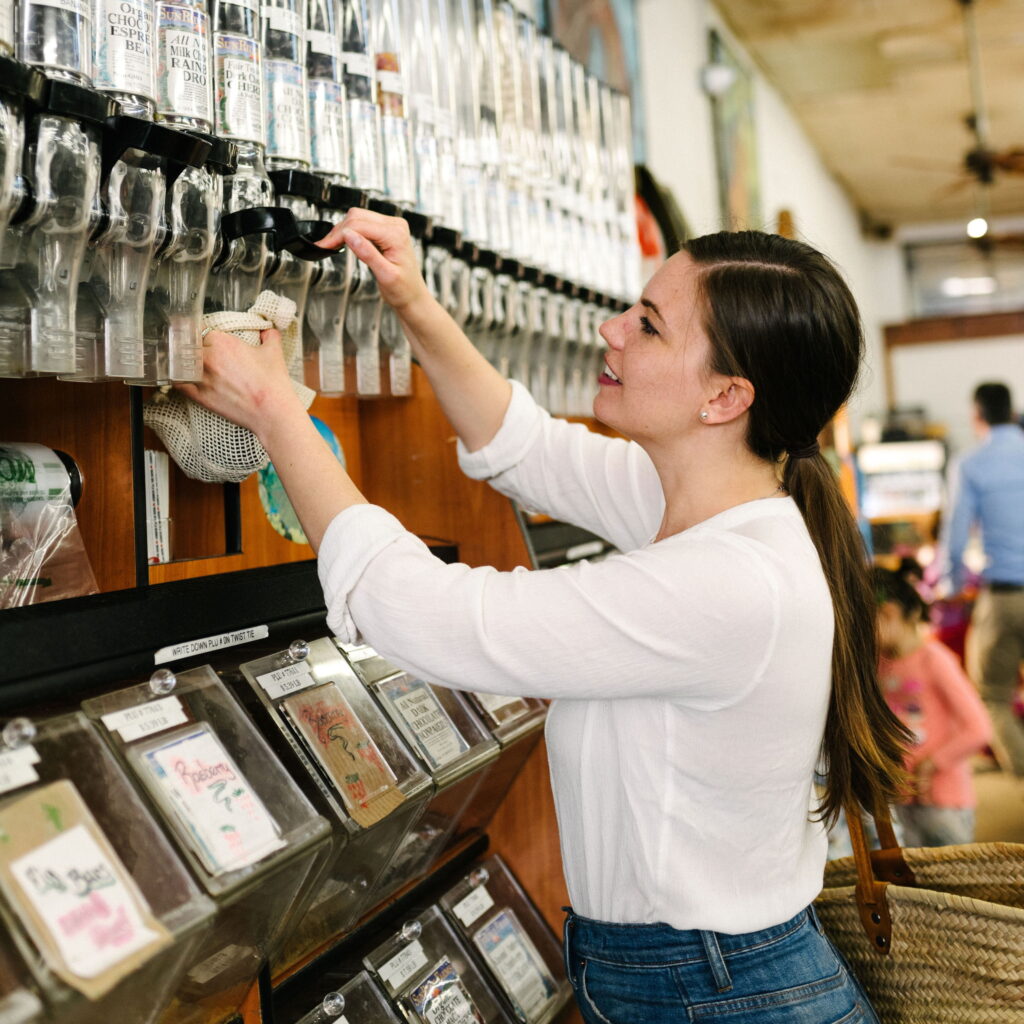
The Bulk Bin Advantage
Bulk bins allow consumers to purchase exactly the amount they need for a specific recipe. This is particularly useful for expensive grains like quinoa or specialized baking ingredients. By avoiding the purchase of a full-sized package for a one-time use, shoppers eliminate both financial waste and the potential for food to expire in the pantry.
The Economics of "Making vs. Buying"
A major component of grocery inflation is the cost of labor. When a consumer buys shredded cheese, pre-cut vegetables, or sliced bread, they are paying for the labor and machinery used to process those items.
The Case for Homemade Bread
A standard loaf of artisanal sourdough bread can cost upwards of $7 at a local bakery. For a household that consumes two loaves a week, this totals approximately $700 per year. In contrast, making bread at home using flour, water, salt, and yeast costs cents per loaf. Utilizing appliances like breadmakers or slow cookers—often acquired at low cost through community "Buy Nothing" groups—can automate this process, making it feasible for busy households.
Staple Substitutions
Many common pantry items can be made at home for a fraction of the retail cost:
- Oat Flour: Created by blending dry oats in a food processor.
- Powdered Sugar: Produced by blending granulated sugar into a fine powder.
- Vegetable Broth: Made by simmering frozen vegetable scraps (onion skins, carrot tops, celery ends) in water.
- Condiments: Items like salad dressings, vinegars, and nut butters often have high margins in stores but require minimal ingredients to produce at home.
Technology and Surplus Food Management
The rise of the "circular economy" has introduced digital tools that help consumers combat food waste while saving money. Apps like Too Good To Go have emerged as major players in this space, connecting consumers with restaurants and grocery stores that have surplus food at the end of the day. These items are typically sold at one-third of the original retail price.
Additionally, many grocery stores now offer "imperfect produce" sections. These items, while aesthetically "blemished" or irregularly shaped, possess the same nutritional value as their "standard" counterparts but are sold at a steep discount. Utilizing these resources allows a household to maintain a high-quality diet without the associated high costs.
Prioritizing Low-Cost, High-Nutrient Staples
The most effective way to lower a grocery bill is to shift the primary protein source from meat to legumes. Plant-based proteins such as beans, lentils, and chickpeas are among the most cost-effective foods available. They are also staples in "Blue Zones"—regions of the world where people live statistically longer lives—due to their high fiber and mineral content.
A comparative analysis shows that dry beans are significantly cheaper than canned beans. While canned beans offer convenience, dry beans bought in bulk and prepared in large batches can be frozen for later use, providing the same convenience at less than half the cost.
Essential Low-Cost Staples for a $300 Budget:
- Grains: Brown rice, oats, pasta, and flour.
- Legumes: Lentils, black beans, chickpeas, and pinto beans.
- Produce: Potatoes, carrots, onions, and frozen vegetables (which retain nutrients and have a longer shelf life than fresh).
- Proteins: Eggs, tofu, and bulk-purchased "bone-in" meats, which are cheaper because the consumer performs the trimming labor.
Broader Implications and Long-Term Sustainability
The shift toward more disciplined grocery budgeting is not merely a reaction to temporary inflation; it is a movement toward long-term financial and environmental sustainability. By reducing reliance on processed foods and excessive packaging, consumers contribute to a reduction in landfill waste and carbon emissions associated with food processing and transport.
From a financial perspective, saving $500 per month—the difference between the average $800 spend and a $300 optimized budget—amounts to $6,000 in annual savings. When redirected into high-yield savings accounts or retirement funds, these savings can significantly alter a household’s long-term financial trajectory.
As 2026 approaches and the USDA’s predicted price increases take effect, the ability to manage a food budget will become an essential skill for the modern household. Through a combination of strategic sourcing, DIY production, and a focus on nutrient-dense staples, it is possible to maintain a high standard of living while successfully navigating the challenges of a volatile global economy. The transition requires effort and a departure from convenience-based habits, but the financial and health-related rewards offer a compelling incentive for change.
Related posts: