The Shift Toward Whole-Food Asian Cuisine
For decades, Americanized Chinese food—characterized by deep-fried wrappers, excessive refined sugars, and sodium levels often exceeding daily recommended limits—dominated the quick-service restaurant landscape. Market analysis indicates that while the convenience of these meals drove their popularity in the late 20th century, the 2010s and 2020s have seen a sharp pivot. Data from the health-conscious culinary sector suggests that households are increasingly opting for "clean" alternatives that replicate the savory profiles of dumplings and pot stickers without the reliance on industrial flour wrappers and synthetic flavor enhancers.
Napa cabbage has emerged as a cornerstone of this movement. Unlike standard round-head cabbage, Napa cabbage features a tender, elongated leaf structure that, when blanched, provides a pliable, low-carbohydrate vessel for protein-rich fillings. By replacing processed wonton wrappers—often composed of bleached wheat flour and chemical stabilizers—with cabbage, home cooks can effectively reduce the glycemic load of their meals while increasing fiber and micronutrient intake.
Culinary Methodology and Nutritional Composition
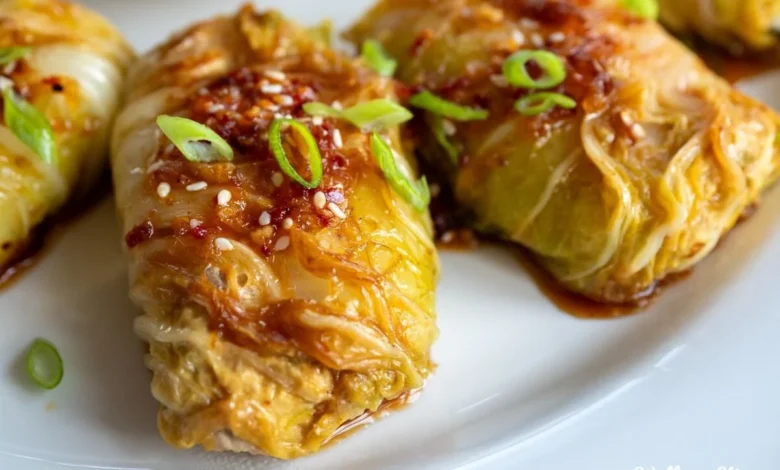
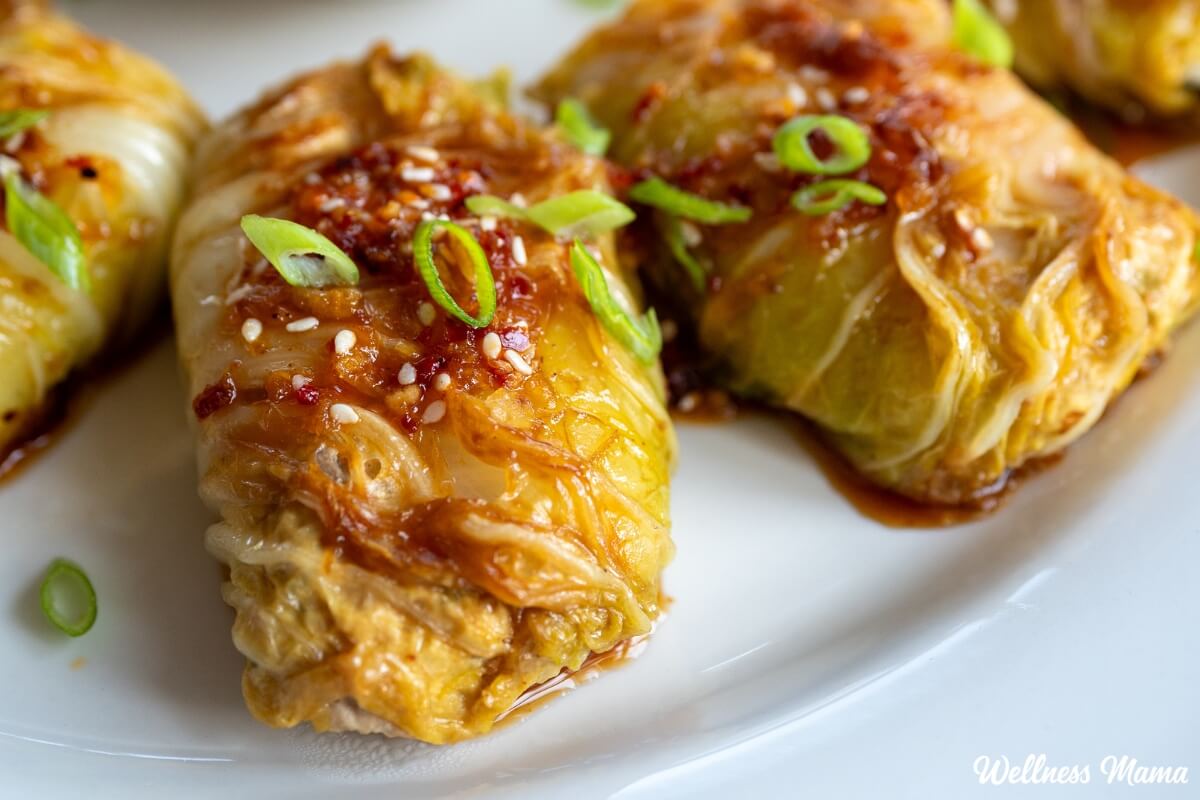
The preparation of sesame ginger cabbage rolls relies on a specific sequence of culinary techniques designed to maintain structural integrity while maximizing flavor infusion. The process begins with the blanching of Napa cabbage leaves. This brief immersion in boiling water softens the cellulose, making the leaves flexible enough to roll without tearing.
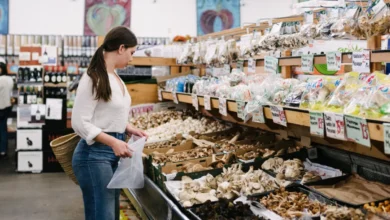
The internal filling typically consists of ground poultry—most commonly chicken or turkey—complemented by finely diced shiitake mushrooms. The inclusion of shiitake is significant from a nutritional perspective; these mushrooms are a rich source of lentinan and other bioactive compounds, and they act as a moisture-retaining agent, preventing the lean protein from drying out during the steaming process.
The seasoning profile focuses on three primary pillars:
- Toasted Sesame Oil: Providing the characteristic nutty aroma essential to East Asian flavor profiles.
- Ginger and Garlic: Serving as both flavor bases and natural anti-inflammatory agents.
- Coconut Aminos: A fermentation-derived substitute for traditional soy sauce. Coconut aminos are particularly favored by health practitioners for being soy-free, gluten-free, and generally lower in sodium, offering a savory "umami" quality that mirrors soy sauce without the associated allergens.
Nutritionally, a single cabbage roll typically contains approximately 139 calories, with 9 grams of protein and roughly 5 grams of carbohydrates. This macronutrient profile aligns with the requirements of low-glycemic and ketogenic dietary patterns, contrasting sharply with traditional deep-fried pot stickers, which often feature higher starch density and trans-fat content.
Chronology of Preparation and Implementation
Achieving a high-quality result requires a disciplined approach to the assembly process:
- Preparation (Minutes 0–15): Selection of fresh Napa cabbage. Leaves are separated and the thick, fibrous white stems are trimmed or shaved down to ensure uniform flexibility.
- Blanching (Minutes 15–20): Leaves are placed in boiling water for 30–60 seconds, followed by an immediate ice-water bath to arrest the cooking process and retain vibrant color.
- Assembly (Minutes 20–40): A standardized measurement of approximately one-third cup of protein filling is placed on each leaf. The rolls are secured by folding the sides inward and rolling tightly.
- Cooking (Minutes 40–50): The rolls are placed in a skillet to brown the bottoms—a process known as Maillard reaction—which adds complexity to the texture. A small amount of water is added to the pan, and the vessel is covered to steam the rolls, allowing the heat to penetrate the core of the filling without compromising the integrity of the cabbage.
- Finishing (Minutes 50–55): The lid is removed to allow for the evaporation of excess moisture, ensuring the exterior of the cabbage reaches a desirable, slightly crisp texture.
Implications for Public Health and Meal Planning
The transition to home-cooked alternatives like sesame ginger cabbage rolls addresses several public health concerns associated with fast-food consumption. Chief among these is the reduction of hidden sodium and MSG. According to nutritionists, the "savory" taste profile of takeout is often achieved through high concentrations of monosodium glutamate, which, while classified as generally recognized as safe (GRAS), is a point of concern for individuals with sensitivities.
Furthermore, the "meal prep" viability of these rolls suggests a potential for improved dietary adherence. Because these rolls maintain their structural and sensory quality when refrigerated for up to 72 hours, they offer a sustainable solution for professionals seeking healthy lunch alternatives. The ability to customize the filling—incorporating water chestnuts for texture or carrots for natural sweetness—allows for culinary variety, which is a key predictor of long-term success in healthy eating habits.
Broader Industry Observations
The shift toward such recipes is not merely a trend but a reflection of a changing food landscape. Retail data from the organic and natural food sectors indicates an upward trend in the purchase of coconut aminos, fresh ginger, and Asian-style aromatics. This suggests that the "knowledge gap" that once prevented home cooks from replicating complex Asian flavors is closing.
Experts in food science note that the substitution of cabbage for dough is part of a larger trend of "veggie-forward" cooking. By utilizing vegetables as the wrapper rather than the side dish, cooks can increase the volume of food consumed while keeping caloric density low. This approach is increasingly supported by medical organizations advocating for plant-heavy diets to combat metabolic syndrome and obesity.
Conclusion
Sesame ginger cabbage rolls represent a convergence of traditional culinary techniques and modern nutritional science. By focusing on high-quality proteins, nutrient-dense fungi, and clean condiments, the dish provides a roadmap for those looking to replicate the sensory satisfaction of takeout in a home environment. As the industry continues to prioritize ingredient transparency and the reduction of ultra-processed additives, such recipes will likely remain at the forefront of the home-cooking movement. The efficacy of these rolls as a meal-prep staple, combined with their low-glycemic profile, reinforces their role as a practical solution for the health-conscious consumer navigating a fast-paced, convenience-oriented world.
Related posts: